







© 2025 JiangSu Dade Heavy Industry Co.Ltd. All Rights Reserved.Web Design by Wangke
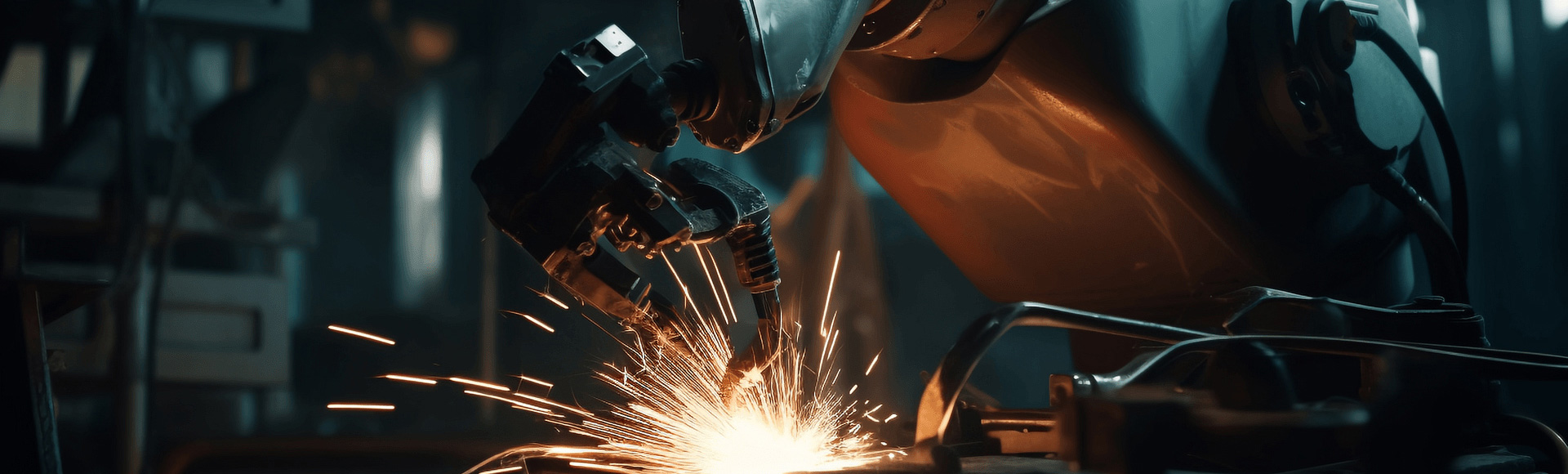
Large Diameter Pipe Welding Machine
2025-10-21
In industrial infrastructure (e.g., oil & gas transmission, water treatment, energy pipelines), large diameter pipes—defined as those with nominal diameter (DN) ≥ 200 mm (or outer diameter ≥ 219 mm)—serve as critical conduits for fluid/gas transport. The integrity of their welds directly determines system safety, operational lifespan, and compliance with industry standards (e.g., API 5L for oil & gas, AWWA C208 for water pipelines). Traditional manual welding of large diameter pipes faces inherent limitations in precision, consistency, and efficiency, making automatic large diameter pipe welding machines—particularly those based on orbital welding technology—a transformative solution. Below is a technical analysis of their industrial value, core principles, application scenarios, selection criteria, and future trajectory. 1. Core Challenges in Large Diameter Pipe Welding Welding large diameter pipes (LDPs) poses unique technical challenges that manual or semi-automatic processes struggle to address, often leading to weld defects (e.g., lack of fusion, porosity, misalignment) and increased operational risks: 1.1 Thermal Distortion Control LDPs (especially thick-walled pipes with wall thickness ≥ 10 mm) require high heat input ...
Applications of Remote Laser Welding in Modern Industry
2025-10-20
Remote laser welding (RLW) has emerged as a transformative joining technology in industrial manufacturing, revolutionizing material assembly through its non-contact operation, exceptional precision, and superior efficiency. Unlike traditional welding methods (e.g., arc welding, resistance welding), RLW utilizes a highly focused laser beam to fuse materials—eliminating physical contact with workpieces, minimizing process-induced defects, and enabling unprecedented control over the welding zone. This technology has become indispensable across high-precision and high-volume industries, where it addresses critical challenges such as heat distortion, complex geometry processing, and quality consistency. 1. Definition of Remote Laser Welding Remote laser welding is a non-contact thermal joining process that employs a collimated, high-energy laser beam to melt and fuse compatible materials (metals, polymers, or composites). The laser beam is typically delivered via fiber optics or articulated mirror systems, which provide exceptional flexibility to access hard-to-reach weld zones without repositioning the workpiece. Core Operational Characteristics - Non-contact operation: Eliminates tool wear, workpiece deformation from mechanical pressure, and contamination risk...
Analysis of Key Points of Pipeline Welding Technology and Process Requirements
2025-10-19
Analysis of Key Points of Pipeline Welding Technology and Process Requirements Pipeline welding is the core process for connecting pipelines. It has high technical requirements and complex operations, directly affecting the sealing performance, strength, and service life of the pipeline system. This article elaborates from multiple dimensions such as welding methods, construction specifications, and precautions, providing a practical guide for practitioners. I. Common Pipeline Welding Methods 1. Shielded Metal Arc Welding (SMAW) It achieves connection by melting the electrode and the workpiece through arc heat. It is suitable for materials such as carbon steel and low - alloy steel. The operation is flexible, but welding parameters need to be controlled to avoid problems such as porosity and slag inclusions. 2. Gas Metal Arc Welding (GMAW) / Gas Tungsten Arc Welding (GTAW) It uses inert gas to isolate air and protect the molten pool. It is suitable for fine welding of materials such as stainless steel and aluminum alloy, with high - quality welds and small deformation. 3. Laser Welding A high - energy - density laser beam is used to achieve local melting. It is suitable for pipelines with high - strength and high - precision requirements, such as thin - w...
A Detailed Explanation of the Welding Process of Automobile Chassis: Core Technologies and Development Trends
2025-10-15
A Detailed Explanation of the Welding Process of Automobile Chassis: Core Technologies and Development Trends In automobile manufacturing, chassis welding is a core link that determines the safety, comfort, and stability of vehicles. Its process integrates materials science, precision machining, and advanced welding technologies. The following is an analysis of the key steps and technologies: I. Material Pretreatment: Dual Assurance of Precision and Corrosion Resistance Material pretreatment is the foundation of chassis welding. Spectral analysis can be used to detect the purity of the steel's composition, ensuring that the anti - fatigue properties and rigidity of the material meet the standards. Surface treatment uses sandblasting and chemical degreasing processes to thoroughly remove the oil and oxide layer on the steel surface. Subsequently, phosphating or galvanizing treatment endows the metal with long - term anti - rust ability, enhancing the durability of the chassis in complex environments. II. Stamping and Forming: From Steel Plates to Precision Components Large - scale stamping presses press steel plates into high - precision molds with hundreds of tons of pressure to complete the initial shaping of chassis components. The mold error needs to be c...
What Are the Disadvantages of Robotic Welding
2025-10-13
Robotic welding systems have become synonymous with efficiency, precision, and consistency in modern manufacturing—revolutionizing production lines in automotive, aerospace, and heavy industry. Yet, their adoption is not without tradeoffs. For businesses considering welding automation, understanding the inherent limitations—from financial barriers to technical constraints—is critical to avoiding costly missteps. This analysis breaks down the key disadvantages of robotic welding, helping manufacturers evaluate whether automation aligns with their operational needs, budget, and long-term goals. Understanding Robotic Welding Systems Before diving into drawbacks, it’s important to contextualize their design: Robotic welding systems use programmable 6-axis robots (or fixed automation) to perform welding tasks, guided by CNC controls and sensors. They excel at repetitive, high-volume tasks (e.g., automotive chassis welding) but rely on stable inputs—consistent part geometry, material quality, and environmental conditions—to deliver optimal results. It is precisely this dependence on predictability that gives rise to many of their disadvantages. 1. Prohibitive Initial Investment and Hidden Costs The most significant barrier to ad...
Six-Axis Collaborative Robots: High Precision and Multi-Scenario Applications Reshape the Future of Industrial Automation
2025-10-12
Six-Axis Collaborative Robots: High Precision and Multi-Scenario Applications Reshape the Future of Industrial Automation As a core device in the field of industrial automation, the six-axis collaborative robot achieves omnidirectional movement in three-dimensional space through six independent rotating joints, demonstrating excellent adaptability in scenarios such as manufacturing, logistics, and education. The integration of its high-precision servo system and intelligent control algorithm promotes the accelerated transformation of production lines towards flexibility and intelligence. Core Technological Advantages for Full-Industry Penetration 1. Multi-Dimensional Movement Ability The mechanical structure with six degrees of freedom enables the robot to precisely simulate the complex movements of a human arm, excelling in high-precision operations such as welding and assembly in narrow spaces. For example, in the automotive production line, the robot can simultaneously perform tasks such as door hinge welding (with an accuracy of ±0.01mm) and dashboard assembly, reducing the process switching time by 15%. 2. Innovation in Human-Robot Collaboration Models equipped with force control sensors can achieve instant collision response. On the food packaging li...
Robotic 3D Laser Cutting & Welding Machines: How They Redefine Precision in Modern Manufacturing
2025-10-10
In high-stakes industries—from aerospace turbine components to automotive lightweight structures and medical device fabrication—precision is no longer a competitive advantage but a non-negotiable requirement. Traditional manual or 2D laser systems struggle to meet the demands of complex 3D geometries, tight tolerances (often ±0.01 mm), and high-volume production. Enter the robotic 3D laser cutting and welding machine: an integrated solution that combines the pinpoint accuracy of laser technology with the flexibility of robotic arms and the repeatability of CNC control. But how exactly do these systems transform precision manufacturing? What makes them indispensable for complex parts? And how do they stack up against conventional methods? This guide explores their technology, core benefits, and industry-specific impact. What Is a Robotic 3D Laser Cutting & Welding Machine? At its core, this system is a synergy of three game-changing technologies: 1. 3D Laser Technology: A high-power laser beam (fiber, CO₂, or Nd:YAG) that delivers concentrated energy for cutting or welding, capable of accessing complex 3D contours (e.g., curved aerospace panels, intricate medical implants) that 2D lasers cannot reach. 2. Robotic Manipulation: A 6-axis robotic arm (w...
Analysis of the Core Application Fields of Welding Robots and Outlook on Future Technological Trends
2025-10-08
Analysis of the Core Application Fields of Welding Robots and Outlook on Future Technological Trends As one of the core equipment in intelligent manufacturing, welding robots, with their high precision and high efficiency, continuously drive the upgrading of the manufacturing industry in the wave of Industry 4.0. The following comprehensively analyzes the core value of welding robots from three major dimensions: application fields, technological advantages, and development trends. Core Application Fields Cover Multiple Industries 1. Automobile Manufacturing Welding robots undertake core tasks in automobile production, such as body frame welding, chassis assembly, and connection of engine components. Their precise operation can ensure the uniformity of welds in key parts such as car doors and roofs, enhancing the strength of the body structure. In addition, the integration of robots with automated production - line equipment significantly improves the overall vehicle assembly efficiency. 2. Machinery and Heavy Equipment In the fields of machine tools and construction machinery, robots can stably complete the welding of thick steel plates, ensuring the load - bearing performance of the equipment. In bridge construction, their high - load continuous operation abilit...