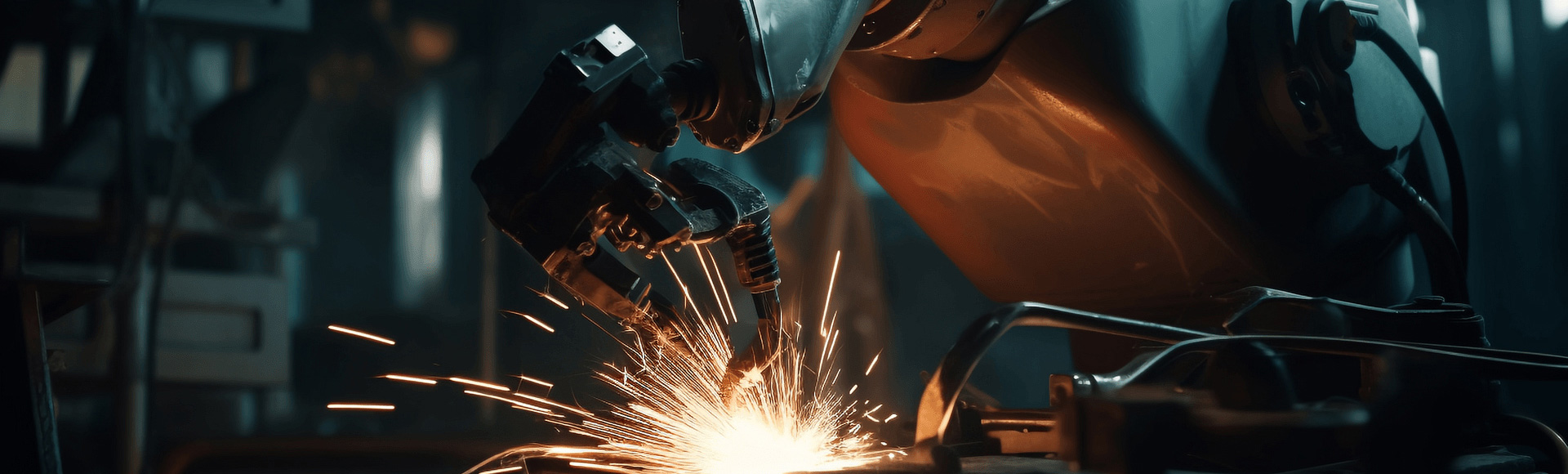
National VI Exhaust Aftertreatment Production Line
Sub-assembly welding line:
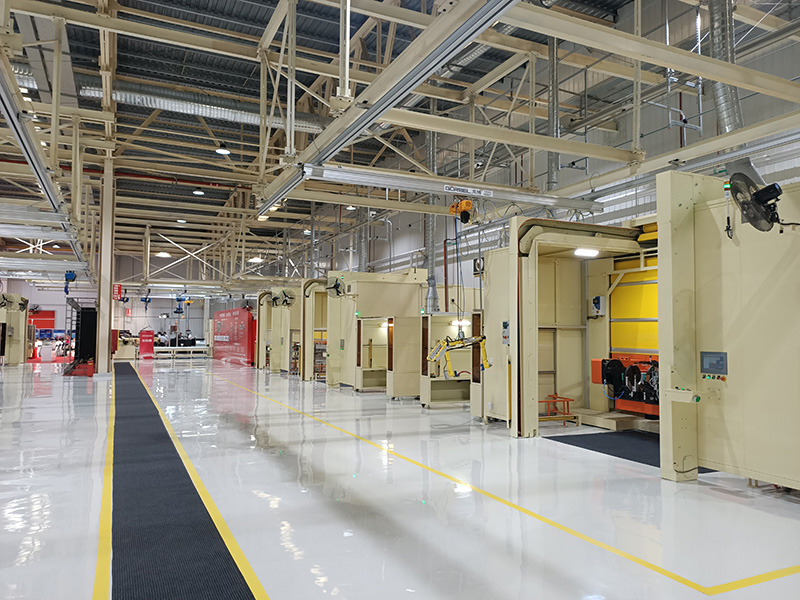
The workstation primarily consists of robotic arc welding stations, leak testing machines, manual welding repair stations, non-powered roller conveyors, and lifting fixtures. For loading and unloading, operators manually handle welding components using KBK hoists. Once welded sub-assemblies are completed, they are placed into containers and transported to the final assembly welding line via electric carts or transfer trolleys。
Assembly welding line overview :
The system mainly consists of robotic arc welding workstations, leak testers, manual welding repair workstations, non-powered roller conveyors, and lifting fixtures. For loading welding components, manual handling is performed using KBK hoists. The welded assemblies are then lifted to the assembly line using KBK hoisting equipment.
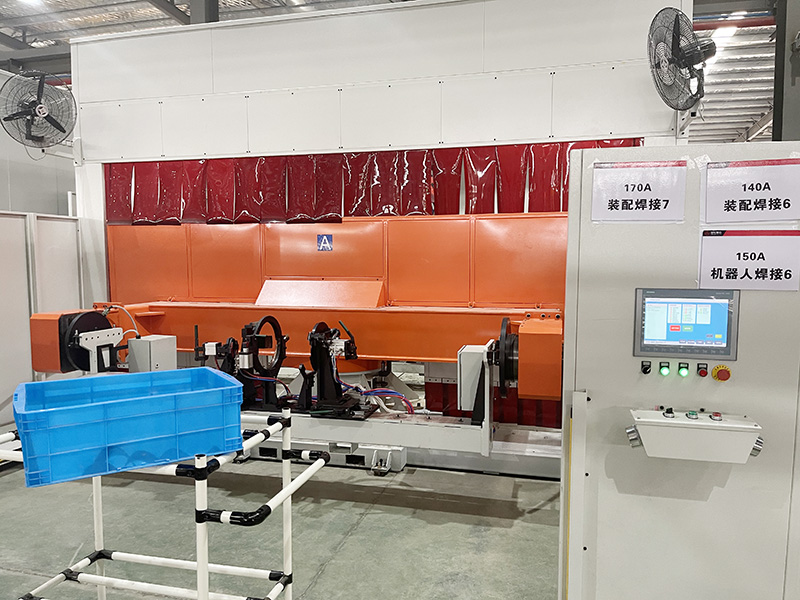
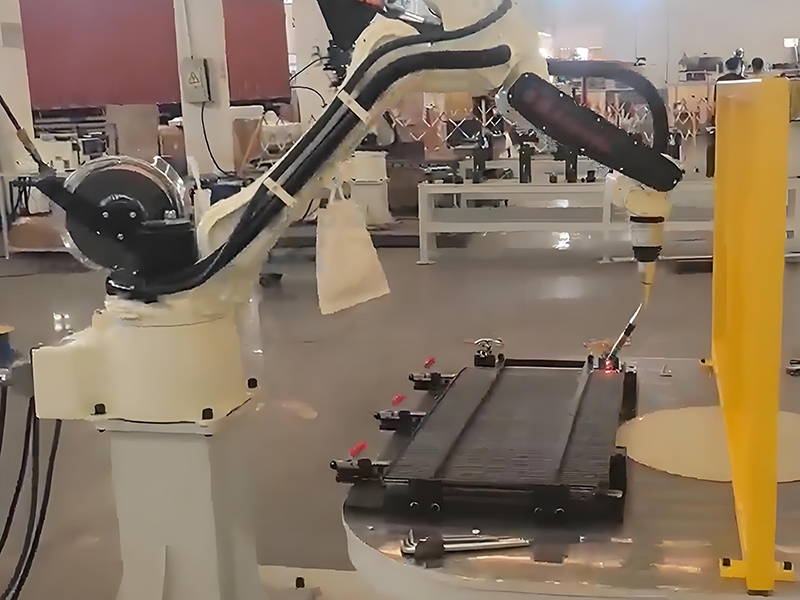
1. Single-Station Horizontal Flip Three-Axis Positioner Workstation
Quantity: 4 sets
Components: Welding booth, Yaskawa robot, Fronius welder, positioner, crossbeam (8+4), beam-changing cart, torch cleaning station, etc.
Key parameters: S1 axis motor power 4.4kW (Yaskawa), S2/S3 axis power 3.7kW, RV reducer.
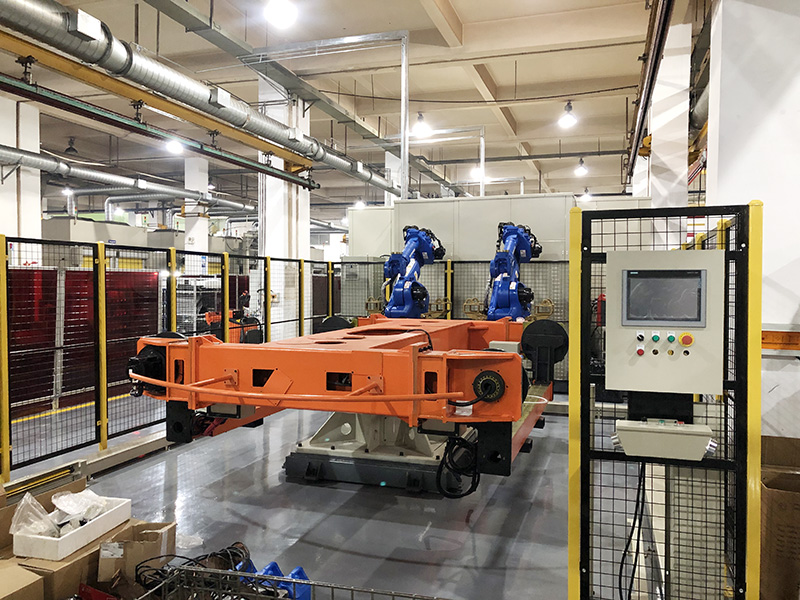
2. Handling Robot + Ground Rail and Peripheral Guardrails
Quantity: 1 set
Components: 4 robots, ground rail, external walking axis, grippers, etc.
3. In-Line Leak Test Station / Rework Welding Station
Quantity: 4 sets
Components: ATEQ D620 leak tester, Fronius rework welder, KBK hoist, conveyor mechanism, etc.
4. Assembly Dimensional Inspection Platform
Quantity: 2 sets
5. Nut Resistance Welding Machine
Quantity: 1 unit
Function: Supports welding for 6 types of nuts.
6. Port Forming Machine
Quantity: 2 sets
Matching molds: DPF port expansion molds (10.5-inch and 13-inch, 1 set each).
7. Offline Laser Marking Station
Quantity: 1 set
Components: MD-X2000 laser marker, 32 sets of positioning fixtures.
8. Manual Stud Welding Workstation
Quantity: 1 set
Components: 12 manual stud welders, 22 sets of positioning fixtures.
Smart Production & Flexible Changeover
Multi-Product Coverage: The line supports 66 product variants and enables quick changeovers, with single-station mold change time ≤30 minutes.
Data Collection: Pre-configured interfaces for collecting robotic welding parameters, leak test data, and installation dimensions (3D inspection), with open interface documentation.
Hybrid Welding: Combines robotic welding + manual welding to ensure welding quality meets Cummins standards (CES-MANF-13).
Smart Handling: Small parts are handled manually, while carrier components and large welded parts are handled by robots. Leak testing and inspection use a combination of manual and balanced hoist operations.
Project Advantages
High Efficiency: Cycle time for 5 core products ≤250 seconds.
Standardized Design: Uses international brands for pneumatic components (SMC), electrical components (Siemens), and robots (Yaskawa).
Flexible Production: Supports quick changeovers for multiple product variants, with traceable data, catering to small-batch customized demands.