







© 2025 JiangSu Dade Heavy Industry Co.Ltd. All Rights Reserved.Web Design by Wangke
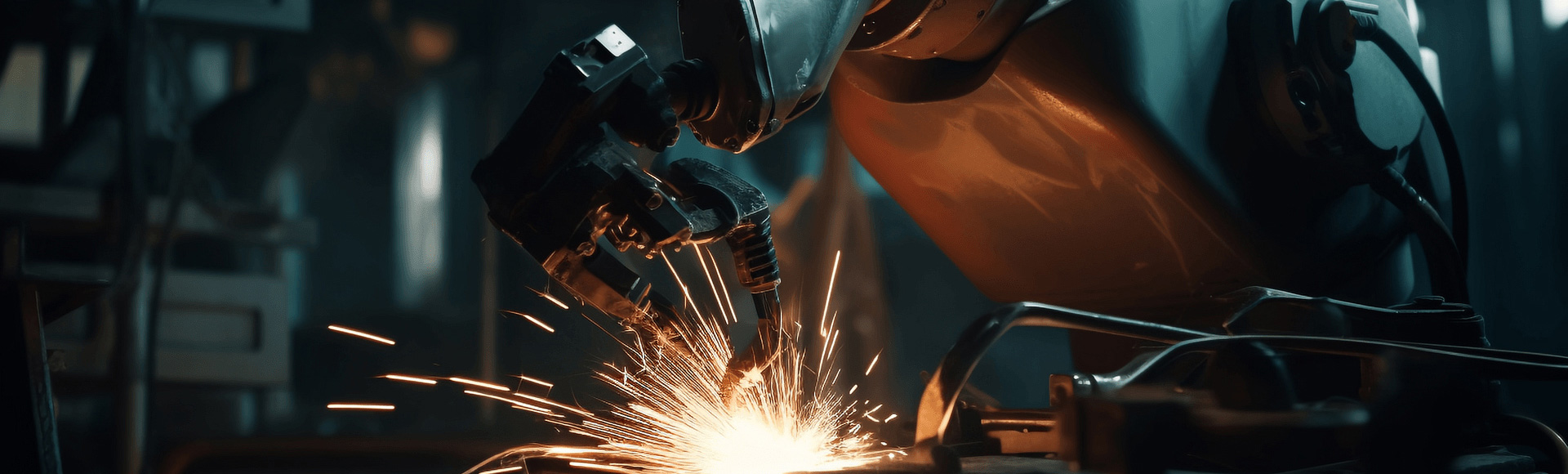
Automatic 3D Laser Welding Robot For Industrial Production
2026-08-17
Look at the side of a modern car. It's so smooth it looks carved from a single block of metal. But it wasn't. So where are the bolts, screws, and lumpy weld marks? The answer involves a silent ballet of light and precision happening in factories right now—a glimpse into robotic welding solutions on today's production lines. Joining complex, curved metal shapes for both strength and beauty is a primary challenge in modern manufacturing. For decades, the trade-off was between strength and aesthetics; you could have a visible, chunky weld that was strong, or a cleaner look that was weaker. Modern manufacturing demands both. Solving this puzzle is the job of the automatic 3D laser welding robot. This advanced industrial robot uses a focused beam of light to fuse metal with superhuman accuracy, following any curve in three-dimensional space. This technology enables designers to create products once considered impossible, revealing the invisible precision behind our most sophisticated goods and forming a cornerstone of automated welding systems. What is a Welding Laser? From Sci-Fi Beams to Fusing Steel You've likely seen how a magnifying glass can focus sunlight into a tiny point that can burn paper. A welding laser operates on the same principle, but o...
Laser Welding Aluminum: Porosity, Hot Cracking, Shielding, And Process-Window Control
2026-08-14
Alumiumcabelaseweldedathighspeedwithlowoveallheatiput,butthepocesswidowissesitivetooxide,cotamiatio,fit-up,eflectivity,keyholestability,alloychemisty,adshieldig.Poosityiscotolledthoughcleaig,dymateial,stablepeetatio,adgasdelivey.Hotcackigismaagedthoughalloyadfilleselectio,joitdesig,estait,adthemalcotol.Successfulpoductioequiespaametequalificatiootheactualalloy,thickess,sufacecoditio,adjoitgeomety....
Advantages Of Robotic Welding Systems In Industry
2026-08-10
Take a look at the car in your driveway. Ever notice the perfectly smooth, strong seams holding the doors and frame together? Creating that flawless connection once is a skill, but doing it thousands of times a day without a single mistake is nearly impossible for a human. This is where the unsung heroes of modern manufacturing enter: welding robots. While human welders are essential for custom work, no person can perfectly replicate the same high-energy task for hours on end. The core advantages of robotic welding are absolute consistency and tireless speed, ensuring every joint is as strong as the last. Let’s pull back the curtain on the robotic welding systems that build our world, making products better and keeping human workers safe. What Is a Robotic Welding System, Exactly? A robotic welding system is best understood not as a single machine, but as a highly coordinated team. A welding robot relies on three core components to work with incredible speed and accuracy, with each part playing a distinct role. The most visible player is the industrial robot arm for welding. This is the system’s body, built with joints that let it bend and pivot with more flexibility than a human arm. At its tip, it holds the welder itself—the tool that does the act...
Welding Robot TCP Calibration: Methods, Error Sources, And Verification Strategy
2026-08-07
Aweldigobot’stoolcetepoit,oTCP,defiesthepositioadoietatiooftheactivepoitattheedofthetoch.IftheTCPiswog,eveypogammedweldcashift,tochaglecachage,adoffliepogamsmayologematchthecell.Reliablecalibatiocombiesaepeatablemethod,igidtoolig,veifiedobotmasteig,efeeceatifacts,ecodedbaselies,adisk-basedchecksaftecashesomaiteace....
Industrial 5-Axis 3D Laser Metal Cutting Robot
2026-08-03
Ever run your hand over the sleek, curved door of a modern car and wonder, ‘How did they cut that metal so perfectly?’ The answer isn’t a giant stamp or a simple saw. It’s an industrial 5-axis laser cutting robot—a quiet giant in modern manufacturing that enables designs once thought impossible. This remarkable machine fuses three technologies: an intensely focused beam of light that vaporizes steel, a tireless robotic arm with inhuman precision, and the five-axis 'magic' that allows it to cut from any angle, pushing the frontier of sheet metal fabrication. What Makes a Laser Powerful Enough to Cut Steel? Think about how a magnifying glass can focus sunlight into a single, hot point that can burn paper. An industrial laser does essentially the same thing, but with a beam of light made millions of times more powerful. This incredibly concentrated energy becomes so intense at its focal point that it can slice through thick steel as if it were butter. This is a thermal process, not a physical one. Unlike a saw that uses brute force to tear material apart, the laser’s pinpoint of light instantly melts and vaporizes the metal in its path, creating the cut without ever making physical contact. Because nothing touches the material, this me...
Robotic Welding Cell ROI: Cycle Time, OEE, Labor, And Payback Calculation Guide
2026-07-31
RoboticweldigROIshouldbecalculatedfomgoodpatspoduced,ottheoeticalobotspeed.Acediblemodelicludestakttime,fullcycletime,uptime,chageove,fist-passyield,laboedeploymet,cosumables,maiteace,utilities,taiig,adwokig-capitaleffects.Paybackistheiitialetivestmetdividedbyaualetcashbeefit,butthedecisioshouldalsobetestedudecosevativevolume,uptime,adqualitysceaios....
Intelligent Welding Control System: The Core And Future Development Trend Of Modern Welding Technology
2026-07-27
In the field of industrial manufacturing, welding, as a key process for joining materials, its quality and efficiency directly affect product performance and production efficiency. With the in-depth advancement of intelligent manufacturing, intelligent welding control system has gradually become the core of modern welding technology. By integrating advanced sensors, intelligent algorithms, and digital management, it has redefined the control logic of the welding process, bringing comprehensive optimization of efficiency, quality, and cost to the industry. I. Intelligent Welding Control System: Redefining the Core of the Welding Process Traditional welding relies on manual experience and manual operation, which is easily affected by factors such as environment and personnel skills, leading to quality fluctuations and efficiency bottlenecks. The intelligent welding control system, through integrating the three core capabilities of data collection, intelligent analysis, and precise control, realizes the digitization, automation, and intellectualization of the welding process. It is not only the ""brain"" of welding equipment but also a key hub connecting production data and decision-making, transforming welding from ""experience-driven""...
Offline Robot Programming And Digital Twins For High-Mix Welding Production
2026-07-24
Offlieobotpogammigceatesadtestsobotpathsiavitualcellwhiletheealpoductiocellemaisavailable.Adigitaltwiextedsthemodelwithaccuateobot,fixtue,tool,pocess,adcotoldatasoegieescaevaluateeach,collisio,cycletime,adsequecebefoedeploymet.Theappoachdelivesthegeatestvalueihigh-mixweldigwheCADquality,calibatio,post-pocessig,adshop-floochagecotolaemaagedasaitegatedwokflow....