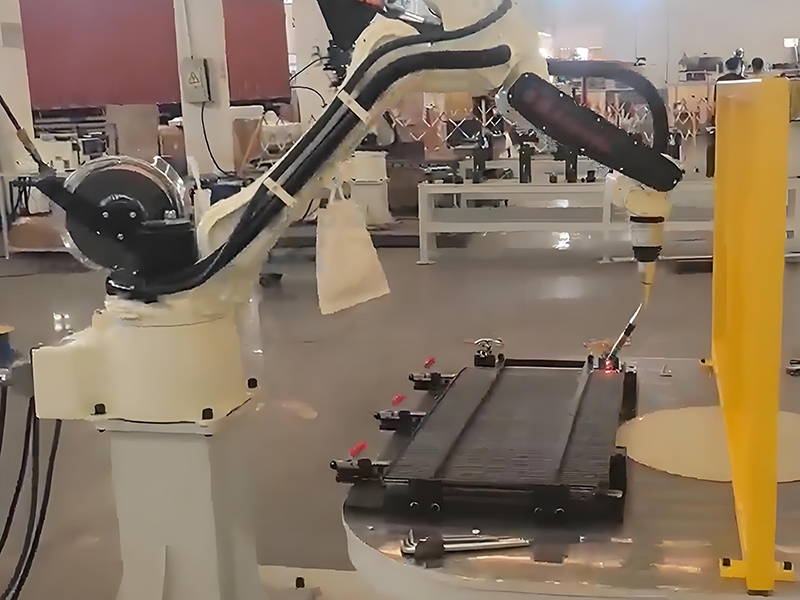
In the era of Industry 4.0, the global glass industry is undergoing a profound technological transformation—driven by the escalating demand for high-precision glass products, operational efficiency, and workplace safety. Robotics, as a core enabler of advanced manufacturing, has evolved from specialized automation tools to integrated, intelligent systems that redefine glass handling, processing, and installation workflows. From delicate glass tube manipulation in pharmaceutical labs to large-format architectural glass installation in skyscrapers, robotic technologies are addressing the unique challenges of glass (fragility, dimensional sensitivity, and varied form factors) while unlocking new possibilities for customization and scalability.
This article provides a technical exploration of the future trends shaping glass industry robotics, focusing on advancements in precision handling systems, automated processing workflows, intelligent installation solutions, and emerging technological enablers such as AI and collaborative robotics. Designed for manufacturing engineers, industry technologists, and procurement decision-makers, this analysis delves into the technical nuances of these trends, their quantifiable benefits, and their strategic impact on the glass industry’s evolution.
1. Glass Handling Robotics: Precision, Adaptability, and Damage Mitigation
Glass handling represents one of the most critical and challenging stages in glass manufacturing—where even micro-deformations or surface contact can lead to product defects or breakage. Future glass handling robots are evolving toward higher precision, adaptive manipulation, and integration with smart sensing technologies to address these challenges.
Key Advancements in Glass Handling Robotics
- Adaptive Gripping and Sensing Technologies: Next-generation glass handling robots integrate multi-modal sensing (3D machine vision, tactile sensors, and force-torque feedback) to adapt to varying glass geometries, thicknesses, and surface properties. For example, glass tube handling robots now utilize vacuum grippers with adaptive pressure control (0.1–0.5 bar) and tactile sensors to detect tube diameter deviations (±0.1 mm), ensuring damage-free manipulation of delicate borosilicate glass tubes used in medical devices and semiconductor manufacturing. These systems achieve positional accuracy of ±0.05 mm, reducing breakage rates from 3–5% (manual handling) to <0.5%.
- Modular and Collaborative Design: Modular robotic arms (e.g., 4–6 axis articulated robots with payload capacities of 0.5–50 kg) enable customization for diverse glass formats—from micro-scale glass wafers (50 mm diameter) to large architectural glass panels (3m x 6m). Collaborative robots (cobots) designed to ISO/TS 15066 safety standards are increasingly adopted for low-volume, high-variety production, working alongside human operators to handle tasks such as loading/unloading glass sheets into processing machines or inspecting surface quality. Equipped with force-limiting technology (≤150 N contact force), cobots eliminate the need for physical barriers while reducing repetitive strain injuries among workers.
- End-to-End Process Integration: Advanced glass handling systems are integrated with manufacturing execution systems (MES) and digital twins, enabling real-time tracking of glass components throughout the production cycle. For instance, robotic cells for automotive glass handling use QR code scanning and machine vision to verify part identity, align glass sheets with cutting tools, and log process data for traceability—ensuring compliance with automotive quality standards (e.g., IATF 16949).
Future Directions
- Autonomous Mobile Manipulation: Integration of autonomous mobile robots (AMRs) with robotic arms will enable end-to-end automated transport and handling of glass products across factories, eliminating the need for conveyor systems and reducing floor space requirements by 20–30%.
- Self-Healing Gripper Technologies: Development of soft, adaptive grippers made from shape-memory polymers will further minimize contact pressure on glass surfaces, enabling handling of ultra-thin glass (≤0.1 mm) used in flexible displays and wearable devices.
2. Automated Glass Processing: Intelligence, Flexibility, and Process Integration
Automated glass processing—encompassing cutting, edging, polishing, engraving, and coating—has become a cornerstone of high-volume glass manufacturing. Future trends in this space focus on integrating robotics with AI, IoT, and advanced process control to enhance precision, reduce cycle times, and enable complex customization.
Key Advancements in Automated Glass Processing
- CNC-Integrated Robotic Processing Cells: 6-axis articulated robots integrated with CNC controllers are now standard for complex glass processing tasks. For example, robotic engraving systems use high-power fiber lasers (1–5 kW) and machine vision to execute intricate patterns on architectural glass or automotive windshields with positional repeatability of ±0.02 mm. These cells can switch between cutting, engraving, and edge finishing tasks in <5 minutes, supporting low-volume, high-variety production.
- AI-Driven Process Optimization: Machine learning algorithms analyze real-time process data (e.g., laser power, cutting speed, glass temperature) to adapt parameters dynamically. For instance, AI-powered glass cutting robots adjust laser energy based on thickness variations (detected via inline vision systems), reducing kerf width to 0.1–0.3 mm and minimizing material waste by 15–20%. Predictive maintenance models, trained on sensor data (vibration, temperature, tool wear), forecast component failures (e.g., laser lens degradation) up to 2 weeks in advance, reducing unplanned downtime by 30–40%.
- Hybrid Processing Technologies: Robotic systems are increasingly integrating multiple processing capabilities (e.g., cutting + polishing + coating) into a single cell, eliminating the need for multiple machine setups. For example, hybrid robotic cells for solar panel glass processing combine laser cutting, edge grinding, and anti-reflective coating application, reducing cycle time per panel by 40–50% compared to sequential processing.
Future Directions
- Digital Twin-Enabled Process Simulation: Virtual replicas of robotic processing cells will enable offline programming, process validation, and what-if analysis—reducing setup time for new product variants by 60–70% and minimizing production disruptions.
- Additive Manufacturing Integration: Robotic systems will incorporate additive manufacturing (3D printing) technologies to create complex glass structures (e.g., microfluidic devices, architectural facades) with unprecedented design flexibility, expanding the application scope of glass in high-tech industries.
3. Glass Installation Robotics: Safety, Precision, and Autonomy
Glass installation—particularly for large-format architectural glass and automotive glass—has long been a labor-intensive, high-risk task. Future installation robots are evolving toward full autonomy, enhanced lifting capacity, and precision positioning to address safety concerns and improve efficiency.
Key Advancements in Glass Installation Robotics
- High-Capacity, Precision Lifting Systems: Glass install lifting robots (GILRs) now feature hydraulic or electric lifting mechanisms with payload capacities of 500–5,000 kg, enabling safe handling of large architectural glass panels (up to 12m x 3m). Equipped with 3D positioning systems (GPS, laser triangulation, and machine vision), these robots achieve installation accuracy of ±2 mm, ensuring seamless alignment with building facades and reducing rework rates from 10–15% (manual installation) to <2%.
- Autonomous Navigation and Obstacle Avoidance: For construction site applications, GILRs integrate LIDAR and SLAM (Simultaneous Localization and Mapping) technologies to navigate dynamic environments, avoiding obstacles such as scaffolding and construction equipment. Some advanced models offer semi-autonomous installation, where operators guide the robot via a remote control while the system maintains precise positioning—reducing the risk of falls and crush injuries by 80–90%.
- Automotive Glass Installation Robots: In automotive manufacturing, collaborative robots equipped with suction cups and force-torque sensors install windshields and side windows with automated adhesive application. These systems ensure uniform adhesive distribution (±0.1 mm thickness) and precise alignment with the vehicle frame, improving structural integrity and reducing water leakage rates by 90%.
Future Directions
- Fully Autonomous Installation: Integration of AI and computer vision will enable GILRs to self-detect installation points, adjust for structural deviations, and complete installations without human intervention—reducing installation time for large buildings by 50–60%.
- Lightweight, Portable Designs: Development of battery-powered, compact installation robots will enable access to confined spaces (e.g., interior glass partitions) and reduce reliance on heavy machinery, expanding their application in renovation and retrofitting projects.
4. Emerging Technological Enablers Shaping the Future
Beyond specific robotic systems, several cross-cutting technologies are poised to redefine the role of robotics in the glass industry, driving innovation and sustainability.
4.1 Artificial Intelligence and Machine Learning
- Adaptive Task Execution: AI-powered robots will learn from historical process data to optimize handling and processing parameters for new glass types (e.g., smart glass, self-cleaning glass) without manual programming. For example, a robot handling electrochromic glass will automatically adjust gripping pressure based on the glass’s electrical properties to avoid damaging sensitive coatings.
- Quality Inspection Automation: Computer vision systems trained on thousands of glass surface images will detect micro-defects (e.g., scratches, bubbles, haze) with accuracy exceeding human inspectors (99.5% vs. 85–90%), enabling 100% inline quality control and reducing scrap rates.
4.2 Internet of Things (IoT) and Connectivity
- Fleet Management and Remote Monitoring: IoT-enabled robotic systems will transmit real-time data (performance metrics, energy consumption, maintenance needs) to cloud-based platforms, allowing manufacturers to monitor robot fleets across multiple facilities. Remote diagnostics will enable technicians to resolve issues without on-site visits, reducing downtime by 25–30%.
- Process Synchronization: Robotics will be integrated with other smart factory systems (e.g., inventory management, supply chain tracking) to synchronize glass processing with demand. For instance, an IoT-connected robotic cell will automatically adjust production schedules based on real-time order data, minimizing inventory holding costs.
4.3 Sustainability and Energy Efficiency
- Energy-Efficient Robotics: Future glass industry robots will feature low-power motors, regenerative braking, and idle-time energy management systems, reducing energy consumption by 20–30% compared to current models. This aligns with the glass industry’s goal of reducing carbon emissions (glass manufacturing accounts for ~3% of global CO₂ emissions).
- Waste Reduction: AI-optimized cutting and handling processes will minimize material waste, while robotic recycling systems will automate the sorting and processing of glass scrap—supporting circular economy initiatives and reducing landfill waste by 15–20%.
4.4 Human-Robot Collaboration (HRC) 2.0
- Augmented Reality (AR)-Assisted Programming: Operators will use AR interfaces to overlay robot paths and process parameters onto physical glass components, simplifying programming and reducing training time for new tasks by 50–60%.
- Skill Augmentation: Cobots will be equipped with advanced sensing and feedback systems to assist human operators in complex tasks (e.g., precision alignment of custom glass components), enhancing worker productivity while maintaining safety.
5. Industry-Specific Applications and Impact
The evolution of glass industry robotics will have a transformative impact across key sectors:
- Architectural Glass: Autonomous installation robots and AI-driven processing will enable the construction of complex glass facades (e.g., curved, double-skin) with reduced labor costs and improved safety, while sustainable robotic systems will support green building initiatives.
- Automotive Glass: Robotic installation and processing will enable the production of lightweight, aerodynamic glass components for electric vehicles (EVs), contributing to extended battery range. AI-powered quality control will ensure compliance with strict safety standards for autonomous vehicle sensors integrated into windshields.
- Electronics and High-Tech Glass: Precision handling robots will support the manufacturing of ultra-thin, flexible glass for displays, wearables, and semiconductor wafers, while hybrid processing cells will enable the integration of glass with other materials (e.g., metal, polymers) for advanced electronic devices.
- Medical and Pharmaceutical Glass: Cleanroom-compatible robots (ISO Class 5) will handle sterile glass vials, syringes, and microfluidic devices with zero contamination risk, ensuring compliance with FDA and EU GMP standards. Adaptive gripping technologies will enable the handling of micro-scale glass components used in diagnostic equipment.
Conclusion
The future of glass industry robotics is defined by integration—of intelligence (AI), connectivity (IoT), and adaptability (collaborative design)—to address the unique challenges of glass manufacturing and installation. From precision handling of delicate glass tubes to fully autonomous installation of large architectural panels, robotic technologies are driving efficiency, safety, and innovation across the value chain.
As the glass industry evolves to meet growing demands for customization, sustainability, and high performance, robotics will remain a critical enabler—empowering manufacturers to reduce costs, improve quality, and unlock new application possibilities. For businesses looking to stay competitive, embracing these trends is not just a technological upgrade but a strategic investment in long-term resilience and growth.
In summary, the glass industry is on the cusp of a robotic revolution that will redefine how glass is made, handled, and installed. By leveraging AI, IoT, and advanced materials, future glass robots will be smarter, safer, and more sustainable—paving the way for a new era of innovation in one of the world’s oldest and most essential materials.