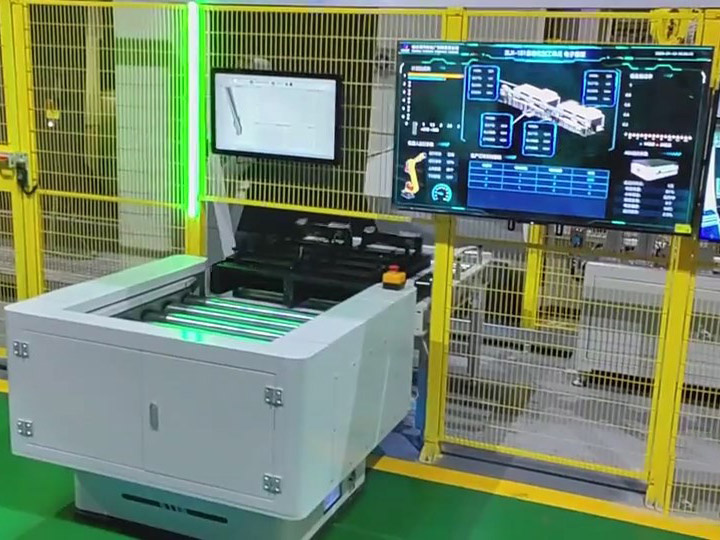
In the era of smart manufacturing, high-efficiency automated laser welding workstations have emerged as pivotal equipment transforming industrial production paradigms. Integrating advanced technologies such as high-power laser sources, precision robotics, intelligent sensing, and digital control, these workstations have become the preferred solution for high-quality joining in key sectors including automotive, aerospace, new energy, and medical devices. This article delves into the core technological advantages, system composition, and forward-looking development trends of these cutting-edge workstations.
Core Technical Advantages
Unmatched Precision and Consistency
Automated laser welding workstations leverage the high energy density of laser beams (10⁶–10⁸ W/cm²) and precision motion control to achieve micron-level welding accuracy. The laser beam’s focused spot diameter can be minimized to 0.1 mm, resulting in narrow weld seams and a heat-affected zone (HAZ) less than 0.1 mm—80% smaller than that of traditional arc welding . Equipped with 6–8 axis CNC robotic arms or gantry platforms with repeat positioning accuracy of ±0.02 mm, the workstations ensure consistent weld penetration and seam formation across mass-produced components . For instance, Tesla’s Berlin Gigafactory achieves a yield rate of 99.97% in battery tab welding through adaptive beam shaping technology, a significant leap from the 95% rate just three years prior .
Exceptional Production Efficiency
The combination of high-speed laser welding and automated workflow drastically reduces cycle times. Welding speeds can reach up to 10 m/min for thin-walled components, 3–5 times faster than conventional MIG welding, while thick-plate welding (up to 60 mm) is enabled by 20 kW high-power fiber lasers with single-pass penetration . Multi-station parallel operation and seamless integration with production lines further enhance throughput—battery manufacturing lines equipped with such workstations can achieve 180 welds per minute, boosting overall equipment efficiency (OEE) to 81% . Compared to traditional methods, these workstations reduce material waste by minimizing spatter and thermal deformation, lowering unit production costs by 18–50% in high-volume applications .
Versatility and Process Flexibility
Modern workstations exhibit exceptional adaptability to diverse materials and component geometries. They can handle similar and dissimilar metal joining, including stainless steel, aluminum, copper, titanium alloys, and even metal-ceramic composites . Advanced laser sources address material-specific challenges: green (532 nm) or blue (450 nm) lasers improve energy absorption by 10x for highly reflective materials like copper, while dual-wavelength systems (infrared + blue) enable efficient welding of dissimilar materials . Modular design and drag-and-teach programming reduce changeover time to as little as 5 minutes, supporting small-batch, high-variety production demands .
Intelligent Process Control and Quality Assurance
Integrated sensing and AI-driven control systems enable closed-loop process optimization. Multi-sensor fusion (vision, infrared, force sensing) captures real-time data at sampling rates up to 1 kHz, detecting deviations in seam position, gap width, and molten pool dynamics . Deep learning algorithms adjust welding parameters (power, speed, beam shape) within milliseconds to compensate for thermal deformation and material inconsistencies, reducing defect rates to below 0.1% . In-line non-destructive testing (NDT) modules, including ultrasonic and machine vision inspection, ensure zero-defect manufacturing by identifying internal and surface defects during production .
Core System Components
High-Performance Laser Source Module
Fiber lasers (1–20 kW) and disk lasers dominate as primary light sources, offering excellent beam quality (BPP < 6 mm·mrad) and energy efficiency . Ultra-fast lasers (picosecond/femtosecond) with pulse widths down to 10 ns minimize thermal damage for precision applications, achieving surface roughness as low as Ra 0.2 μm . Emerging quantum dot lasers provide continuous wavelength adjustment (400–2000 nm), adapting to the absorption spectra of various materials .
Precision Motion and Execution Unit
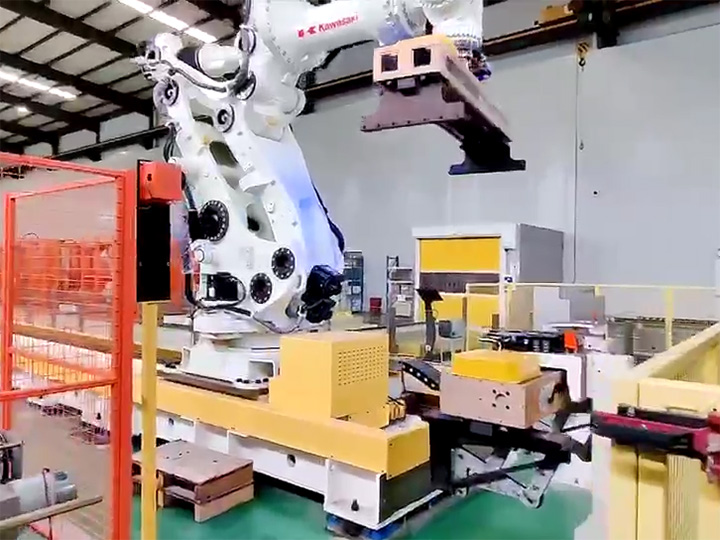
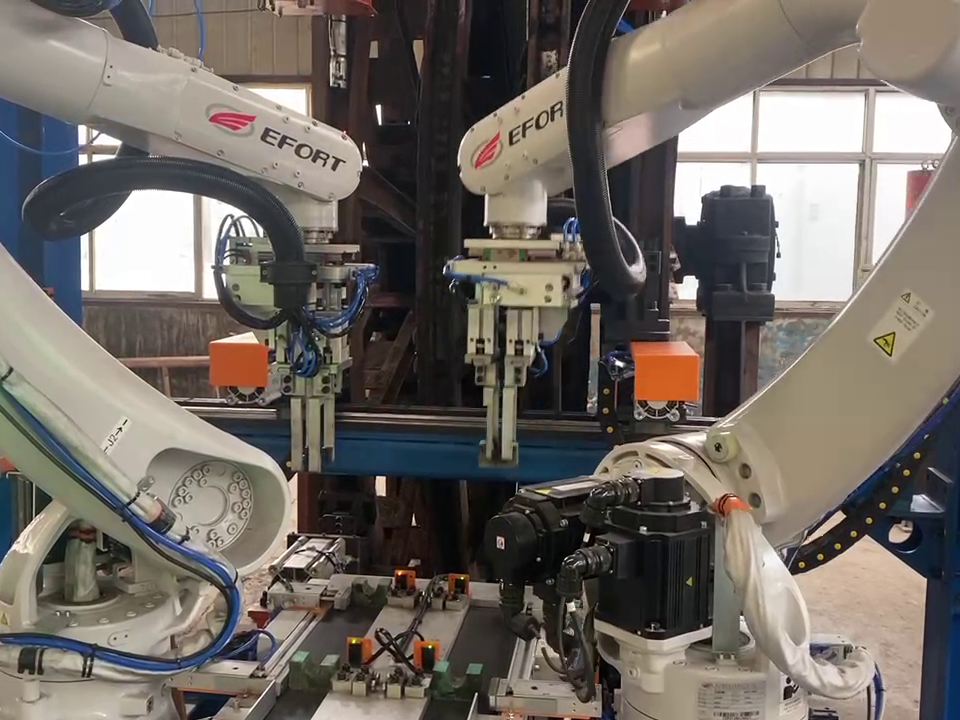
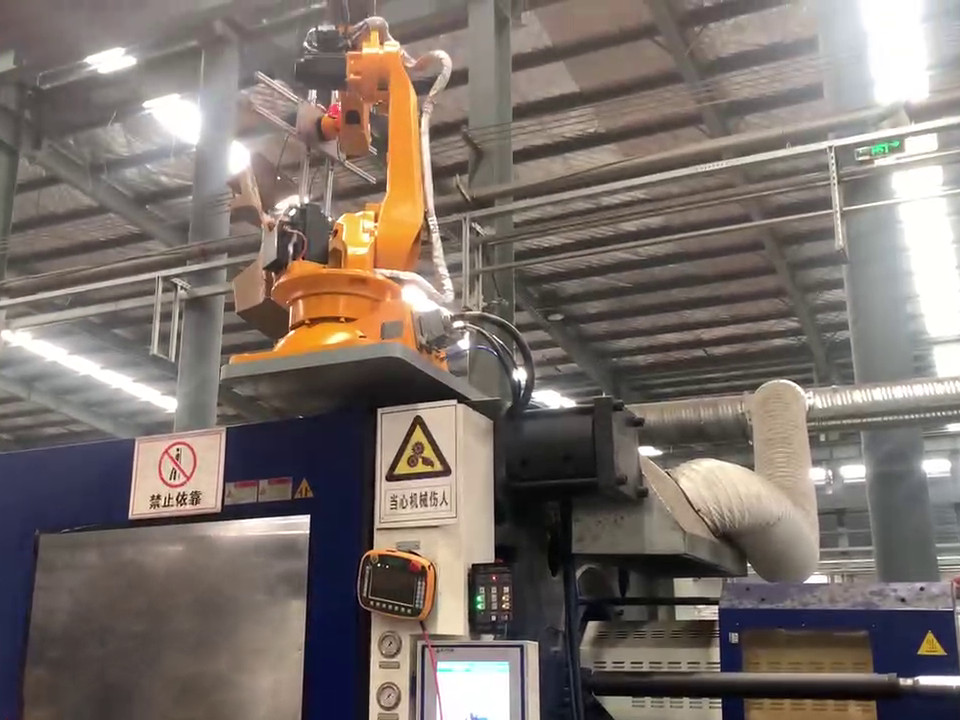
Six-axis robotic arms (e.g., UR20, ABB IRB 6600) and gantry systems enable complex 3D trajectory following, accessing narrow cavities and curved surfaces . High-dynamic-response motion controllers ensure synchronization between laser activation and robot movement, critical for high-speed welding applications . Collaborative robots with payload capacities up to 20 kg facilitate safe human-machine interaction in flexible production environments .
Sensing and Control System
3D vision sensors (structured light/laser triangulation) with ±2 μm positioning accuracy compensate for workpiece clamping errors and deformation . Process monitoring modules analyze plasma spectra and molten pool dynamics, triggering adaptive adjustments to laser power and welding speed . Advanced control algorithms—including PID, fuzzy logic, and neural networks—optimize process stability, with response times as fast as 10 ms .
Integrated Auxiliary Modules
Coaxial shielding gas delivery systems (argon/helium mixtures) prevent oxidation and porosity, with flow rates precisely regulated based on material and weld geometry . Modular cooling units maintain laser source stability during extended operation, while dust and fume extraction systems ensure compliance with environmental standards .
Key Application Fields
Automotive and New Energy Vehicles
These workstations are integral to manufacturing battery trays, motor stators, and body-in-white components. In动力电池 production, they weld copper-aluminum tabs at speeds up to 5 m/s, with joint shear strength exceeding 85 MPa and porosity below 0.3% . BMW’s Munich plant uses 6 kW fiber lasers for chassis welding, achieving 0.03 mm precision and reducing production cycles by 42% .
Aerospace and Defense
Critical for joining high-temperature alloys in aircraft engine blades, rocket fuel tanks, and satellite structures. The ultra-narrow HAZ preserves material toughness, while digital process control ensures compliance with strict aerospace standards (e.g., AWS D17.1) . Commercial aircraft manufacturers like COMAC use these workstations for fuselage stringer welding, improving efficiency by 3x compared to traditional methods .
Medical Devices and Consumer Electronics
Precision welding of stainless steel surgical instruments, titanium implants, and microelectronic components benefits from ultra-fast lasers and micron-level control. Medical stents welded with femtosecond lasers exhibit no thermal damage, meeting biocompatibility requirements . In consumer electronics, they enable hermetic sealing of smartphone camera modules and battery connectors .
Heavy Industry and Infrastructure
Laser-arc hybrid welding systems (20 kW laser + dual-wire arc) handle thick-plate welding (up to 30 mm) in shipbuilding, wind turbine towers, and railway rolling stock, reducing costs by 50% compared to pure laser welding .
Future Development Trends
AI-Driven Adaptive Intelligence
Deep learning algorithms will enable real-time, millisecond-level optimization of welding parameters based on material properties and process dynamics . "Digital welder" systems integrating vision, force, and thermal sensing will autonomously generate optimal process plans, reducing setup time by 60% . Predictive maintenance powered by cloud-based data analytics will extend equipment uptime to over 2000 hours .
Digital Twin Integration
Virtual simulation of welding processes will predict thermal deformation and optimize trajectories before physical production. This technology has already reduced scrap rates by 90% in high-precision component manufacturing (e.g., ASML lithography parts) . Real-time synchronization between virtual and physical systems will enable closed-loop quality control and process refinement .
Hybrid Process Convergence
Laser-arc, laser-ultrasonic, and laser-cladding hybrid technologies will expand application boundaries. Laser-arc hybrid welding achieves 2 m/min speed for 30 mm thick plates, while laser-ultrasonic systems enable glass-metal joining with 200 MPa strength . Coaxial powder feeding will integrate welding and surface modification, reducing repair costs for critical components by 80% .
Green and Sustainable Manufacturing
Next-generation fiber lasers will reduce energy consumption by 30% compared to current models, with waste heat recovery systems boosting energy efficiency to 85% . Adoption of lead-free solders and low-emission processes will minimize environmental impact, while modular designs will extend equipment lifecycles .
Flexible and Collaborative Production
Modular workcells with quick-change tooling will support high-mix, low-volume production, with changeover times under 5 minutes . Human-robot collaboration will expand, with lightweight collaborative arms enabling safe, flexible operation in small-batch manufacturing environments .
Conclusion
High-efficiency automated laser welding workstations represent the convergence of laser technology, robotics, and digital intelligence, driving unprecedented improvements in manufacturing precision, efficiency, and reliability. As global industries pursue lightweighting, miniaturization, and sustainability, these workstations will play an increasingly critical role in advancing high-end manufacturing. The global market for laser welding equipment is projected to grow from $7.59 billion in 2024 to $15.76 billion by 2032, with a CAGR of 9.55% , reflecting strong demand across industries. Future innovations in AI, digital twin, and hybrid processes will further expand their capabilities, solidifying their position as indispensable tools in the factory of the future.