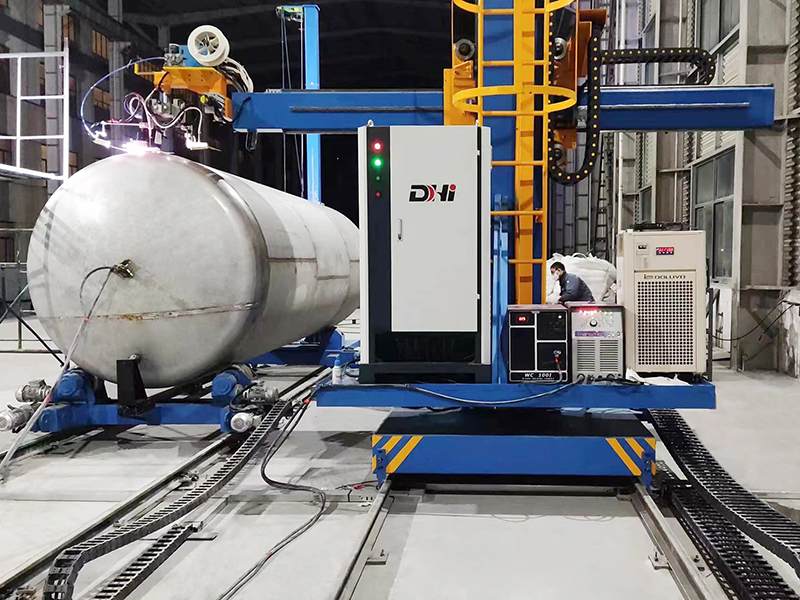
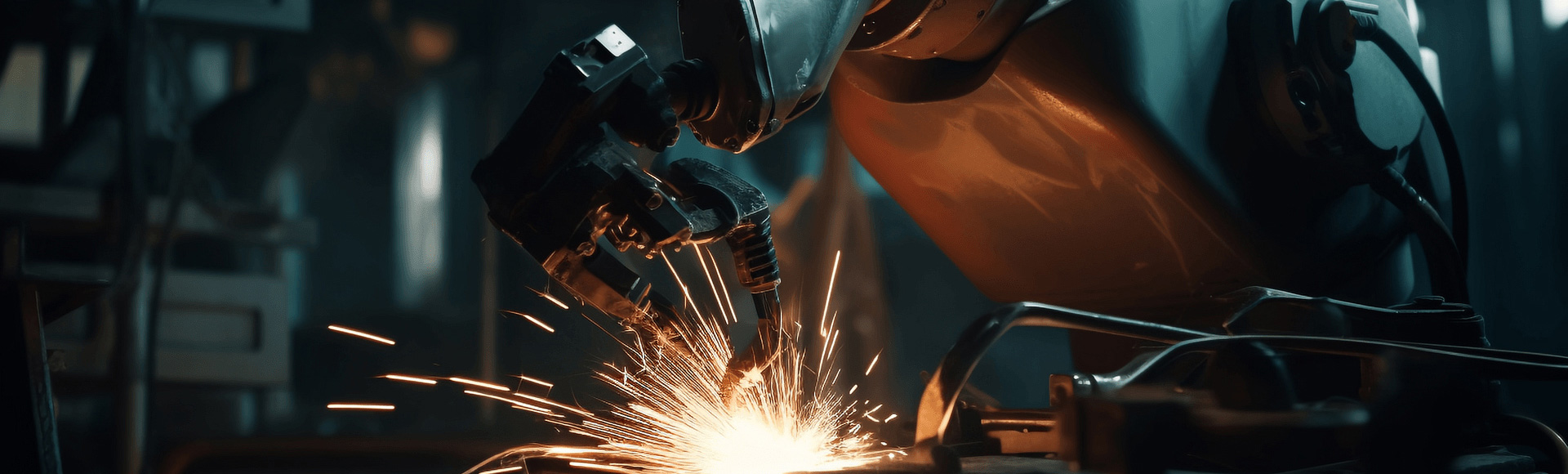
In the era of Industry 4.0, modern manufacturing is defined by the pursuit of operational excellence—where high throughput, consistent quality, and cost optimization converge to drive competitive advantage. Among the critical processes shaping industrial productivity, production line welding stands as a cornerstone, particularly in sectors requiring robust material joining such as automotive, aerospace, heavy equipment, and construction. As a value-adding operation that directly impacts product structural integrity and performance, welding lines are increasingly targeted for optimization through advanced automation, intelligent process control, and precision engineering. By integrating state-of-the-art welding technologies and data-driven workflows, manufacturers can transcend the limitations of manual and semi-automated systems, unlocking significant gains in efficiency, quality, and scalability.
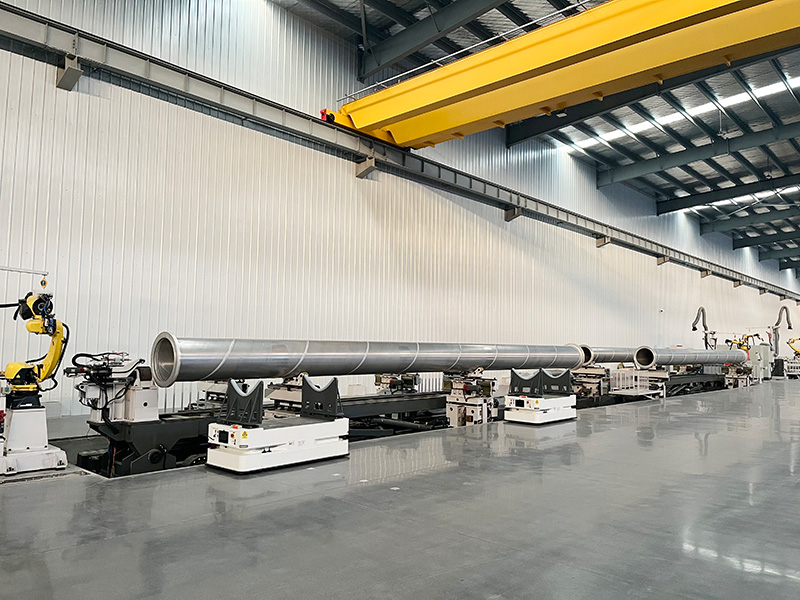
This article provides a technical exploration of
production line welding optimization, covering core welding technologies, automation solutions, intelligent process enhancements, equipment selection frameworks, implementation strategies, and industry best practices. Designed for manufacturing engineers, production managers, and technology procurement professionals, this analysis aims to demystify the technical nuances of efficient welding line design while highlighting actionable strategies to drive operational improvement.
The Strategic Role of Welding in Modern Manufacturing
Welding is a materials joining process that fuses two or more workpieces (predominantly metals, including carbon steel, stainless steel, aluminum alloys, and titanium) through the application of heat, pressure, or a combination of both. Unlike mechanical fasteners (e.g., bolts, rivets), welded joints offer superior structural integrity, load-bearing capacity, and resistance to environmental stressors—making them indispensable in safety-critical applications such as automotive chassis, aircraft fuselages, and industrial machinery frames.
In production line contexts, welding efficiency directly correlates with overall manufacturing throughput: bottlenecks in welding processes (e.g., inconsistent weld quality, slow cycle times, high rework rates) can disrupt downstream operations, increase lead times, and erode profit margins. A well-optimized welding line delivers three core value propositions:
1. Process Consistency: Minimizing weld defect rates (e.g., porosity, cracks, incomplete fusion) to meet stringent quality standards (e.g., ISO 3834, AWS D1.1);
2. Cycle Time Reduction: Maximizing welding speed while maintaining joint integrity, enabling higher production volumes;
3. Cost Optimization: Reducing consumable waste, labor costs, and rework expenses through automation and precision control.
Automation: The Foundation of Efficient Welding Lines
Automated welding systems have emerged as the gold standard for high-volume, precision-critical production lines, replacing or augmenting manual welding to address the limitations of human labor (e.g., fatigue, variability, slower cycle times). These systems integrate robotic manipulators, specialized welding power sources, and computer numerical control (CNC) to execute pre-programmed welding trajectories with unparalleled repeatability.
Key Technical Advantages of Automated Welding
- Enhanced Speed and Throughput: Robotic welding systems operate at linear speeds of 30–150 mm/min (depending on welding process and material thickness), with continuous 24/7 operation reducing downtime by up to 40% compared to manual welding. For high-volume applications (e.g., automotive frame production), six-axis articulated robots can complete 1,000+ welds per hour, significantly outpacing human welders (typically 100–200 welds per hour).
- Superior Precision and Repeatability: Automated systems achieve positional accuracy of ±0.1 mm and path repeatability of ±0.05 mm, ensuring consistent weld bead geometry (width, height, penetration) across thousands of workpieces. This eliminates human error-related defects (e.g., uneven bead formation, undercutting) and reduces rework rates from 10–15% (manual) to <2% (automated).
- Cost Efficiency Over Lifecycle: While initial capital expenditure for robotic welding cells ranges from $100,000–$500,000, long-term savings are substantial: labor cost reductions of 50–70%, consumable waste reduction of 20–30% (via precise wire feed and voltage control), and lower energy consumption (modern welding power sources offer efficiency ratings of 85–90%, vs. 60–70% for legacy systems).
- Ergonomic and Safety Improvements: Automated systems eliminate worker exposure to hazardous welding fumes, UV radiation, and high-temperature environments, reducing occupational health risks (e.g., respiratory illnesses, burns) and compliance costs. Safety features such as interlocked enclosures, arc shields, and collision avoidance sensors further mitigate workplace hazards.
Common Automated Welding Configurations
- Robotic Arm Welding Cells: Six-axis articulated robots (e.g., Fanuc ARC Mate, KUKA KR C5) equipped with welding torches, integrated with positioners or turntables to optimize workpiece orientation. Ideal for complex 3D welds (e.g., automotive body-in-white components, aerospace structural parts).
- Gantry Welding Systems: Cartesian robots operating along X/Y/Z axes, designed for high-speed, high-volume 2D welding (e.g., sheet metal fabrication, pipe welding). Offer large workspace coverage and compatibility with conveyorized production lines.
- Collaborative Welding Robots (Cobots): Compact, lightweight robots (payload 3–16 kg) designed for human-robot collaboration (HRC) under ISO/TS 15066. Equipped with force-torque sensors and speed limiting, they are ideal for small-batch production, custom fabrication, or tasks requiring human oversight (e.g., complex joint setups).
Intelligent Welding Cells: Beyond Basic Automation
Intelligent welding workcells represent the next evolution of production line welding, integrating advanced technologies such as artificial intelligence (AI), machine learning (ML), IoT sensors, and real-time data analytics to create self-optimizing, adaptive systems. These cells transcend the "program-and-execute" limitations of traditional automation, enabling dynamic adjustments to process parameters in response to environmental variations, material inconsistencies, or production line changes.
Core Capabilities of Intelligent Welding Systems
- Adaptive Process Control: AI-driven algorithms analyze real-time sensor data (e.g., arc voltage, current, torch temperature, weld pool geometry via machine vision) to adjust welding parameters (wire feed speed, travel speed, voltage) on the fly. For example, if a sensor detects a gap in the workpiece joint, the system automatically increases heat input to ensure full penetration, eliminating the need for manual intervention.
- Predictive Maintenance (PdM): Integrated condition monitoring sensors (vibration, temperature, acoustic emission) track the health of critical components (e.g., welding torch, wire feeder, robot joints). ML models trained on historical data predict component failures (e.g., torch wear, motor degradation) up to 30 days in advance, enabling scheduled maintenance and reducing unplanned downtime by 25–40%.
- Digital Twin Integration: Virtual replicas of welding cells simulate production processes, allowing for offline programming, process optimization, and what-if analysis. Digital twins enable manufacturers to test new welding programs, adjust parameters, and identify bottlenecks without disrupting physical production, reducing setup time for new products by 50–60%.
- Quality Assurance (QA) Automation: Machine vision systems (high-resolution cameras, laser profilometers) inspect welds in real time, measuring key metrics such as熔深 (weld penetration), bead width, and defect presence (e.g., porosity, cracks). Defective welds are flagged automatically, and data is logged to a central quality management system (QMS) for traceability—ensuring compliance with industry standards (e.g., IATF 16949 for automotive).
Critical Considerations for Welding Line Equipment Selection
Selecting the optimal welding equipment and configuration is a technical decision that depends on multiple factors, including material characteristics, production volume, joint complexity, and quality requirements. Below is a structured framework for equipment selection:
1. Welding Process Compatibility
Different welding processes are optimized for specific materials, thicknesses, and joint designs:
- MIG (Metal Inert Gas) Welding: Ideal for high-speed welding of carbon steel, stainless steel, and aluminum (thickness 1–20 mm). Offers high deposition rates (5–20 kg/h) and is well-suited for automated production lines.
- TIG (Tungsten Inert Gas) Welding: Delivers superior precision for thin materials (0.5–6 mm) and exotic alloys (titanium, Inconel). Used in aerospace and medical device manufacturing, but slower deposition rates (1–5 kg/h) make it less suitable for high-volume production unless automated.
- Spot Welding: Resistance welding process for joining sheet metals (0.5–3 mm) in automotive and appliance manufacturing. Automated spot welding robots (equipped with servo-controlled electrodes) can complete 500+ spots per hour with consistent pressure and current control.
- Laser Welding: Uses high-energy laser beams for precision welding of thin materials (0.1–5 mm) and complex geometries. Offers narrow heat-affected zones (HAZ < 0.1 mm), minimal distortion, and high welding speeds (up to 5 m/min)—ideal for electronics and aerospace components.
2. Material and Thickness Requirements
- Ferrous Metals (Carbon Steel, Stainless Steel): MIG or submerged arc welding (SAW) for thick sections (≥10 mm); laser or TIG for thin sections (≤3 mm).
- Non-Ferrous Metals (Aluminum, Copper): MIG welding with pulsed current (to reduce spatter) or TIG welding (for precision); laser welding for high-speed, thin-gauge applications.
- Exotic Alloys (Titanium, Nickel Alloys): TIG or laser welding with inert gas shielding (to prevent oxidation) and precise heat input control.
3. Production Volume and Cycle Time Targets
- High-Volume Production (10,000+ units/year): Six-axis robotic welding cells with integrated material handling (conveyors, positioners) and multi-torch configurations to maximize throughput.
- Medium-Volume Production (1,000–10,000 units/year): Collaborative robots or modular robotic cells that balance speed and flexibility, enabling quick changeovers between product variants.
- Low-Volume/Custom Production: Manual or semi-automated systems with user-friendly programming interfaces (e.g., teach pendants, offline programming software) to minimize setup time.
4. Quality and Tolerance Requirements
- Safety-Critical Applications (Aerospace, Automotive Chassis): Intelligent welding cells with real-time quality monitoring (machine vision, ultrasonic testing) and 100% weld inspection.
- General Industrial Applications: Automated systems with statistical process control (SPC) to track weld quality metrics and identify trends before defects occur.
Implementing an Efficient Welding Production Line: Key Steps
Transitioning from manual/semi-automated to advanced welding lines requires a systematic, phased approach to ensure successful integration and ROI:
1. Process Assessment and Gap Analysis
- Conduct a comprehensive audit of existing welding processes, measuring key performance indicators (KPIs) such as OEE (Overall Equipment Efficiency), defect rate, cycle time, and consumable waste.
- Identify bottlenecks (e.g., manual workpiece positioning, inconsistent weld parameters) and prioritize automation opportunities based on impact (e.g., high-volume, high-defect rate processes).
- Align welding line optimization with broader manufacturing goals (e.g., reducing lead time by 20%, achieving zero defects for a new product launch).
2. Technology Selection and System Design
- Collaborate with welding equipment suppliers to design a custom solution that meets material, volume, and quality requirements. Key considerations include robot reach, payload capacity, welding power source compatibility, and integration with existing MES/WMS systems.
- Validate equipment performance through prototype testing, simulating production conditions to ensure weld quality, cycle time, and reliability meet targets.
3. Workforce Training and Change Management
- Train operators on robot programming (e.g., Fanuc Karel, KUKA SmartHMI), equipment maintenance, and troubleshooting. Upskill welders to become "robot technicians" who oversee automated systems and handle complex setups.
- Implement a change management program to address employee concerns, emphasizing the shift from manual labor to high-value tasks (e.g., quality control, process optimization).
4. Continuous Monitoring and Optimization
- Deploy IoT sensors to collect real-time data on welding parameters, equipment performance, and quality metrics. Use analytics platforms (e.g., Siemens MindSphere, Rockwell FactoryTalk) to identify inefficiencies (e.g., suboptimal travel speed, excessive consumable use).
- Regularly review KPIs and adjust processes/parameters to drive continuous improvement. For example, using data from predictive maintenance to reduce downtime, or optimizing welding programs to minimize energy consumption.
Industry Case Studies: Welding Line Optimization in Action
1. Automotive Manufacturing: Robotic Welding for Chassis Production
A global automotive OEM implemented a fleet of 80 six-axis robotic welding cells for chassis assembly, replacing manual welding processes. Key improvements included:
- Cycle time reduction from 120 seconds to 45 seconds per chassis;
- Defect rate reduction from 8% to 0.5% (via real-time arc monitoring and adaptive control);
- Labor cost savings of $2.4 million annually;
- Ability to handle 10+ vehicle variants on the same production line (via quick-change tooling and offline programming).
2. Aerospace: Intelligent Laser Welding for Turbine Blades
An aerospace component manufacturer adopted intelligent laser welding cells for titanium turbine blade production. The system integrated machine vision, AI-driven process control, and digital twin technology:
- Weld precision improved to ±0.02 mm, meeting strict aerospace tolerances;
- Setup time for new blade designs reduced by 70% (via digital twin simulation);
- Rework rate eliminated entirely (from 5% previously) due to real-time defect detection;
- Energy consumption reduced by 30% compared to traditional TIG welding.
3. Heavy Equipment: Collaborative Welding for Custom Fabrication
A heavy equipment manufacturer deployed 12 collaborative welding robots for custom loader bucket fabrication, addressing challenges of low-volume, high-variety production:
- Setup time reduced from 4 hours to 30 minutes per product variant;
- Worker productivity increased by 60% (cobots handle repetitive welds, workers focus on complex joints);
- Workplace injuries related to welding reduced by 100%;
- Consumable waste reduced by 25% via precise wire feed control.
Future Trends Shaping Production Line Welding
As technology continues to advance, production line welding is poised for further innovation, driven by trends in digitalization, sustainability, and advanced materials:
1. AI-Powered Process Optimization
Next-generation AI algorithms will enable self-learning welding systems that adapt to material variations, environmental changes, and production demands without human input. For example, AI models trained on thousands of welds will predict optimal parameters for new materials or joint designs, reducing setup time and improving quality.
2. Digital Twin and Virtual Commissioning
Digital twins will become standard for welding line design and operation, enabling manufacturers to simulate, test, and optimize processes in a virtual environment before physical implementation. Virtual commissioning will reduce startup time by 40–50% and minimize production disruptions during system upgrades.
3. Sustainable Welding Technologies
Energy-efficient welding power sources (e.g., inverter-based systems), low-spatter welding processes, and recyclable consumables will gain traction as manufacturers prioritize sustainability. Additionally, AI-driven parameter optimization will reduce energy consumption and material waste, aligning welding lines with global carbon reduction goals.
4. Advanced Sensor Integration
Multi-sensor fusion (combining machine vision, thermal imaging, ultrasonic testing, and acoustic sensors) will enable comprehensive real-time weld quality monitoring, detecting defects such as cracks, porosity, and incomplete fusion with near-perfect accuracy. This will eliminate the need for post-weld inspection in many applications, reducing cycle time and costs.
5. Human-Robot Collaboration 2.0
Future cobots will feature enhanced sensing capabilities (e.g., tactile sensors, vision-guided grasping) and intuitive programming interfaces (e.g., voice commands, augmented reality), enabling seamless collaboration with human workers on complex welding tasks. This will bridge the gap between high-volume automation and low-volume customization.