In the era of Industry 4.0, global manufacturing and supply chain ecosystems are undergoing a transformative shift toward automation, digitalization, and intelligent optimization. As the backbone of logistics automation, material handling robots—formally classified as Automated Material Handling Systems (AMHS)—have emerged as critical enablers of operational efficiency, process reliability, and supply chain resilience. These advanced robotic systems redefine the movement, storage, control, and protection of raw materials, work-in-progress (WIP), and finished goods across industrial facilities, warehouses, and distribution centers. By automating labor-intensive, repetitive, and high-risk material handling tasks, they not only address the limitations of manual operations but also unlock new levels of productivity, precision, and scalability for modern enterprises.
This article provides a technical exploration of material handling robots, covering their core definitions, classification, key technologies, performance benefits, industry applications, and emerging trends. Designed for manufacturing engineers, supply chain managers, and technology procurement professionals, this analysis aims to demystify the technical nuances of these systems while highlighting their strategic value in industrial automation.
Core Definition and Operational Scope
Material handling robots are programmable, automated systems engineered to execute material-centric tasks with minimal human intervention. Unlike general-purpose industrial robots, they are specialized for optimizing material flow—encompassing functions such as:
- Precision picking, placing, and sorting of components or finished products;
- Palletizing (stacking) and depalletizing (unstacking) of bulk goods;
- Intralogistics transportation between production lines, storage zones, and shipping docks;
- Automated storage and retrieval (AS/RS) within warehouses or distribution centers;
- Specialized handling of fragile, hazardous, or high-value materials (e.g., liquids, electronics, pharmaceuticals).
These robots integrate mechanical engineering, motion control, sensor technology, and software algorithms to adapt to dynamic industrial environments, ensuring consistent performance even in high-volume or complex operational scenarios. Their core value lies in streamlining material flow, reducing bottlenecks, and aligning material handling processes with lean manufacturing principles.
Classification of Material Handling Robots
Material handling robots are categorized based on their kinematic design, mobility, and application specificity. Below is a technical breakdown of the most industrially relevant types, including their operational principles, performance parameters, and use cases:
1. Articulated Material Handling Robots
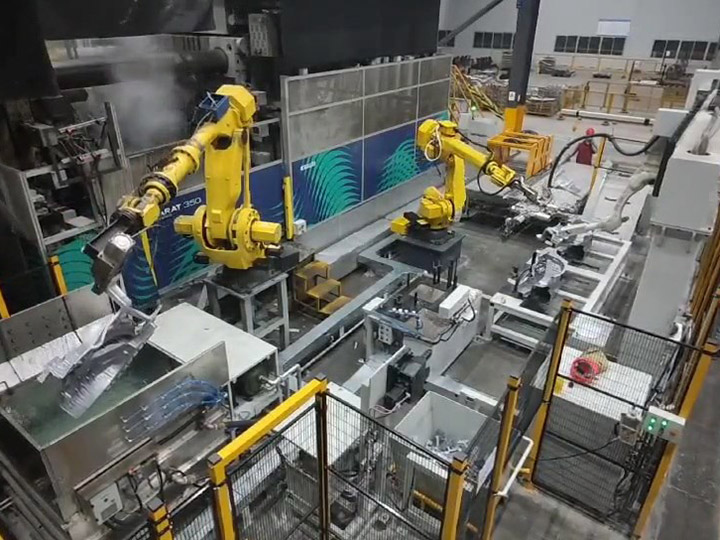
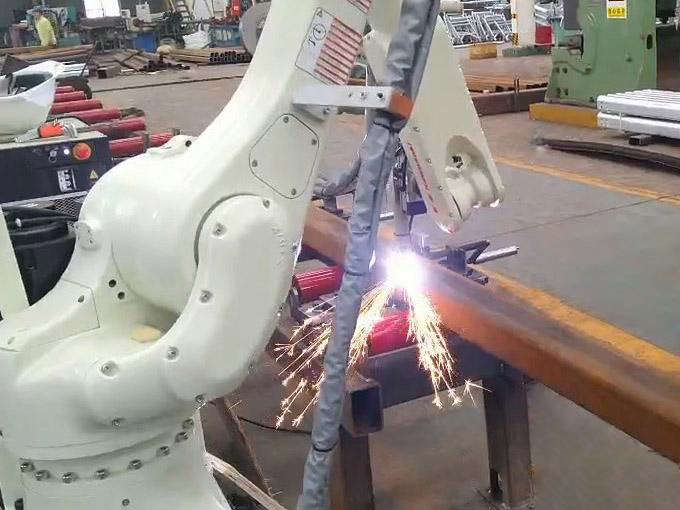
Articulated robots are equipped with 4–6 rotational joints (axes) that mimic human arm movement, offering exceptional flexibility for complex material handling tasks. Typically mounted on fixed bases, they are optimized for high-precision picking, placing, and assembly operations in manufacturing environments.
Key Technical Specifications:
- Payload capacity: 0.5kg–500kg (industrial-grade models);
- Repeatability: ±0.01mm–±0.1mm;
- Reach: 500mm–3,000mm;
- Integration with end effectors (grippers) for multi-material handling.
Typical Applications:
- Automotive manufacturing: Handling engine components, body panels, and fasteners during assembly;
- Electronics production: Precision placement of circuit boards, semiconductors, and delicate components;
- Consumer goods: Packaging and sorting of small-to-medium-sized products (e.g., smartphones, cosmetics).
2. Automated Guided Vehicles (AGVs)
AGVs are mobile robots that navigate predefined paths using guidance systems such as magnetic tapes, QR codes, or laser triangulation. They are designed for intralogistics transportation, moving heavy loads or bulk materials across warehouses, factories, or distribution centers.
Key Technical Specifications:
- Load capacity: 100kg–50,000kg (heavy-duty models);
- Navigation accuracy: ±10mm–±50mm;
- Speed: 0.5m/s–2m/s;
- Safety features: Collision avoidance sensors, emergency stop systems, and compliance with ISO 15085.
Typical Applications:
- Warehouse operations: Transporting pallets, bins, and containers between storage racks and packing stations;
- Manufacturing: Delivering raw materials to production lines and removing finished goods to storage zones;
- Logistics: Loading and unloading goods from trucks and conveyor systems.
3. Autonomous Mobile Robots (AMRs)
AMRs represent the next generation of mobile material handling robots, leveraging advanced navigation technologies (LIDAR, computer vision, SLAM—Simultaneous Localization and Mapping) to navigate dynamically without predefined paths. They can adapt to changes in the environment (e.g., obstacles, rearranged storage racks) and optimize routes in real time.
Key Technical Specifications:
- Load capacity: 5kg–1,500kg;
- Navigation accuracy: ±5mm–±20mm;
- Autonomy level: Full autonomy (path planning, obstacle avoidance, task prioritization);
- Integration with warehouse management systems (WMS) and manufacturing execution systems (MES).
Typical Applications:
- E-commerce fulfillment centers: Picking and transporting orders to packing stations (e.g., Amazon Robotics Kiva systems);
- Healthcare: Delivering medical supplies, medications, and equipment within hospitals;
- Retail: Restocking shelves and transporting inventory between backrooms and sales floors.
4. Automated Case-Handling Mobile Robots (ACMRs)
ACMRs are specialized mobile robots designed for handling case-sized loads (e.g., cardboard boxes, plastic crates) in high-throughput warehouse environments. They combine the mobility of AMRs with specialized lifting mechanisms to stack, transport, and sort cases efficiently.
Key Technical Specifications:
- Load capacity per case: 10kg–50kg;
- Stack height: Up to 2.5m;
- Throughput: 100–300 cases per hour;
- Compatibility with standard warehouse racking systems (e.g., selective racks, flow racks).
Typical Applications:
- Distribution centers: Sorting and transporting cases to shipping lanes;
- Food and beverage: Handling packaged products between production lines and storage;
- Retail logistics: Preparing store-ready shipments from regional distribution centers.
5. Gantry (Cartesian) Robots
Gantry robots operate along three linear axes (X, Y, Z) within a fixed workspace, offering high precision and load capacity for overhead material handling. They are commonly used in applications requiring repetitive, high-speed picking and placing over large areas.
Key Technical Specifications:
- Payload capacity: 1kg–10,000kg;
- Repeatability: ±0.02mm–±0.1mm;
- Workspace size: Up to 50m (X-axis), 10m (Y-axis), 3m (Z-axis);
- Speed: Up to 5m/s (linear movement).
Typical Applications:
- Warehouse AS/RS systems: Retrieving and storing pallets or bins from high racks;
- Automotive: Handling large components (e.g., windshields, seats) during assembly;
- Packaging: High-speed picking and placing of products into boxes or containers.
6. Liquid Handling Robots
Liquid handling robots are specialized systems designed for precise dispensing, mixing, and transferring of liquids in laboratory, pharmaceutical, and biotech environments. They ensure ultra-high precision and reproducibility, critical for scientific research and drug development.
Key Technical Specifications:
- Dispensing volume range: 0.1μL–1L;
- Precision: ±0.1%–±1% of dispensed volume;
- Throughput: Up to 10,000 samples per hour (high-throughput models);
- Compatibility with various liquid types (aqueous solutions, solvents, viscous fluids).
Typical Applications:
- Pharmaceutical research: Drug discovery and high-throughput screening;
- Clinical diagnostics: Sample preparation and analysis;
- Biotechnology: Cell culture media preparation and nucleic acid purification.
Key Technologies and Components
Material handling robots rely on a suite of advanced technologies and modular components to deliver precision, reliability, and adaptability. Below is a detailed breakdown of their core technical enablers:
1. Perception and Navigation Systems
Perception systems enable robots to interact with their environment, while navigation systems ensure accurate movement:
- LIDAR (Light Detection and Ranging): Creates 3D maps of the environment for obstacle avoidance and localization, with a range of up to 100m and angular resolution of 0.1°;
- Machine Vision: Uses cameras and image processing algorithms to identify objects, verify barcodes/QR codes, and ensure precise picking/placing (resolution up to 12MP, frame rate up to 60fps);
- SLAM Technology: Enables AMRs to build maps in unknown environments and localize themselves in real time, with positioning accuracy of ±5mm;
- Sensor Fusion: Integrates data from LIDAR, cameras, ultrasonic sensors, and inertial measurement units (IMUs) to enhance environmental awareness and reliability.
2. End Effectors (Grippers)
End effectors are the "hands" of material handling robots, customized to handle specific materials and shapes:
- Mechanical Grippers: Equipped with jaws (parallel, angular, or custom) for gripping solid objects, with clamping forces ranging from 1N to 10,000N;
- Vacuum Grippers: Use suction cups to handle flat or irregularly shaped objects (e.g., boxes, sheets of metal), with lifting capacities up to 500kg;
- Magnetic Grippers: Utilize electromagnets or permanent magnets to handle ferrous materials (e.g., steel plates, automotive parts), ideal for high-speed applications;
- Custom End Effectors: Designed for specialized tasks (e.g., liquid dispensing nozzles, soft grippers for fragile items like glassware or produce).
3. Control and Software Systems
Control systems serve as the "brain" of material handling robots, enabling task execution, optimization, and integration:
- Programmable Logic Controllers (PLCs): Execute low-level control tasks (e.g., motion control, sensor data processing) with response times of <1ms;
- Robot Operating Systems (ROS): Open-source or proprietary software frameworks for programming, simulation, and integration of robotic components;
- AI and Machine Learning Algorithms: Optimize path planning, predict maintenance needs, and adapt to dynamic environments (e.g., real-time route adjustment for AMRs);
- Integration Software: Interfaces with WMS, MES, and enterprise resource planning (ERP) systems to synchronize material handling with production and logistics workflows.
4. Motion Control Systems
Motion control systems ensure precise and smooth movement of robotic joints or mobile platforms:
- Servo Motors: Provide high torque and positional accuracy for articulated robots and gantry systems, with speed control resolution of 0.1rpm;
- Stepper Motors: Used in low-cost, low-speed applications (e.g., small AGVs), offering precise positioning without feedback;
- Drive Systems: Include gearboxes, belts, and linear actuators to transmit motion, with efficiency ratings of up to 98%.
Core Benefits of Material Handling Robots
The adoption of material handling robots delivers quantifiable technical, operational, and economic benefits to industrial enterprises:
1. Enhanced Productivity and Throughput
- 24/7 uninterrupted operation reduces downtime by up to 30% compared to manual labor;
- High-speed task execution (e.g., AMRs with speeds up to 2m/s, gantry robots with picking rates up to 1,000 cycles per hour) increases throughput by 50–100% in high-volume environments;
- Automated task prioritization and path optimization minimize idle time, ensuring optimal resource utilization.
2. Superior Precision and Consistency
- Repeatability of ±0.01mm–±0.1mm eliminates human error, reducing material waste by 15–25% in precision-critical applications;
- Consistent handling of materials ensures uniform product quality, particularly in industries such as electronics and pharmaceuticals where tolerances are tight (±0.1mm or less);
- Machine vision integration enables real-time quality checks during handling, further reducing defect rates.
3. Cost Reduction and Operational Efficiency
- Labor cost savings of 30–70% by automating repetitive tasks, with a typical return on investment (ROI) of 1–3 years for industrial-grade systems;
- Reduced material waste and damage (e.g., <1% damage rate for fragile items) lowers raw material and replacement costs;
- Energy-efficient designs (e.g., AMRs with low-power motors, regenerative braking) reduce operational energy consumption by 20–30% compared to traditional material handling equipment.
4. Improved Workplace Safety
- Elimination of human exposure to high-risk tasks (e.g., lifting heavy loads >25kg, handling hazardous materials, working in extreme temperatures) reduces work-related injuries by up to 80%;
- Compliance with safety standards (ISO 10218 for industrial robots, ANSI/UL 1740 for AGVs) ensures adherence to global occupational health and safety regulations;
- Collision avoidance sensors and emergency stop systems prevent accidents in dynamic industrial environments.
5. Scalability and Flexibility
- Modular design allows for easy expansion of robot fleets to accommodate growing production volumes;
- Quick programming and reconfiguration (e.g., teach pendant interfaces, offline programming software) enable adaptation to new products or processes in as little as 1–2 hours;
- Compatibility with multiple end effectors and material types supports diverse operational needs without significant hardware modifications.
Industry-Specific Applications
Material handling robots are tailored to address the unique requirements of diverse industries, with specialized designs and configurations:
1. Manufacturing
- Automotive: Articulated robots handle engine components, body panels, and fasteners during assembly; AGVs transport WIP between production lines;
- Electronics: Precision gantry robots place semiconductors and circuit boards; liquid handling robots dispense solder paste and adhesives;
- Aerospace: Heavy-duty articulated robots (payload >500kg) handle large structural components (e.g., wings, fuselages); AMRs transport tools and materials in cleanrooms.
2. Warehousing and Logistics
- E-commerce: AMRs and ACMRs optimize order fulfillment by picking and transporting items to packing stations, reducing order processing time by 40–60%;
- Retail Logistics: AGVs and AS/RS systems automate storage and retrieval of inventory, improving space utilization by 30–50%;
- Third-Party Logistics (3PL): Modular AMR fleets adapt to fluctuating order volumes, ensuring scalability during peak seasons.
3. Food and Beverage
- Processing: Hygienic-design robots (stainless steel construction, IP67 rating) handle raw materials and finished products, complying with FDA and EU food safety standards;
- Packaging: High-speed gantry robots palletize packaged goods, with throughput up to 300 cases per hour;
- Cold Chain: AMRs designed for low-temperature environments (-20°C to 0°C) transport frozen or refrigerated goods without performance degradation.
4. Healthcare and Pharmaceuticals
- Pharmaceuticals: Liquid handling robots dispense reagents and samples for drug discovery, ensuring precision and reproducibility; AGVs transport medications and medical supplies within cleanrooms;
- Hospitals: AMRs deliver linens, meals, and equipment, reducing staff workload and improving patient care efficiency;
- Biotechnology: High-throughput liquid handling robots support genomic sequencing and cell culture applications, with dispensing precision of ±0.1μL.
Challenges and Future Trends
While material handling robots offer significant benefits, their adoption is not without challenges. However, ongoing technological advancements are addressing these limitations and unlocking new possibilities:
Key Challenges
- High Initial Investment: Industrial-grade systems can cost $50,000–$500,000, posing a barrier for small and medium-sized enterprises (SMEs);
- System Integration Complexity: Integrating robots with legacy WMS/MES systems requires specialized expertise, potentially leading to delays or compatibility issues;
- Skills Gap: A shortage of trained engineers and technicians capable of programming, maintaining, and troubleshooting robotic systems hinders widespread adoption;
- Environmental Adaptability: Some robots struggle with harsh environments (e.g., dust, moisture, extreme temperatures) or unstructured spaces (e.g., cluttered warehouses).
Emerging Trends
- Collaborative Robots (Cobots): Designed for human-robot collaboration (HRC) under ISO/TS 15066, cobots feature force-torque sensors and safety-rated monitoring, enabling them to work alongside humans in tasks such as picking and packing;
- AI-Powered Intelligence: Advanced machine learning algorithms optimize path planning, predict equipment failures (predictive maintenance), and enable adaptive handling of variable materials (e.g., deformable packages);
- Digital Twin Technology: Virtual replicas of material handling systems simulate operations, allowing for offline programming, process optimization, and risk mitigation before deployment;
- IoT and Connectivity: Industrial IoT (IIoT) integration enables real-time monitoring of robot performance, fleet management, and data-driven decision-making; 5G connectivity supports low-latency communication between robots and central systems;
- Sustainability: Energy-efficient designs, recyclable materials, and battery technology advancements (e.g., lithium-ion batteries with 8-hour runtime) reduce the environmental footprint of robotic systems.