In the era of Industry 4.0, the manufacturing sector has witnessed a paradigm shift toward automation, precision engineering, and intelligent production—driven by the escalating demand for high-quality components, reduced cycle times, and cost optimization. Robotic cutting systems, as a core subset of advanced manufacturing technology, have redefined material processing across industries ranging from automotive and aerospace to metal fabrication and medical device production. These systems integrate robotic kinematics, advanced cutting mechanisms, and computer numerical control (CNC) to deliver unparalleled efficiency, accuracy, and versatility, addressing the limitations of traditional manual or semi-automated cutting processes.
This article provides a technical overview of the leading robotic cutting technologies, exploring their operational principles, core performance parameters, industry-specific applications, and competitive advantages. By delving into the technical nuances of each system, this analysis aims to equip manufacturing professionals, process engineers, and procurement decision-makers with the insights required to select optimal robotic cutting solutions aligned with their operational requirements.
Core Categories of Robotic Cutting Systems
Robotic cutting systems are classified based on their cutting mechanism, kinematic configuration, and application specificity. Below is a detailed examination of the most industrially relevant technologies, emphasizing technical specifications, operational principles, and performance metrics:
1. Robotic Plasma Cutting Systems
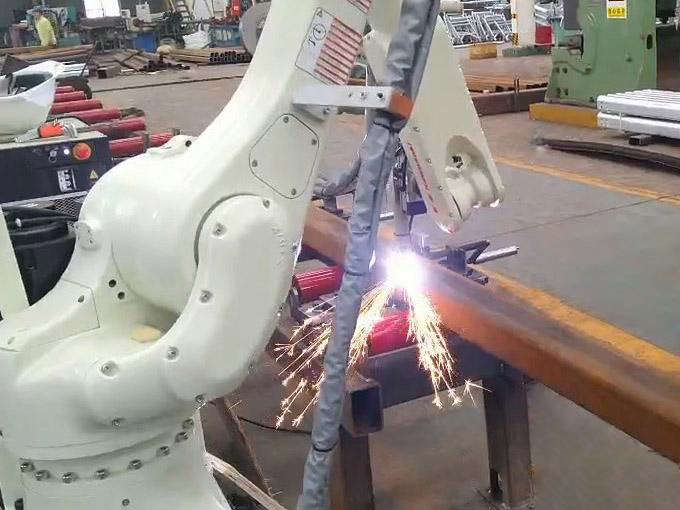
Robotic plasma cutting leverages a high-temperature (10,000–30,000°C) ionized gas jet (plasma) generated by an electric arc between a tungsten electrode and the workpiece. This plasma jet melts and expels molten material, enabling precise cutting of electrically conductive materials—primarily carbon steel, stainless steel, aluminum, and copper alloys. Modern systems integrate 6-axis articulated robots with CNC controllers, automatic torch height control (ATHC), and plasma gas optimization algorithms to enhance cut quality and process stability.
Key Technical Advantages:
- Material Compatibility: Optimized for thick materials (up to 150mm for carbon steel, 50mm for stainless steel) and high-speed processing (up to 500 mm/min for 20mm carbon steel).
- Cost-Efficiency: Lower operational costs compared to laser cutting for thick materials, with minimal tool wear and reduced consumable expenses.
- Rapid Deployment: Suitable for high-volume production environments, with cycle time reductions of 30–40% compared to manual cutting processes.
- Cut Quality: Advanced plasma systems (e.g., high-definition plasma) achieve kerf widths of 2–5mm and surface finish Ra values of 12.5–25μm, minimizing post-processing requirements.
Typical Applications:
- Shipbuilding and offshore engineering (hull plate cutting, structural component fabrication).
- Heavy machinery manufacturing (excavator buckets, crane components).
- Automotive chassis and frame production (high-volume, thick-gauge steel cutting).
2. CNC Robotic Beam Cutting Systems
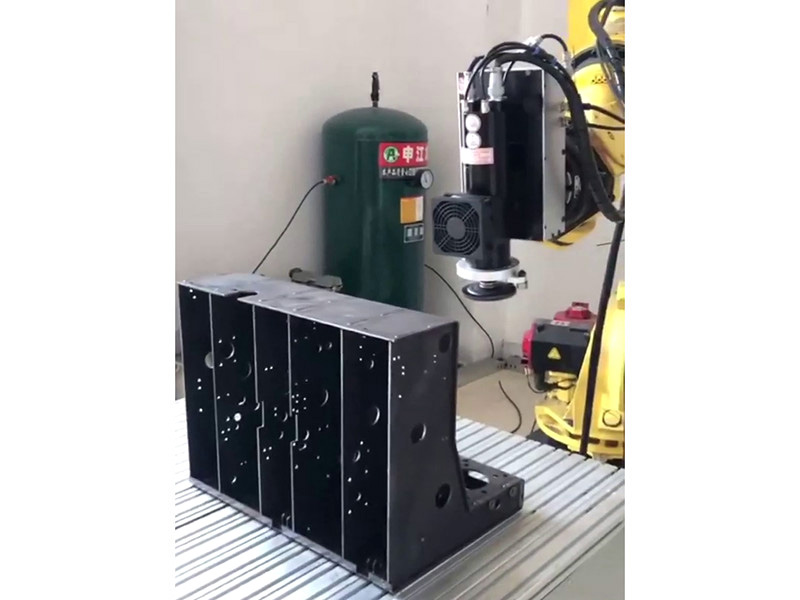
CNC robotic beam cutting systems combine articulated robotic arms (3–6 axes) with specialized cutting tools (plasma, oxy-fuel, or laser) to process structural beams (H-beams, I-beams, box sections) and profiles. These systems integrate CAD/CAM software for automated path planning, material handling modules (conveyors, positioners), and real-time process monitoring to ensure precision and repeatability.
Key Technical Advantages:
- Structural Processing Capability: Designed for complex beam geometries (drilling, notching, coping) and multi-axis cutting of structural steel (up to 1000mm flange width).
- High Repeatability: Positional accuracy of ±0.2mm/m and path repeatability of ±0.1mm, ensuring consistent cuts across mass-produced components.
- Automation Integration: Seamless integration with manufacturing execution systems (MES) and material resource planning (MRP) software, enabling lights-out production.
- Versatility: Compatible with multiple cutting technologies (plasma for speed, laser for precision, oxy-fuel for thick materials), offering flexibility for diverse production needs.
Typical Applications:
- Construction and infrastructure (bridge beams, building frameworks).
- Steel fabrication (precast concrete reinforcement, modular construction components).
- Heavy-duty equipment manufacturing (agricultural machinery frames, mining equipment structures).
3. Robotic Laser Cutting Systems
Robotic laser cutting systems utilize a focused laser beam (fiber, CO₂, or disk laser) to ablate, melt, or vaporize material, delivering ultra-precise cuts with minimal thermal distortion. These systems are typically configured with 6-axis robotic arms for 3D cutting or gantry robots for 2D sheet processing, with power ratings ranging from 500W to 15kW.
Key Technical Advantages:
- Precision and Tolerance: Achieves dimensional tolerances of ±0.01–±0.1mm and kerf widths as narrow as 0.1mm (for fiber lasers), making it ideal for intricate geometries.
- Material Versatility: Processes metals (steel, aluminum, titanium), plastics (ABS, polycarbonate), ceramics, and composites (carbon fiber-reinforced polymers, CFRP) with minimal heat-affected zones (HAZ < 0.1mm for thin materials).
- Energy Efficiency: Fiber laser systems offer electrical-to-optical conversion efficiencies of 25–30% (vs. 10–15% for CO₂ lasers), reducing operational costs.
- Waste Reduction: Nest optimization software and precise cutting minimize material waste by up to 30% compared to traditional methods.
Technology Variants:
- Fiber Laser Cutting: Optimized for metallic materials (0.1–30mm thickness), offering high cutting speeds (up to 10m/min for 1mm steel) and low maintenance requirements.
- CO₂ Laser Cutting: Suitable for non-metallic materials (polymers, wood, textiles) and thick metals (up to 25mm steel), with a wavelength of 10.6μm that minimizes material reflection.
- 3D Laser Cutting: 6-axis robotic systems for complex 3D components (e.g., aerospace turbine blades, automotive body-in-white structures), enabling cutting of curved surfaces and undercuts.
Typical Applications:
- Aerospace (aircraft fuselage panels, turbine blades, composite components).
- Electronics (PCB cutting, semiconductor wafer dicing, micro-component fabrication).
- Medical devices (surgical instruments, implantable components, 3D-printed part finishing).
- Jewelry manufacturing (precision metal stamping, intricate design cutting).
4. Collaborative Robotic (Cobot) Cutting Systems
Collaborative robotic cutting systems—built to ISO 10218 safety standards—are designed for human-robot collaboration (HRC) in low-to-medium volume production environments. These systems integrate lightweight robotic arms (payload 3–16kg), force-torque sensors, and vision systems to ensure safe interaction with human operators, while delivering precise cutting capabilities.
Key Technical Advantages:
- Safety Compliance: Equipped with safety-rated monitored stop, speed and separation monitoring, and power and force limiting (PFL) to prevent collisions, eliminating the need for physical barriers.
- Ease of Programming: Intuitive teach pendant interfaces and hand-guiding capabilities enable rapid programming (typically <1 hour per task), reducing setup time for small-batch production.
- Flexibility: Modular design allows for quick tool changes (plasma, laser, or abrasive cutting tools), supporting multi-tasking (cutting, deburring, assembly) in dynamic manufacturing environments.
- Space Efficiency: Compact footprint (50–80cm diameter) makes them suitable for small workshops or existing production lines with limited space.
Typical Applications:
- Custom fabrication (small-batch metal parts, prototype development).
- Automotive aftermarket (custom body kits, exhaust system modifications).
- Electronics assembly (precision cutting of flexible circuits, plastic enclosures).
- Medical device prototyping (custom surgical tools, implant prototypes).
Industry-Specific Applications and Case Studies
Robotic cutting systems are tailored to address the unique requirements of diverse industries, with performance parameters optimized for specific materials, geometries, and production volumes:
Automotive Industry
- Application: Body-in-white (BIW) component cutting, chassis fabrication, and battery pack housing processing.
- Technology Preference: 6-axis robotic laser cutting systems (fiber laser, 3–10kW) for precision cutting of high-strength steel and aluminum; plasma robotic systems for thick-gauge frame components.
- Case Example: Toyota’s Kentucky manufacturing plant utilizes 120+ robotic laser cutting systems to produce BIW components with a cycle time of 60 seconds per vehicle, achieving a defect rate of <0.01%.
Aerospace Industry
- Application: Turbine blade cutting, aircraft fuselage panels, and composite material processing (CFRP, GFRP).
- Technology Preference: 6-axis robotic 3D laser cutting cells (fiber or disk laser, 10–15kW) for complex 3D geometries; waterjet-assisted laser cutting for composite materials to minimize delamination.
- Case Example: Boeing’s Everett factory employs robotic laser cutting systems to process titanium alloy fuselage panels, achieving tolerances of ±0.05mm and reducing production time by 50% compared to manual methods.
Metal Fabrication
- Application: Sheet metal cutting, structural steel fabrication, and custom component manufacturing.
- Technology Preference: Hybrid robotic systems (plasma + laser) for versatility; CNC robotic beam cutting systems for structural components; cobots for small-batch custom work.
- Case Example: Lincoln Electric’s automated fabrication lines integrate robotic plasma cutting systems with nest optimization software, achieving material utilization rates of 95% and reducing lead times by 35%.
Medical Device Manufacturing
- Application: Surgical instrument cutting, implantable component fabrication (titanium, stainless steel), and 3D-printed part finishing.
- Technology Preference: High-precision fiber laser cutting systems (500W–2kW) with vision-guided alignment, achieving tolerances of ±0.01mm and surface finish Ra < 0.8μm.
- Case Example: Medtronic uses robotic laser cutting systems to produce cardiac stents, with a production rate of 1000+ units per hour and compliance with ISO 13485 quality standards.
Emerging Trends and Future Developments
The evolution of robotic cutting technology is driven by advancements in artificial intelligence (AI), the Internet of Things (IoT), and materials science, with key innovations focused on enhancing adaptability, efficiency, and sustainability:
AI-Powered Process Optimization
- Path Planning: Machine learning algorithms analyze CAD data and material properties to generate optimal cutting paths, reducing cycle times by 15–20% and minimizing HAZ.
- Adaptive Control: Real-time AI-driven adjustment of cutting parameters (speed, power, gas pressure) in response to material variations (e.g., thickness inconsistencies, surface defects) ensures consistent cut quality.
- Predictive Maintenance: AI models trained on sensor data (vibration, temperature, tool wear) predict equipment failures, reducing unplanned downtime by 30–40%.
IoT and Connectivity
- Industry 4.0 Integration: Robotic cutting systems equipped with IoT sensors communicate with MES, ERP, and cloud platforms, enabling real-time production monitoring, remote diagnostics, and process optimization.
- Digital Twin Technology: Virtual replicas of cutting systems simulate production processes, allowing for offline programming, process validation, and performance optimization before deployment.
Advanced Material Processing
- Composite and Additive Manufacturing Integration: Robotic laser cutting systems are increasingly used for post-processing 3D-printed components (support structure removal, surface finishing) and cutting advanced composites (CFRP, thermoplastics) with minimal damage.
- Green Technology: Energy-efficient fiber lasers, recycled cutting gases, and waste reduction algorithms align robotic cutting systems with sustainability initiatives, reducing carbon footprints by 20–25%.
Human-Robot Collaboration (HRC) Advancements
- Enhanced Sensing: Next-generation cobots integrate multi-modal sensors (vision, tactile, acoustic) to improve human-robot interaction, enabling more complex collaborative tasks (e.g., semi-automated custom cutting).
- Augmented Reality (AR) Programming: AR interfaces overlay cutting paths and parameters onto the workpiece, simplifying programming and reducing human error.