In recent years, the global manufacturing and fabrication sectors have witnessed an exponential surge in demand for precision engineering, high-speed production, and operational efficiency—drivers that have catalyzed the widespread adoption of computerized cutting technologies. These advanced systems have redefined the paradigms of material processing, offering unparalleled dimensional accuracy, process repeatability, and versatility across diverse industrial applications. However, amid a diverse array of solutions—ranging from CNC robotic beam cutting systems to 6-axis robotic 3D laser cutting cells—identifying the optimal computerized cutting machine requires a systematic evaluation of technical capabilities, industry-specific requirements, and operational constraints.
This comprehensive analysis delves into the technical nuances of computerized
cutting machines, exploring their core functionalities, classification, and performance parameters. Whether you are a manufacturing professional seeking to upgrade legacy equipment, a plant manager evaluating automation solutions, or an industry newcomer navigating the technological landscape, this guide provides data-driven insights to facilitate informed decision-making.
Computerized cutting machines, formally referred to as Computer Numerical Control (CNC) cutting systems, are automated material processing tools that execute pre-programmed cutting trajectories via computer-aided design (CAD) and computer-aided manufacturing (CAM) software integration. By translating digital blueprints into precise mechanical movements, these systems eliminate the variability associated with manual cutting, ensuring consistent performance even for complex geometries. As integral components of modern manufacturing ecosystems, CNC cutting machines are deployed across automotive, aerospace, construction, metal fabrication, electronics, and jewelry industries, among others, owing to their ability to process a wide spectrum of materials—including ferrous and non-ferrous metals, polymers, composites, and ceramics—with exceptional precision.
Key Classifications of Computerized Cutting Machines
Computerized cutting machines are categorized based on their cutting mechanism, degrees of freedom, and application specificity. Below is a detailed breakdown of the most technologically advanced and industrially relevant types:
1. CNC Robotic Beam Cutting Systems
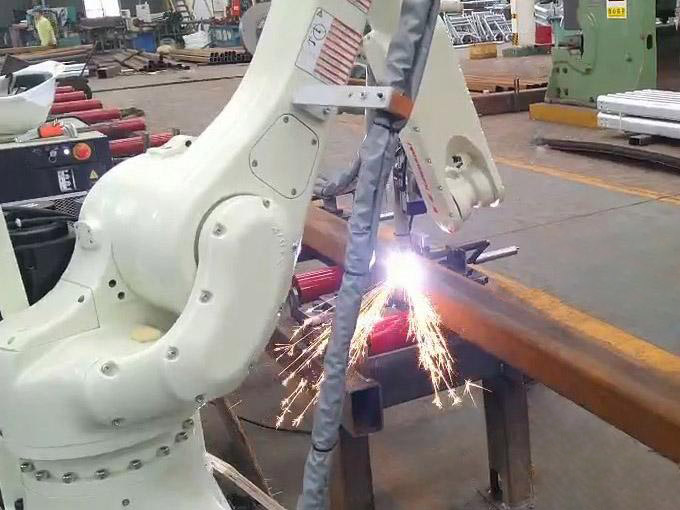
Engineered for heavy-duty structural processing, CNC robotic beam cutting systems integrate articulated robotic arms with high-power cutting tools (typically plasma or oxy-fuel) to process large-format beams, columns, and structural components. These systems excel in cutting H-beams, I-beams, and box sections made of carbon steel, stainless steel, and aluminum, with cutting thicknesses ranging from 10mm to 300mm and positional accuracy of ±0.2mm/m. Their robust design and automated material handling capabilities make them indispensable in construction, bridge building, and heavy machinery manufacturing, where high-volume processing of structural steel is a core operational requirement.
2. Plasma Robotic Cutting Systems
Plasma robotic cutting leverages a high-velocity jet of ionized gas (plasma) generated by an electric arc, which heats and melts conductive materials while expelling molten debris via gas pressure. This technology is distinguished by its high cutting speed (up to 500mm/min for 20mm steel) and ability to process thick materials (up to 150mm for carbon steel), making it ideal for industries such as shipbuilding, offshore engineering, and automotive chassis manufacturing. Modern plasma robotic systems incorporate advanced features such as automatic torch height control (ATHC) and plasma gas optimization, which enhance cut quality by minimizing kerf width (typically 2-5mm) and reducing thermal distortion.
3. 3D Robot Fiber Laser Cutting Machines
Fiber laser cutting systems represent the pinnacle of precision cutting technology, utilizing a high-energy fiber laser beam (wavelength: 1064nm) to ablate or melt materials with micron-level accuracy. These machines offer positional repeatability of ±0.03mm and are capable of processing thin to medium-thickness materials (0.1mm to 30mm for metals) with intricate geometries—making them the preferred choice for aerospace component manufacturing (e.g., turbine blades, aircraft fuselage panels), electronics (PCB cutting, micro-component fabrication), and medical device production. The fiber laser's superior energy density (up to 10^6 W/cm²) ensures minimal heat-affected zones (HAZ), preserving material integrity and reducing post-processing requirements.
4. Laser Cutting Systems (CO₂ and Fiber)
Laser cutting systems are classified into CO₂ laser and fiber laser variants, each optimized for specific applications. CO₂ lasers (wavelength: 10.6μm) excel in cutting non-metallic materials such as acrylic, wood, and textiles, with cutting speeds up to 10m/min for thin sheets. Fiber laser systems, by contrast, are tailored for metallic materials, offering higher energy efficiency (up to 30% compared to CO₂ lasers) and lower operational costs. Both technologies are widely adopted in industries requiring high-quality edge finishes, such as jewelry manufacturing (precision metal stamping) and electronics (semiconductor wafer dicing).
5. Robotic Cutting Systems (Hybrid Configurations)
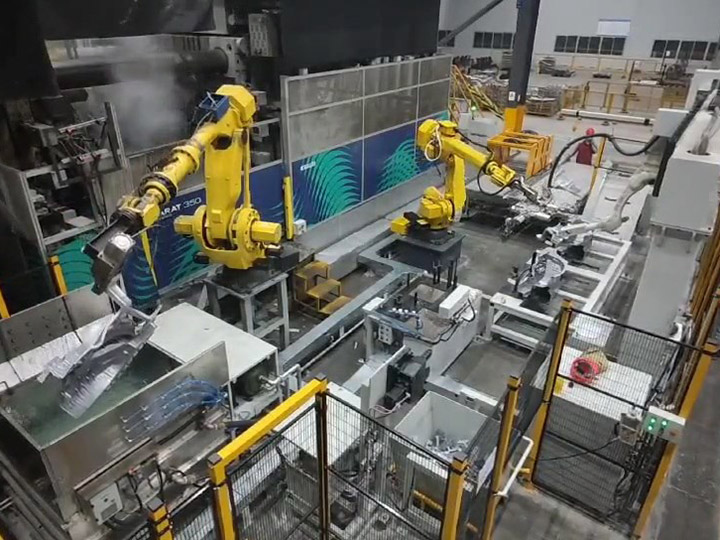
Robotic cutting systems combine the dexterity of multi-axis robotic arms (3-6 axes) with modular cutting tools (plasma, laser, or waterjet), enabling flexible processing of complex workpieces. These hybrid configurations are designed for adaptive manufacturing, where production runs require frequent tool changes or geometry adjustments. Key features include offline programming (OLP) software, collision avoidance systems, and integration with manufacturing execution systems (MES), making them suitable for small-batch production and custom fabrication.
6. 6-Axis Robotic 3D Laser Cutting Cells
As the most advanced category of computerized cutting machines, 6-axis robotic 3D laser cutting cells offer six degrees of freedom, enabling simultaneous movement along linear (X, Y, Z) and rotational (A, B, C) axes. This kinematic flexibility allows for cutting complex 3D contours, undercuts, and curved surfaces—critical for aerospace engine components, automotive body-in-white (BIW) structures, and composite material processing. Equipped with high-power fiber lasers (up to 15kW) and real-time vision systems, these cells achieve cutting accuracy of ±0.05mm and are capable of processing materials with hardness up to HRC 60, including titanium alloys and Inconel.
Critical Selection Criteria for Optimal Performance
The "best" computerized cutting machine is inherently application-specific, as no single system can excel across all use cases. Below are the key technical, operational, and economic factors to consider when evaluating solutions:
1. Material Compatibility and Thickness Range
The primary determinant of machine selection is the type and thickness of materials to be processed. For example:
- Thick metallic materials (≥50mm): Plasma robotic cutting systems or CNC oxy-fuel cutting machines offer the optimal balance of speed and cost-effectiveness.
- Thin metals (≤10mm) and intricate designs: 3D robot fiber laser cutting machines deliver superior precision and edge quality.
- Non-metallic materials (polymers, composites): CO₂ laser cutting systems or waterjet cutting machines are preferred to avoid thermal damage.
2. Dimensional Accuracy and Tolerance Requirements
Industries such as aerospace and medical device manufacturing demand ultra-tight tolerances (±0.01mm to ±0.1mm), making 6-axis robotic 3D laser cutting cells or high-precision fiber laser systems the ideal choice. For general metal fabrication (tolerances ±0.5mm), CNC robotic beam cutting or plasma systems provide sufficient accuracy at a lower cost point.
3. Production Volume and Cycle Time
High-volume manufacturing environments (e.g., automotive assembly lines) require systems with rapid cutting speeds and automated material handling. CNC robotic beam cutting systems (cycle time reduction of up to 40% vs. manual cutting) and plasma robotic cells are optimized for throughput, while 3D laser systems prioritize precision over raw speed.
4. Capital and Operational Costs
Advanced systems such as 6-axis robotic 3D laser cutting cells typically carry a higher initial investment (range: $200,000–$1,000,000) but offer lower operational costs due to energy efficiency and reduced material waste. Budget-constrained operations may opt for entry-level CNC plasma systems ($50,000–$150,000) or refurbished laser cutting machines, provided they meet performance requirements.
5. Automation Integration and Scalability
The level of automation required depends on production goals:
- Fully automated systems (e.g., 6-axis robotic cells with conveyor integration) reduce labor costs by up to 70% and enable 24/7 operation but require higher upfront investment.
- Semi-automated systems (e.g., standalone CNC laser cutters) are suitable for small-batch production, offering flexibility with lower capital expenditure.
- Scalability is another critical factor—systems with modular designs (e.g., robotic arms with interchangeable cutting tools) allow for future upgrades to accommodate evolving production needs.
6. Maintenance and Technical Support
Reliability and after-sales support are essential for minimizing downtime. Laser-based systems require periodic maintenance (e.g., lens cleaning, laser source calibration) every 500–1,000 operating hours, while plasma systems need electrode replacement every 100–200 hours. Choosing a supplier with a global service network and readily available spare parts is critical for long-term operational efficiency.
Core Advantages of Computerized Cutting Machines
The adoption of computerized cutting technology delivers transformative benefits to manufacturing operations, including:
1. Unmatched Precision and Repeatability
By eliminating human error and leveraging closed-loop feedback systems, CNC cutting machines achieve consistent dimensional accuracy across thousands of workpieces. This is particularly critical for industries with strict quality control standards (e.g., aerospace OEMs), where even minor deviations can compromise product performance.
2. Enhanced Production Efficiency
Automated cutting processes reduce cycle times by 30–60% compared to manual methods, enabling higher throughput and faster time-to-market. Additionally, features such as nest optimization software (which maximizes material utilization) and parallel processing capabilities further enhance operational efficiency.
3. Exceptional Versatility
Modern CNC cutting machines can process a wide range of materials and geometries, from simple 2D cuts to complex 3D contours. This versatility allows manufacturers to diversify their product portfolios without investing in multiple specialized tools.
4. Reduced Material Waste and Sustainability
Precision cutting minimizes material waste by up to 30% compared to manual methods, reducing raw material costs and environmental impact. Furthermore, energy-efficient technologies (e.g., fiber lasers) lower carbon emissions, aligning with global sustainability initiatives.
5. Improved Workplace Safety
Automated systems eliminate the need for operators to work in close proximity to cutting tools, reducing the risk of injuries associated with manual cutting (e.g., lacerations, thermal burns). Advanced safety features—such as interlocked enclosures, emergency stop buttons, and laser safety curtains—further enhance workplace safety.
Conclusion
The "best" computerized cutting machine is not a one-size-fits-all solution but rather a technology that aligns with your specific industrial requirements, performance parameters, and budget constraints. For heavy-duty structural processing, CNC robotic beam cutting systems and plasma robotic cells offer optimal speed and durability. For precision-critical applications in aerospace or electronics, 3D robot fiber laser cutting machines or 6-axis robotic 3D laser cutting cells deliver unmatched accuracy. For non-metallic materials, CO₂ laser or waterjet systems are the preferred choices.
When evaluating options, prioritize technical specifications such as material compatibility, tolerance capabilities, and automation features, while balancing these with long-term operational costs and scalability. By investing in the right computerized cutting machine, manufacturers can unlock significant productivity gains, improve product quality, and maintain a competitive edge in an increasingly demanding global market.
In the era of Industry 4.0, the integration of CNC cutting systems with IoT (Internet of Things) platforms, AI-driven predictive maintenance, and digital twin technology is poised to further revolutionize material processing—making continuous evaluation of technological advancements a critical component of long-term manufacturing success.