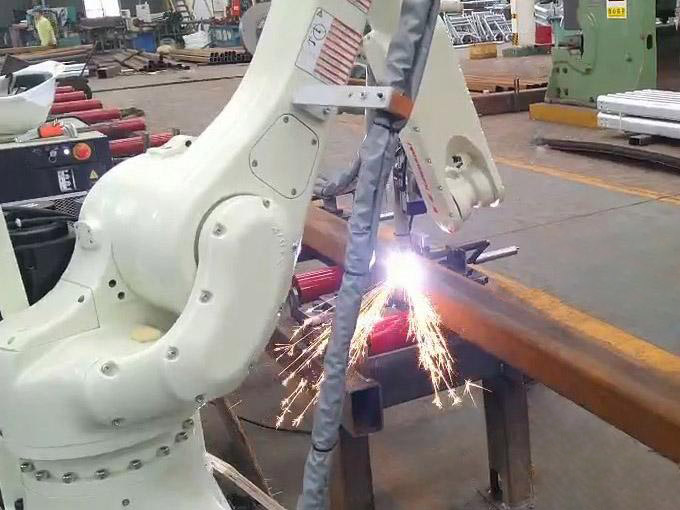
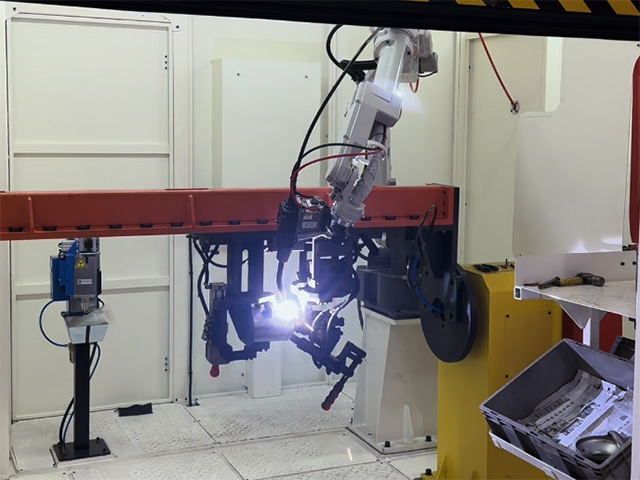
Tube-sheet welding is a critical joining process for manufacturing heat exchangers, boilers, pressure vessels, and chemical reactors—core equipment in petrochemical, nuclear power, and HVAC industries. The quality of tube-sheet weld joints directly determines the pressure-bearing capacity, leak tightness, and service life of these devices. Tube-sheet welding machines are specialized automated systems designed to realize high-precision, high-efficiency welding between tubes (hollow cylindrical components) and tube sheets (thick metal plates with dense hole arrays). This article systematically analyzes the core working principles, technical configurations, key advantages, and application standards of tube-sheet welding machines.
1. Core Working Principles of Tube-Sheet Welding Machines
Tube-sheet welding machines mainly adopt fusion welding processes centered on gas tungsten arc welding (TIG) and plasma arc welding (PAW), with the core goal of forming a hermetic, high-strength metallurgical bond between the outer wall of the tube and the inner wall of the tube-sheet hole. The basic working principle is as follows:
1. Workpiece Positioning and Clamping: The tube sheet is fixed on a precision rotary or linear positioning platform, and the tubes are inserted into the pre-machined holes of the tube sheet with a specified interference fit (typically 0.02–0.05 mm). Specialized fixtures (pneumatic or hydraulic) ensure coaxial alignment between the tube and the hole, with positioning accuracy controlled within ±0.01 mm.
2. Arc Ignition and Weld Pool Formation: The welding torch (equipped with a non-consumable tungsten electrode for TIG or a constricted nozzle for PAW) is positioned at the tube-sheet interface. After the shielding gas (high-purity argon, purity ≥99.99%) is introduced to displace air in the welding zone, the power supply is activated to generate a stable arc between the electrode and the workpiece. The arc’s high temperature (5,000–30,000 °C) melts the tube end and the tube-sheet hole wall, forming a uniform molten pool.
3. Weld Seam Forming and Solidification: For fixed-position welding, the arc rotates circumferentially around the tube to complete the annular weld seam; for rotary welding, the workpiece rotates at a constant speed while the torch remains stationary. During the process, the molten metal flows along the interface under the action of surface tension and arc force, filling the gap between the tube and the tube sheet. After the arc is extinguished, the molten pool solidifies rapidly under the protection of the shielding gas, forming a compact annular weld joint with excellent mechanical properties and leak tightness.
2. Key Technical Configurations of Tube-Sheet Welding Machines
A high-performance
tube-sheet welding machine consists of four core modules, with each component’s precision directly affecting welding quality:
2.1 Welding Power Supply Module
The power supply is the energy core of the system, and its performance determines arc stability and weld seam quality:
- TIG Welding Power Supply: Adopts inverter technology with a frequency of 20–100 kHz, supporting DC straight polarity (DCEP) and AC square wave output. DC mode is suitable for welding carbon steel, stainless steel, and titanium alloy tubes; AC square wave mode (with adjustable balance ratio of 30–70%) is used for aluminum alloy tubes to break the dense oxide film (Al₂O₃) on the surface. The current adjustment range is 5–500 A, with a current stability accuracy of ±1%.
- Plasma Welding Power Supply: Features a three-electrode structure (cathode, anode, and pilot arc electrode) to achieve stable arc ignition at low current (0.5 A). The plasma arc, constrained by the nozzle, has higher energy density than the TIG arc, enabling single-pass welding of thick-walled tubes (wall thickness ≥3 mm) and improving welding efficiency by 30–50% compared with TIG welding.
2.2 Welding Torch and Motion Control Unit
- Specialized Welding Torch: Designed with a narrow neck structure to access the dense tube array (tube pitch ≥1.2 times the tube diameter) in heat exchangers. The torch is equipped with a coaxial shielding gas nozzle and a cooling water channel to prevent overheating during continuous welding. For deep hole welding, extended torch heads with a length of 100–500 mm are available.
- Motion Control System: Composed of servo motors, ball screw drives, and CNC controllers, it supports two motion modes: torch rotation (rotation speed 5–60 rpm) and workpiece rotation (rotation speed 10–100 rpm). The system realizes multi-axis linkage between the torch lifting (Z-axis) and positioning (X/Y-axis), with repeat positioning accuracy of ±0.02 mm, ensuring uniform weld seam width and penetration for each tube-sheet joint.
2.3 Positioning and Clamping Fixture
- Tube Sheet Fixture: Adopts a vacuum adsorption or hydraulic clamping structure to fix large tube sheets (diameter up to 3 m) without deformation. The fixture is equipped with a rotary platform to realize continuous welding of multiple tubes in the same row.
- Tube Positioning Fixture: Uses a pneumatic centering mechanism to ensure coaxiality between the tube and the hole. For thin-walled tubes (wall thickness ≤1 mm), a flexible clamping design is adopted to avoid tube deformation caused by excessive clamping force.
2.4 Intelligent Control and Monitoring System
- Programmable Logic Controller (PLC): Stores welding parameters (current, voltage, welding speed, shielding gas flow rate) for different tube-sheet material combinations (e.g., 304 stainless steel tube + Q345R tube sheet, titanium tube + nickel alloy tube sheet). One-click parameter calling reduces setup time by 80% for batch production.
- Welding Process Monitoring Module: Integrates high-speed cameras and infrared temperature sensors to monitor arc stability and molten pool temperature in real time. If abnormalities (e.g., arc extinction, excessive temperature) are detected, the system automatically stops welding and triggers an alarm, reducing defect rates to below 0.1%.
- Shielding Gas and Cooling System: The mass flow controller controls the shielding gas flow rate with an accuracy of ±0.1 L/min; the closed-loop cooling system maintains the torch temperature at 20–40 °C, ensuring stable operation during 24-hour continuous welding.
3. Core Technical Advantages of Tube-Sheet Welding Machines
Compared with manual welding, tube-sheet welding machines have the following irreplaceable advantages:
3.1 Ultra-High Welding Precision and Leak Tightness
The CNC motion control system ensures uniform weld seam width (±0.1 mm) and penetration depth (±0.2 mm) for each annular weld joint. The weld joints can withstand a hydraulic test pressure of 1.5 times the design pressure without leakage, meeting the strict requirements of ASME VIII and GB 150 standards for pressure vessels.
3.2 High Welding Efficiency and Automation Level
The machine can complete the welding of one tube-sheet joint in 10–60 seconds, which is 5–10 times faster than manual TIG welding. Integrated with automatic tube loading/unloading systems, it can realize unmanned production of heat exchanger tube sheets with 10,000+ tubes, improving overall equipment efficiency (OEE) to over 85%.
3.3 Strong Material Compatibility
The system can weld a wide range of tube-sheet material combinations, including carbon steel, stainless steel, titanium alloy, nickel alloy, and copper alloy. By adjusting welding parameters, it adapts to tubes with different wall thicknesses (0.5–10 mm) and tube sheets with different thicknesses (10–200 mm), meeting the diverse needs of petrochemical, nuclear power, and marine engineering industries.
3.4 Minimal Thermal Deformation
The concentrated heat input of TIG/plasma welding and the low welding heat cycle reduce the heat-affected zone (HAZ) of the tube-sheet interface to less than 0.5 mm. Combined with the rigid clamping fixture, the post-welding deformation of the tube sheet is controlled within ±0.5 mm, eliminating the need for post-weld correction and reducing production costs.
4. Typical Industrial Applications and Quality Control Standards
4.1 Key Application Fields
1. Petrochemical Industry: Welding of heat exchanger tube sheets in refineries and chemical plants, where the weld joints need to withstand corrosive media (e.g., sulfuric acid, hydrochloric acid) and high-temperature/high-pressure operating conditions (temperature up to 600 °C, pressure up to 30 MPa).
2. Nuclear Power Industry: Welding of steam generator tube sheets in nuclear power plants, using nickel-based alloy tubes (Inconel 600) and low-alloy steel tube sheets to ensure radiation resistance and long-term service life (≥40 years).
3. HVAC and Refrigeration Industry: Welding of evaporator and condenser tube sheets in air conditioners and refrigerators, using copper tubes and aluminum alloy tube sheets to achieve high heat exchange efficiency.
4. Boiler Manufacturing: Welding of water wall tube sheets in industrial boilers, where the weld joints need to withstand cyclic thermal loads and prevent water leakage.
4.2 Strict Quality Control Requirements
1. Pre-Welding Preparation: Clean the tube ends and tube-sheet holes to remove oil, rust, and oxide films using ultrasonic cleaning or sandblasting; check the interference fit between tubes and holes to ensure it meets design requirements.
2. Welding Parameter Optimization: For example, welding 1 mm thick 304 stainless steel tubes and 20 mm thick Q345R tube sheets requires a TIG welding current of 80–100 A, voltage of 10–12 V, and shielding gas flow rate of 8–10 L/min.
3. Post-Welding Inspection:
- Visual Inspection (VT): Check for surface defects such as cracks, porosity, and undercut; the weld seam should be smooth and uniform without overlap.
- Pressure Test: Conduct a hydraulic test or helium leak test to verify the leak tightness of the weld joints; the helium leak rate should be ≤1×10⁻⁹ Pa·m³/s.
- Non-Destructive Testing (NDT): Use eddy current testing (ECT) to detect surface cracks in non-ferromagnetic materials, and ultrasonic testing (UT) to detect internal defects in thick-walled weld joints.
5. Future Development Trends
1. Intelligent Upgrading: Integration of machine vision and AI algorithms to realize automatic identification of tube-sheet hole positions and adaptive adjustment of welding parameters, further improving welding accuracy and efficiency.
2. Hybrid Welding Technology: Combination of TIG welding and laser welding to form a laser-TIG hybrid tube-sheet welding system, which can weld dissimilar materials (e.g., steel-aluminum tube-sheet joints) and avoid the formation of brittle intermetallic compounds.
3. Digital Twin Application: Establishment of a digital twin model of the tube-sheet welding process to simulate the temperature field and stress field of the weld joint, optimize welding sequences, and predict weld quality.