Welding Robot Workstation: A Core Solution To Enhance Efficiency And Quality In Modern Manufacturing
Release time:2026-03-09
Visits:412
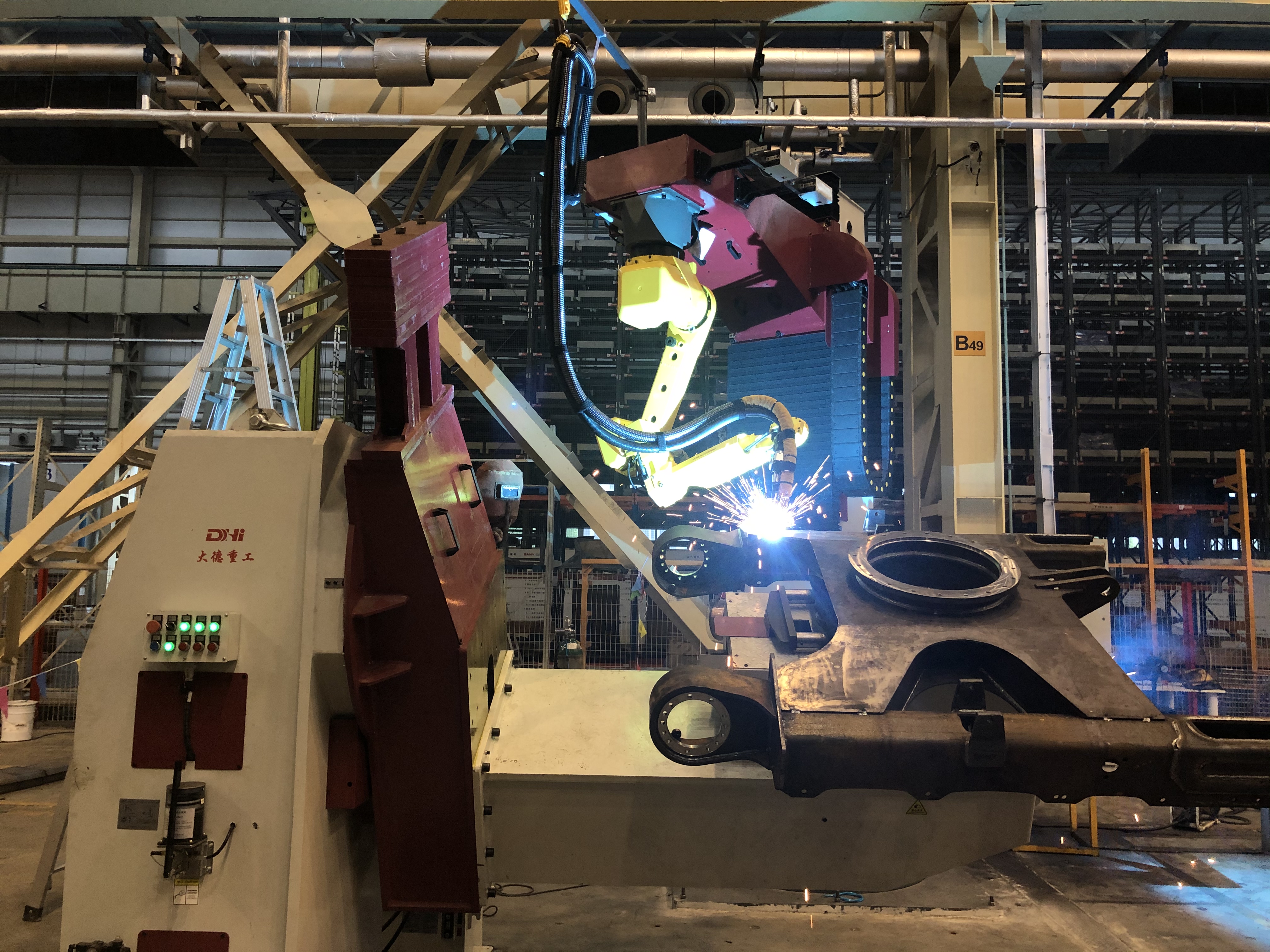
In today's rapidly developing manufacturing environment, automation technology is playing an increasingly important role. As an automated welding unit integrating welding robots and various related auxiliary equipment, the welding robot workstation can realize high-precision and automated welding operations for various workpieces through pre-set programs and advanced control systems. It has not only completely changed the mode of traditional welding operations but also demonstrated significant advantages in improving production efficiency, ensuring product quality, and improving the working environment, making it an indispensable key equipment in modern industrial production.
Core Components of a Welding Robot Workstation
A typical welding robot workstation is an integration of multiple technologies, and its main components include:
1.
Welding robot system: This is the core of the workstation, usually consisting of a robot body, a precision control system, and a teach pendant, responsible for performing complex welding actions and path planning.
2. Welding power supply system: Provides stable and reliable electrical energy for the welding process, ensuring the stability of the welding arc and the quality of the molten pool.
3. Tooling fixtures: Used for precise positioning and firm clamping of workpieces, which is the basis for ensuring welding accuracy and consistency.
4. Positioner: Can flexibly adjust the spatial position and angle of the workpiece, enabling the robot to easily reach the optimal welding position and realize the welding of complex welds.
5. Rail: When large or long workpieces need to be welded, the rail can drive the robot or workpiece to move, meeting the needs of continuous welding.
6. Automatic weld tracking technology: Through advanced sensing and image processing technology, it can detect and correct the weld position in real-time, ensuring that the robot is always accurately aligned with the weld, thus greatly improving the welding quality.
7. Turnover table: Used to flip large or heavy workpieces, increasing the accessibility of welding and ensuring that all surfaces of the workpiece can be well welded.
8. Safety system: Including safety fences, light curtains, emergency stop buttons, etc., designed to protect the safety of operators and equipment and prevent accidents.
Wide Application Fields of Welding Robot Workstations
With its excellent performance, welding robot workstations have been widely used in many industries:
1. Automobile manufacturing: Welding robot workstations play a vital role in the welding of key components such as automobile chassis, body frames, seat structures, and exhaust systems, ensuring high efficiency and high consistency in automobile production.
2. Aerospace: For products with extremely high welding quality requirements such as aircraft fuselage structural parts and engine components, welding robot workstations meet the strict standards of the aerospace field with their precise control and stable performance.
3. Electronic equipment: In the welding of electronic components, circuit boards, and precision instruments, welding robot workstations can achieve precise welding of tiny solder joints, ensuring the reliability of electronic equipment.
4. Construction machinery: Structural parts of large construction machinery such as excavators, cranes, and loaders often require high-strength welding, and welding robot workstations can efficiently complete these heavy welding tasks.
5. Petrochemical industry: In the manufacturing and installation of large equipment such as pipelines, storage tanks, and pressure vessels, welding robot workstations can provide high-quality and efficient welding solutions.
Core Advantages of Choosing a Welding Robot Workstation
Enterprises choose to introduce welding robot workstations mainly because of their following significant advantages:
Significantly improve production efficiency: Robots can work 24 hours a day, greatly increasing the welding output per unit time and effectively shortening the production cycle.
Ensure stable welding quality: Robot welding has a high degree of repeatability and consistency, which can effectively reduce welding defects caused by human factors and ensure the stability of product quality.
Improve working environment and safety: Free operators from harsh welding environments such as high temperature, smoke, and arc light, reducing the risk of work-related accidents.
Enhance production flexibility: Through simple program adjustments, robots can adapt to the welding needs of different workpieces and quickly respond to market changes.
Reduce long-term operating costs: Although the initial investment is relatively high, in the long run, robots can effectively reduce labor costs, reduce material waste, and lower overall costs by improving product qualification rates.
About Investment and Configuration
The configuration scheme and corresponding investment cost of welding robot workstations will vary greatly according to factors such as specific production needs, workpiece characteristics, welding process requirements, and automation level. When considering introduction, enterprises should conduct detailed demand analysis and feasibility evaluation to select the most suitable solution for their own production conditions.
Summary
Welding robot workstation is a key technical equipment for the transformation of manufacturing industry towards intelligence and automation. By integrating advanced robot technology, welding process and control system, it provides enterprises with efficient, high-quality and safe welding solutions. With the continuous progress of technology and the gradual optimization of cost, welding robot workstations will definitely be applied in a wider range of fields, contributing important strength to promoting the sustainable development and industrial upgrading of the manufacturing industry. For enterprises pursuing excellent production efficiency and product quality, investing in welding robot workstations is undoubtedly a decision with long-term strategic significance."