Laser Welding: A Comprehensive Analysis Of Principles, Advantages, And Wide-Ranging Applications
Release time:2026-03-30
Visits:406
In modern manufacturing, efficient and precise welding technology is crucial for enhancing product quality and production efficiency. As an advanced fusion welding process, laser welding is gaining prominence across various industries due to its unique advantages. This article will delve into the definition, working principle, core benefits, and extensive application fields of laser welding, helping you gain a comprehensive understanding of this revolutionary welding technology.
What is Laser Welding?
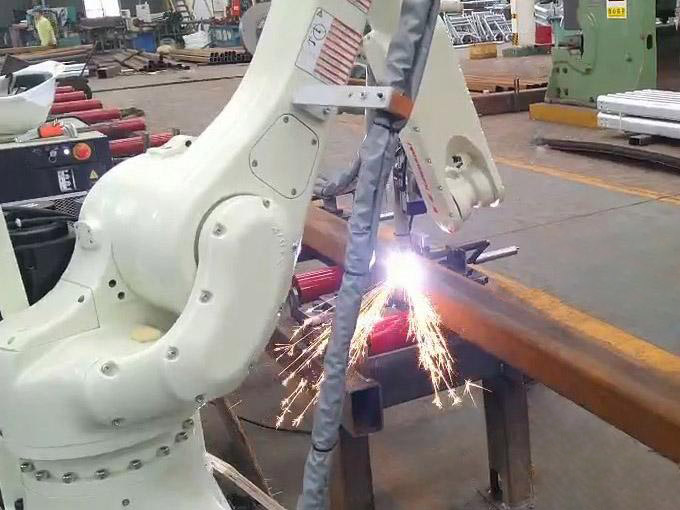
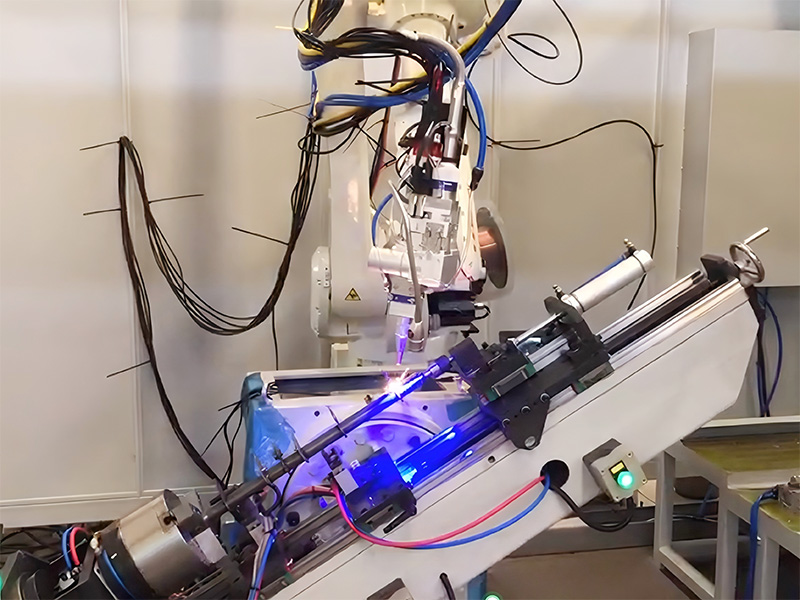
Laser welding is an advanced welding process that utilizes a highly concentrated laser beam as the heat source to join materials. It can effectively transfer energy to various materials such as metals and thermoplastics, achieving molten connection of materials. With its notable characteristics of high precision, high efficiency, and small heat-affected zone, laser welding has become an indispensable key technology in numerous industrial fields.
Working Principle of Laser Welding
The core principle of laser welding lies in the precise control and transfer of laser beam energy. When a high-energy-density laser beam is focused on the material surface, the laser energy is absorbed by the material and rapidly converted into thermal energy. This thermal energy causes the local temperature of the material to rise sharply and melt, forming a molten weld pool. As the laser beam moves or the material is fed, the molten weld pool cools and solidifies, thereby firmly welding the materials to be joined together to form a high-strength bond.
Distinct Advantages of Laser Welding Process
Laser welding is widely adopted due to its series of outstanding technical advantages:
1. High Precision and Repeatability: The laser beam can be precisely focused onto an extremely small area, ensuring high accuracy of the welding position. Meanwhile, the automated laser welding process offers extremely high repeatability, stably ensuring the quality consistency of each welding spot and effectively reducing errors caused by human factors.
2. Excellent Welding Quality: Laser welding can form aesthetically pleasing and dense welds, which typically possess excellent physical strength and electrical properties. Even for challenging metal materials such as aluminum and magnesium, or dissimilar metal welding between different types of metals, laser welding can achieve ideal connection results.
3. Efficient Welding Speed: The laser beam can achieve high-speed scanning, and both simple linear welds and complex three-dimensional curved welds can be completed quickly. In many application scenarios, the speed of laser welding far exceeds that of traditional welding methods, significantly improving overall production efficiency.
4. Low Maintenance Requirements: As a non-contact welding process, there are no issues such as electrode wear during laser welding, so the maintenance requirements for equipment are low, and there is almost no consumption of additional welding consumables. This enables the laser welding system to maintain longer stable operation time and reduce operating costs.
5. Low Heat Input and Heat-Affected Zone (HAZ): Laser welding can precisely control the heat input and action range, resulting in a minimal heat-affected zone (HAZ). This is crucial for welding sensitive parts or easily deformable materials, as it can effectively reduce workpiece deformation and thermal stress after welding, protecting the original properties of the material.
6. Easy Automation and Integration: Laser welding systems have high flexibility and can be easily integrated into various automated production lines. Whether for mass production of small precision components or welding of large structural parts, efficient automated operation can be achieved, further enhancing the intelligence level and efficiency of production.
Wide-Ranging Application Fields of Laser Welding
With the above-mentioned significant advantages, laser welding technology has been widely applied in several key industries:
Automotive Manufacturing: Used for welding body structural parts, power system components, precision electronic components, etc., to achieve lightweight and high-strength connections.
Aerospace: Meets the stringent requirements of aerospace components for welding quality, precision, and reliability, such as engine components and airframe structures.
Electronics and Microelectronics: Plays an important role in the welding of micro-components such as precision instruments, sensors, and semiconductor devices.
Medical Devices: Used in the manufacturing of high-precision and high-purity medical instruments and implantable devices.
Tool and Mold Manufacturing: Used for repairing, hardening, or precision splicing of tools and molds.
With the continuous advancement of laser technology and the gradual reduction of costs, the application fields of laser welding are still expanding. It not only promotes the upgrading and transformation of traditional manufacturing industries but also provides strong technical support for the development of emerging industries. It can be predicted that in future industrial production, laser welding technology will play an increasingly important role, bringing more innovations and possibilities to various industries."