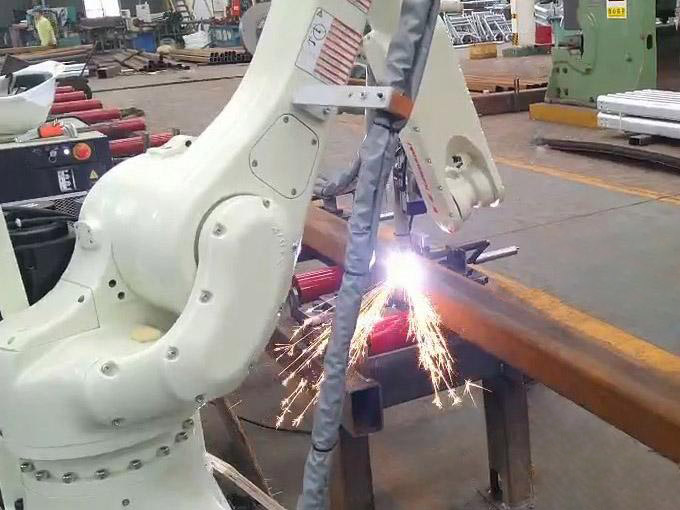
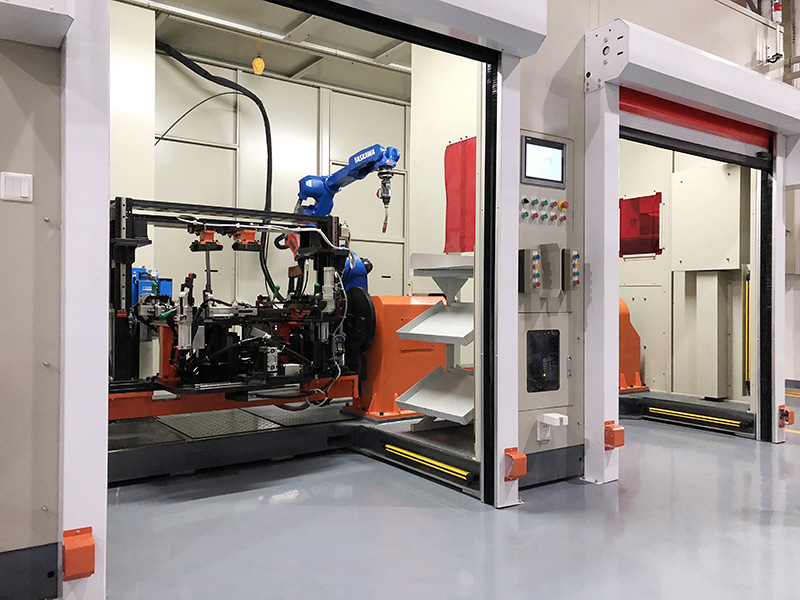
In the field of modern industrial manufacturing, efficient and precise joining technologies are key to driving product upgrades and industrial development. Laser welding technology, as an advanced material processing technology that utilizes high-energy-density laser beams, is gradually becoming the ""new favorite"" in various industries due to its unique advantages. This article will comprehensively analyze the core value of laser welding technology from the aspects of principles, advantages, application fields, and future trends.
I. Basic Principles of Laser Welding Technology
The core of
laser welding technology lies in using a high-energy-density laser beam as the heat source. The laser beam is focused through an optical system, generating highly concentrated heat at the joint of materials, which instantly melts the material. After the molten material cools and solidifies, a strong weld is formed, thereby achieving precise joining of different materials. This ""using light as a blade"" processing method makes the welding process more controllable and precise.
II. Core Advantages of Laser Welding Technology
Compared with traditional welding technologies, laser welding exhibits significant advantages in multiple dimensions, making it stand out in precision manufacturing and efficient production:
1. High Precision: Micron-level Control to Meet Precision Requirements
The energy of the laser beam is highly concentrated and precisely controllable, enabling welding precision at the micron or even nanometer level. This characteristic makes it particularly suitable for products with extremely high dimensional and joint quality requirements, such as precision electronic components and micro-medical devices, effectively avoiding errors that may occur in traditional welding.
2. Fast Welding Speed: An ""Accelerator"" for Improving Production Efficiency
Laser welding has high energy transfer efficiency, and its welding speed is much faster than traditional technologies such as arc welding and resistance welding. In mass production scenarios, this advantage can significantly shorten the processing cycle, improve overall production efficiency, and help enterprises reduce costs and increase production capacity.
3. Small Heat-Affected Zone: Reducing Material Damage and Deformation
The energy of the laser beam is concentrated in a very small area, so the heat-affected zone (HAZ) on the surrounding material during the welding process is very small. This means that the material is less likely to deform, oxidize, or degrade in performance due to high temperatures, making it especially suitable for welding thin materials and heat-sensitive materials.
4. Wide Material Adaptability: Breaking Material Limitations
Laser welding technology has strong compatibility with materials. It can not only weld metals (such as steel, aluminum, copper, etc.) but also connect various materials such as plastics, ceramics, and composite materials. This wide adaptability makes it irreplaceable in cross-material welding scenarios.
5. Environmental Friendliness: An Ideal Choice for Green Production
The laser welding process does not require electrodes, avoiding consumable waste caused by electrode wear; at the same time, in most cases, no welding filler materials are needed, reducing the emission of harmful substances. From the production process to post-processing, it is more in line with the requirements of modern industry for green and sustainable development.
III. Wide Application Fields of Laser Welding Technology
With the above advantages, laser welding technology has been deeply penetrated into multiple industries and has become a key technology driving industrial upgrading:
Automotive Manufacturing: Improving the Connection Quality of Vehicle Bodies and Components
In automobile production, laser welding is widely used in welding key parts such as car bodies, engine components, and chassis structures. Its high precision and high strength can improve the overall rigidity and safety of the vehicle body, while reducing the weight redundancy of traditional welding, contributing to the lightweight development of automobiles.
Aerospace: Meeting Reliability Requirements in Extreme Environments
The aerospace field has extremely strict requirements for welding quality. The high precision and low deformation advantages of laser welding make it the preferred welding method for core components such as aircraft structural parts, engine blades, and fuel storage tanks. It can ensure that components maintain stable performance in extreme environments such as high temperatures and high pressures.
Electronics Industry: ""Precision Connector"" for Micro Parts
As electronic devices develop towards miniaturization and integration, the welding of micro electronic components (such as sensors, chip pins, and circuit boards) has extremely high precision requirements. Laser welding can complete connections at the micron scale without damaging precision components, making it a key process in electronic manufacturing.
Medical Industry: ""Fine Craft"" for Safeguarding Life and Health
In the manufacturing of medical devices, laser welding is often used in welding products such as implantable devices (e.g., heart stents, artificial joints) and surgical instruments. Its high precision and aseptic operation characteristics can ensure the biocompatibility and safety of the devices, which are directly related to patients' health.
Jewelry Industry: ""Seamless Technology"" for Precious Metal Processing
The welding of precious metal jewelry (such as gold and platinum jewelry) needs to balance aesthetics and firmness. Laser welding can achieve precise connection of tiny welds without damaging the original shape of the jewelry, and the weld seam is delicate and almost seamless, meeting the ultimate pursuit of details in jewelry design.
IV. Future Development Trends of Laser Welding Technology
With the advancement of science and technology, laser welding technology is developing towards smarter, more efficient, and more environmentally friendly directions, and will show the following trends in the future:
1. Intelligence and Automation: Upgrading to ""Unmanned"" Welding Processes
By introducing AI algorithms, machine vision, and sensor technologies, laser welding equipment will realize automatic parameter adjustment, real-time weld monitoring, and defect early warning. In the future, highly automated welding production lines will become the mainstream, reducing manual intervention and improving welding consistency and stability.
2. Expansion of Multi-Material Welding Capability: Breaking ""Material Barriers""
Aiming at the welding difficulties of different materials (such as metal and plastic, dissimilar metal alloys), laser welding technology will improve its welding ability for complex material combinations by optimizing laser wavelength and energy control, to meet the cross-material connection needs in new energy, new materials and other fields.
3. Balancing High Power and High Precision: Taking into Account Efficiency and Quality
Future laser welding technology will further optimize focusing precision while increasing power to speed up welding, achieving ""high precision under high power"". This trend will help enterprises further improve production efficiency while ensuring welding quality.
4. Green and Sustainable Development: Reducing Energy Consumption and Emissions
By developing low-energy laser sources and optimizing energy utilization efficiency, laser welding technology will pay more attention to energy conservation and emission reduction. At the same time, the characteristics of no consumables and low pollution will be further highlighted, helping the manufacturing industry achieve the goal of ""carbon neutrality"".
5. Interdisciplinary Integration and Innovation: ""Accelerator"" for Technological Breakthroughs
The development of laser welding technology will rely on the cross-integration of multiple disciplines such as materials science, optical engineering, mechanical automation, and artificial intelligence. For example, the research and development of new laser materials and the upgrading of intelligent control systems will bring more possibilities to laser welding.
Conclusion
Laser welding technology is reshaping the production mode of modern manufacturing with its high precision, high efficiency, wide adaptability, and environmental friendliness. From automobile and aerospace to electronics and medical care, its in-depth application in various fields not only improves product quality but also promotes industrial technological upgrading. With the development of trends such as intelligence and greenization, laser welding technology will surely play a more important role in future industries, injecting continuous power into human scientific and technological progress and industrial development."