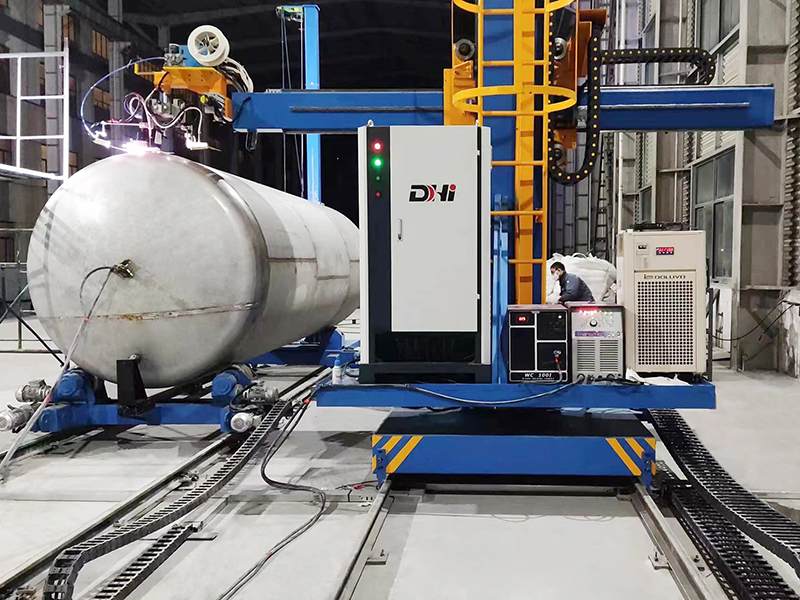
In recent years, the global manufacturing sector has witnessed a paradigm shift toward process automation, with welding—one of the most critical and labor-intensive fabrication processes—emerging as a focal point for technological disruption. Automated welding solutions are gaining traction at an accelerated pace, driven by their inherent advantages in operational efficiency, weld precision, and total cost of ownership (TCO). This article dissects the core technological trends reshaping automated welding, offering a detailed analysis of the innovations and industrial applications that are defining the future of modern welding operations.
Automated robotic welding is spearheading the transformation of the welding industry, delivering unmatched precision, repeatability, and throughput that far exceed the capabilities of manual welding processes. Robotic welding systems are engineered to execute high-complexity weld joints with micron-level accuracy, mitigating the variability and human error associated with manual operations. This superior precision not only elevates the mechanical integrity and aesthetic consistency of welds but also minimizes filler metal waste and post-weld rework, translating into substantial cost reductions for manufacturing enterprises.
The deployment of automated welding systems confers multifaceted operational and economic benefits:
- Elevated Productivity: Unmanned, 24/7 continuous operation eliminates downtime caused by human fatigue, significantly amplifying production throughput and capacity utilization.
- Superior Weld Quality: Closed-loop control over critical welding parameters (including voltage, current, travel speed, and wire feed rate) ensures uniform weld bead geometry and metallurgical consistency across all workpieces.
- Cost Optimization: Reduced reliance on skilled welders cuts direct labor costs, while minimized material waste and rework further lower the overall TCO of fabrication processes.
- Enhanced Occupational Safety: Automated systems remove human operators from high-risk environments characterized by arc flash, fume exposure, and heavy lifting, thereby mitigating workplace hazards and lowering occupational injury rates.
The evolution of next-generation robotic welding systems has unlocked new functional capabilities and operational efficiencies, underpinned by integrated sensor technology, advanced control algorithms, and modular hardware design. These systems are equipped with high-precision vision sensors, force-torque sensors, and real-time process monitoring modules, enabling adaptive responses to dynamic workpiece variations and complex welding scenarios.
Modern robotic welding platforms are compatible with a full spectrum of industrial welding processes, including robotic metal inert gas (MIG) welding, robotic tungsten inert gas (TIG) welding, and automatic submerged arc welding (SAW). This versatility ensures consistent performance across diverse applications, from thin-sheet automotive components to heavy-duty structural steel fabrications. Key technological enablers include:
- Adaptive Control Systems: Leveraging real-time data from in-process sensors, these systems dynamically adjust welding parameters to compensate for workpiece misalignment, thermal distortion, and material inconsistencies, ensuring optimal weld quality under variable conditions.
- Intelligent Programming Interfaces: User-friendly offline programming (OLP) software and teach pendant systems streamline setup and reprogramming workflows, reducing changeover downtime and enhancing production flexibility for mixed-model manufacturing.
- Industrial IoT (IIoT) Integration: Connectivity with IIoT platforms facilitates seamless data synchronization, remote performance monitoring, and centralized fleet management, enabling data-driven decision-making to optimize system uptime and process efficiency.
Automated welding technologies are exerting a transformative impact across high-value manufacturing sectors, where precision, scalability, and compliance with stringent quality standards are paramount. From automotive mass production to aerospace component fabrication, these solutions are redefining the benchmarks for efficiency and product reliability.
The automotive industry stands as the most prominent adopter of automated welding systems, owing to its demand for high-volume production, tight tolerance control, and rapid cycle times for vehicle body-in-white (BIW) assembly. The value proposition of automated welding in automotive manufacturing includes:
- Uniform Weld Integrity: Consistent weld quality across thousands of identical components ensures compliance with automotive safety standards and reduces the risk of field failures.
- Compressed Production Cycles: High-speed robotic welding cells cut down BIW assembly cycle times, enabling original equipment manufacturers (OEMs) to shorten time-to-market for new vehicle models.
Looking ahead, technological advancements are poised to further expand the capabilities and applications of automated welding systems, with two key trends set to dominate the industry landscape in the coming years.
Collaborative robots (cobots) are engineered to work synergistically with human operators, bridging the gap between the precision of fully automated systems and the flexibility of manual labor. Unlike traditional industrial robots that require physical safety barriers, cobots are equipped with force-limiting sensors and collision-detection algorithms, enabling safe human-robot collaboration (HRC) in shared workspaces. The core advantages of cobot welding systems include:
- Rapid Redeployment Flexibility: Cobots can be reprogrammed in minutes to handle small-batch, high-mix welding tasks, making them ideal for job shops and custom fabrication facilities.
- Embedded Safety Protocols: Intrinsic safety features eliminate the need for costly safety fencing, reducing floor space requirements and lowering initial setup costs.
The integration of artificial intelligence (AI) and machine learning (ML) into robotic welding systems represents the next frontier of technological innovation, enabling autonomous process optimization and predictive maintenance. These intelligent systems leverage historical weld data and real-time sensor inputs to continuously refine welding parameters and adapt to evolving production conditions. Key applications include:
- Predictive Maintenance (PdM): AI-powered analytics models process sensor data to identify early signs of equipment degradation, enabling proactive maintenance interventions that reduce unplanned downtime and extend the service life of welding equipment.
- Autonomous Process Optimization: ML algorithms analyze vast datasets of weld parameters and quality outcomes to identify optimal process settings, automatically fine-tuning operations to maximize weld quality and minimize waste.
Despite their compelling benefits, the implementation of automated welding solutions presents distinct challenges that manufacturers must address to realize full return on investment (ROI). These challenges encompass upfront capital expenditure, workforce reskilling, and system integration complexities.
The initial investment for robotic welding cells—including hardware, software, and installation—can be substantial, particularly for small and medium-sized enterprises (SMEs). However, the long-term cost savings from labor reduction, material efficiency, and improved yield typically offset the upfront costs over the system’s lifecycle. Critical considerations for financial viability include:
- ROI Quantification: A comprehensive ROI analysis should account for tangible benefits (labor cost reduction, waste minimization) and intangible benefits (improved safety, enhanced brand reputation) to justify capital allocation.
- Government Incentives and Grants: Many national and regional governments offer financial incentives, tax breaks, and R&D grants to support manufacturing automation, helping to alleviate the burden of upfront investment.
As automated welding systems become increasingly prevalent, the industry is witnessing a growing demand for a specialized workforce with expertise in robotics, programming, and process engineering. To address this skill gap:
- Targeted Training Programs: Partnerships between manufacturers, technical colleges, and robot OEMs can deliver customized training programs that equip workers with the skills to operate, program, and maintain automated welding systems.
- Cross-Functional Skill Diversification: Existing welding technicians can be upskilled to handle hybrid roles that combine traditional welding knowledge with robotics and data analytics, ensuring a smooth transition to automated operations.
Automated welding solutions are redefining the manufacturing landscape by driving improvements in efficiency, quality, and safety across diverse industrial sectors. As AI, IIoT, and cobot technologies continue to mature, the potential for further innovation in automated welding—from autonomous process control to digital twin-enabled simulation—remains vast. By proactively adopting and adapting to these trends, manufacturers can enhance their competitive edge in an increasingly globalized and technology-driven market.