Laser Welding Robots: Automated Solutions For Enhancing Manufacturing Precision And Efficiency
Release time:2026-05-25
Visits:492
In the rapid development of modern manufacturing, automation and intelligentization have become key to improving production efficiency and product quality. As an automated equipment integrating advanced laser welding technology and precision robotic technology, laser welding robots are playing an increasingly important role in numerous industries with their excellent performance. They can accurately and efficiently complete various complex welding tasks, bringing significant improvements in production efficiency for enterprises.
What is a Laser Welding Robot?
A
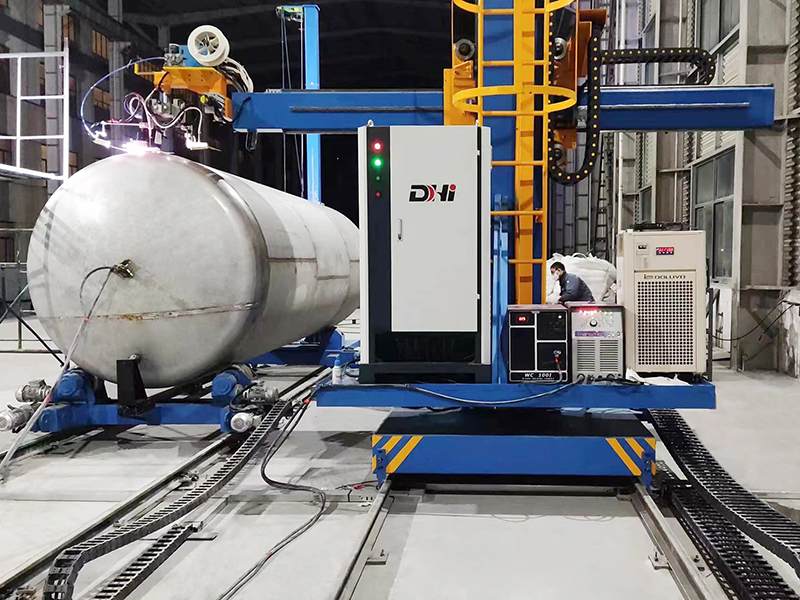
laser welding robot is a highly integrated automated system that perfectly combines the precise focusing of a high-energy laser beam with the flexible movement of a robot. Through pre-programming or visual guidance, the robot can carry a laser welding head and perform non-contact welding on workpieces according to a preset path. The core of this equipment lies in its ability to achieve high precision and efficiency that are difficult to reach with traditional welding methods, especially suitable for occasions with strict requirements on welding quality.
Main Components of a Laser Welding Robot
A typical laser welding robot usually consists of the following key parts working together:
1. Mechanical Arm: As the ""arm"" of the robot, the mechanical arm is the basis for realizing flexible movement. Common designs include six-axis or multi-axis configurations, ensuring that the welding head can reach any position in the workspace and achieve complex trajectory movements. Its end effector is the laser welding head, which is responsible for positioning and performing welding operations.
2. Laser Welding Head: This is the core functional component of the laser welding robot. It is responsible for focusing, collimating, and transmitting the laser beam generated by the laser generator, and finally forming a highly energy-concentrated welding spot on the workpiece surface. According to different welding requirements and material characteristics, different types of welding heads can be equipped to optimize the welding effect.
3. Control System: Equivalent to the ""brain"" of the robot, it is responsible for coordinating and controlling the entire welding process. It not only precisely controls the movement trajectory and speed of the mechanical arm but also adjusts key parameters such as laser power and welding time, and conducts real-time monitoring and adjustment of the welding process to ensure the stability and consistency of welding quality.
4. Safety Protection System: In view of the potential risks such as high-intensity laser radiation, high temperature, and spatter that may occur during the laser welding process, a complete safety protection system is crucial. This usually includes laser safety fences, interlocking devices, emergency stop buttons, and safety training for operators to ensure personnel safety and the stability of the production environment.
Wide Application Fields of Laser Welding Robots
With their unique advantages, laser welding robots have been widely used in multiple industrial fields:
Automobile Manufacturing: In the welding of key structures such as automobile bodies, chassis, doors, and engine components, laser welding robots can achieve high-precision and high-strength connections, improve and safety, and optimize production takt.
Aerospace: For products with high precision and high reliability requirements such as aero-engine blades, airframe structural parts, and spacecraft components, laser welding robots can meet the strict welding quality standards for materials such as high-temperature alloys and titanium alloys.
Electronic Manufacturing: In the welding of tiny components such as precision electronic components, sensors, and battery tabs, the high precision and low heat input characteristics of laser welding robots are particularly important, which can effectively avoid thermal damage.
Medical Devices: Medical devices have extremely high requirements for welding quality and cleanliness. Laser welding robots can provide clean and precise welding effects, suitable for the manufacturing of surgical instruments, implants, and other products.
Mold Manufacturing: The repair and strengthening of molds, as well as the welding of precision mold parts, can be accomplished with the help of laser welding robots, improving the service life and precision of molds.
Core Advantages of Laser Welding Robots
Enterprises can gain significant advantages in multiple aspects by choosing laser welding robots:
High Precision and Quality: Laser welding robots can achieve micron-level positioning accuracy and uniform weld quality, effectively reducing welding defects and improving product qualification rates.
High Efficiency and Output: Laser welding speed is fast, and robots can operate continuously for 24 hours, greatly improving production efficiency and shortening the production cycle.
Low Heat Input and Small Heat-Affected Zone: Laser welding has concentrated energy, resulting in low heat input to the workpiece and a narrow heat-affected zone, thereby reducing workpiece deformation, especially suitable for welding precision parts and thin materials.
High Automation and Flexibility: Through programming and automated control systems, laser welding robots can flexibly adapt to the needs of different products and welding processes, reduce manual intervention, lower labor intensity, and be easily integrated into automated production lines.
In summary, with its characteristics of high precision, high efficiency, and high flexibility, laser welding robots are becoming an important driving force for the upgrading and transformation of modern manufacturing industry. Whether pursuing the improvement of product quality or the optimization of production efficiency, laser welding robots have shown huge application potential and value, helping enterprises gain an advantageous position in the fierce market competition."