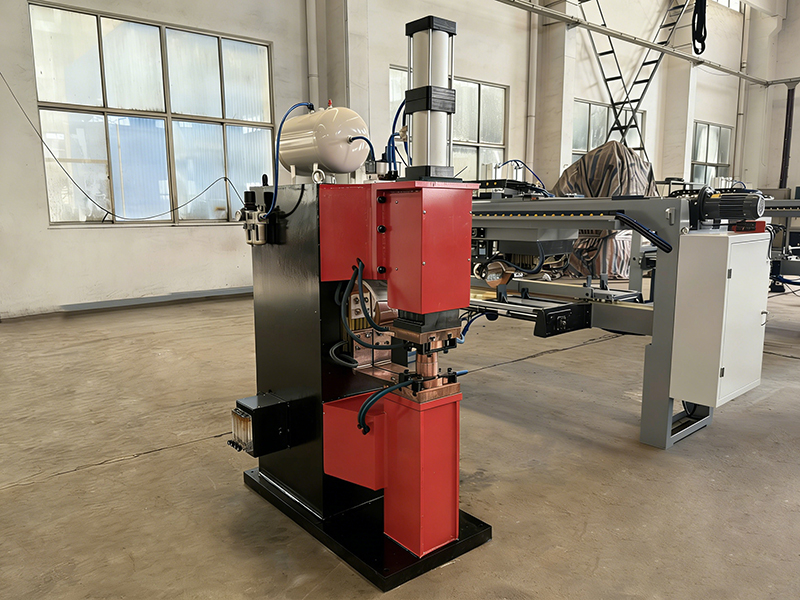
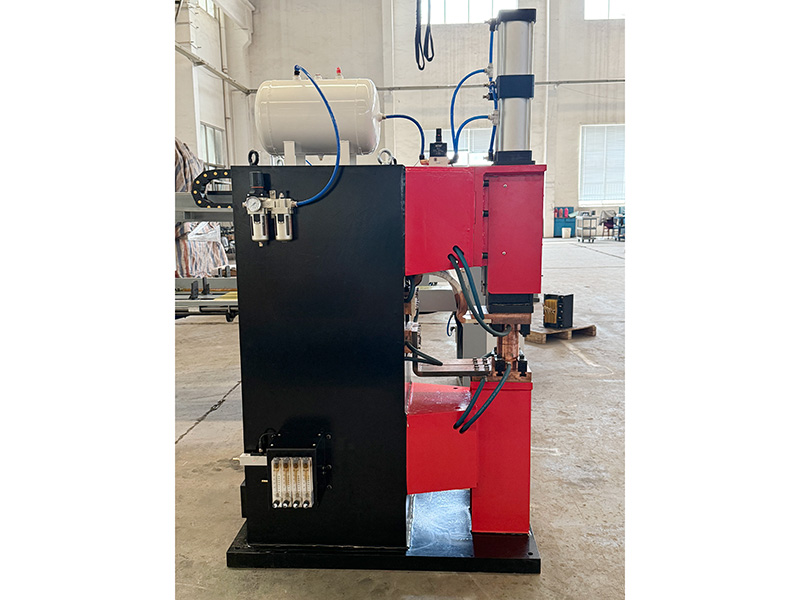
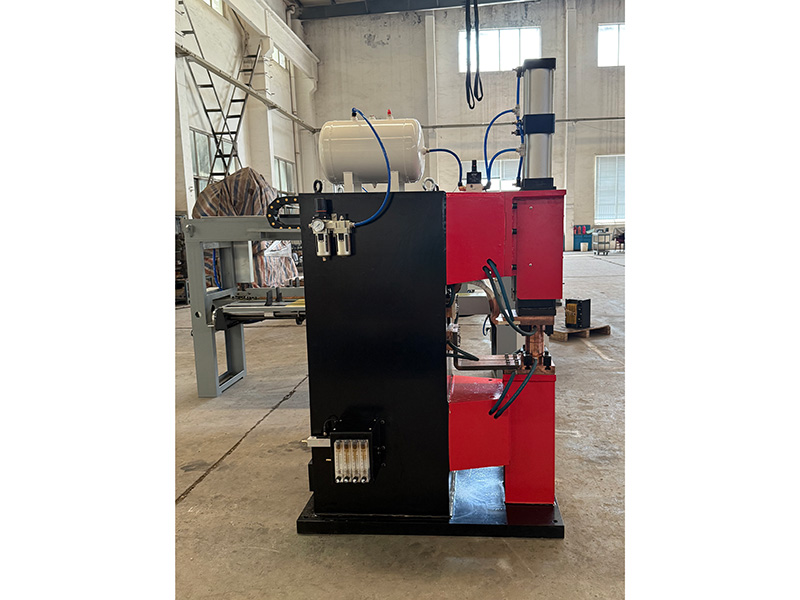
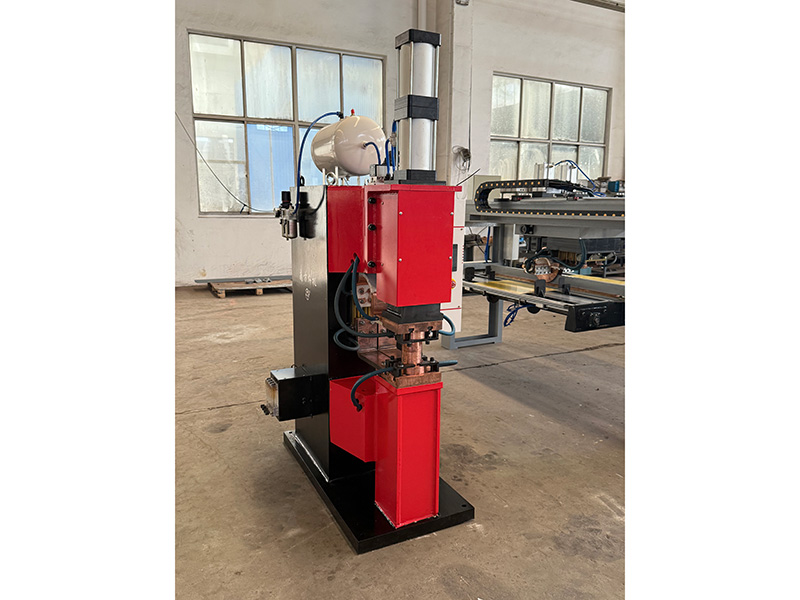
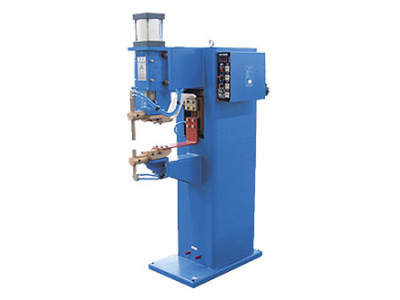
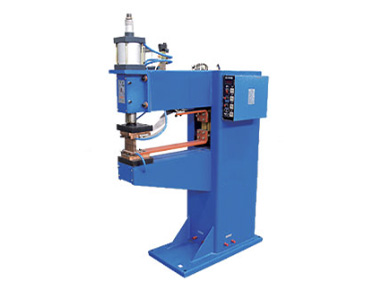
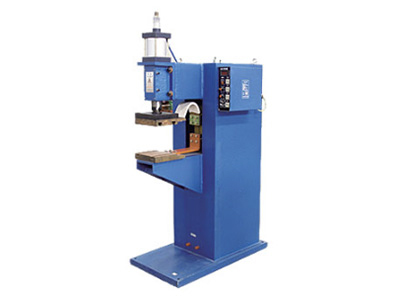
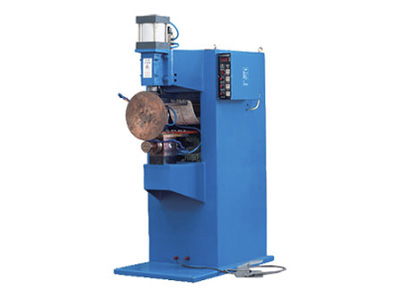
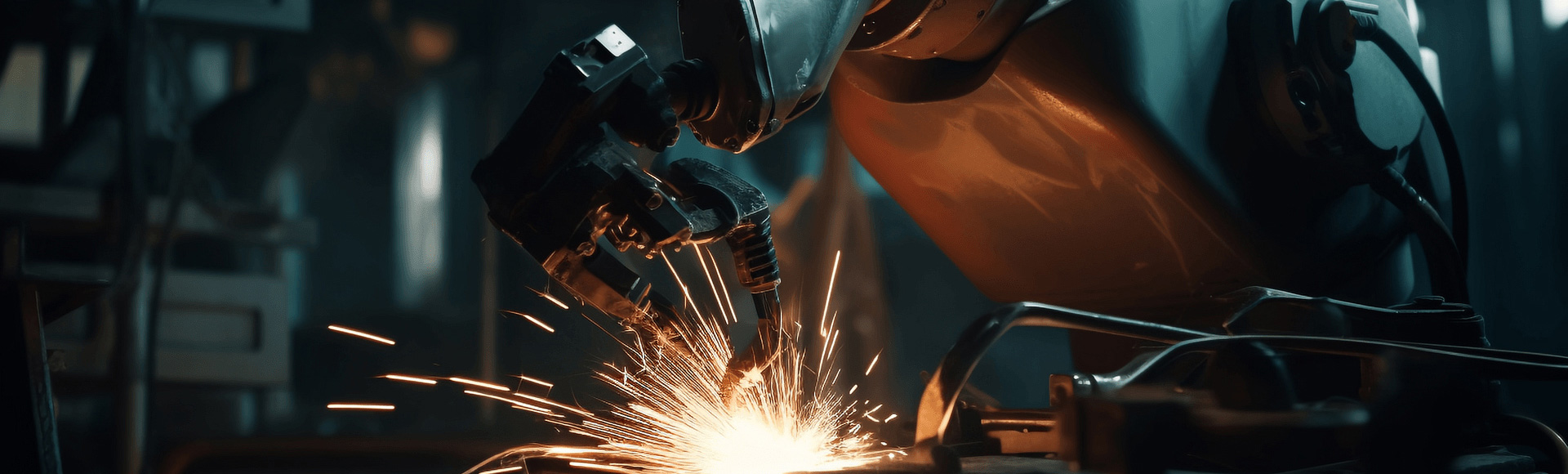
Details of Medium Frequency Spot Projection Welding Machine
Controller: Power drive module, rectifier circuit, capacitor board (energy storage and filtering), IGBT inverter module (1kHz medium-frequency DC output), PLC/HMI control center (programmable with 64 parameter sets).
Medium frequency transformer: High-efficiency voltage transformation, delivering high current output to meet projection welding requirements.
Workpiece clamping system: Dual-column structure + adjustable cylinder + air storage tank, ensuring stable pressure.
Features of Mid Frequency Projection Welding Machine
High-precision control: 1kHz medium-frequency output, millisecond-level response, and 64 programmable presets.
Multi-stage process: Preheating/welding/tempering with three-stage heating; welding segment supports incremental/decremental settings; 10-stage programmable pressure control.
Automation compatibility: 3 programmable I/O outputs, supports PLC/robot integration; weld point counting function.
Superior weld quality: Minimal spatter, aesthetically pleasing finish, and high strength (optimized microstructure through multi-stage tempering).
How to Choose the Right Projection Welder
When sourcing a projection welder, consider the following factors:
Material Compatibility: Verify the welder supports the metals you work with, such as steel, aluminum, copper, or titanium.
Production Volume: For low-volume work, single-phase or inverter welders suffice. High-volume production demands automatic welders with higher duty cycles.
Power Source: Choose between pneumatic, hydraulic, or electric based on your operational setup and energy efficiency goals.
Customization & Accessories: Look for machines offering adjustable electrodes, cooling systems, and advanced control panels to tailor welding to specific tasks.
Duty Cycle & Frequency Control: Ensure the welder can handle your workload without overheating and that frequency adjustments match your material thickness.
Best Practices for Using Projection Welders
Maximize your projection welder’s efficiency and lifespan by following these tips:
Maintain uniform and properly sized projections on your workpieces.
Regularly dress electrodes to maintain shape and prevent burn-through.
Calibrate current, pressure, and timing for each material type.
Use accurate workholding fixtures to prevent movement during welding.
Conduct routine inspections of weld quality and machine health.
Frequently Asked Questions (FAQs)
Q1: Can projection welders handle different metal types?
Yes, modern projection welders can weld mild steel, stainless steel, aluminum, copper, and more with adjustable settings.
Q2: How many weld points can be welded simultaneously?
Depending on the machine and fixture design, multiple weld points can be processed in one cycle, significantly boosting productivity.
Q3: Are projection welders suitable for automated production lines?
Absolutely. Many projection welders integrate seamlessly with robotic arms and conveyor systems for automated manufacturing.
Q4: What maintenance is required?
Regular electrode dressing, transformer and contact inspection, and calibration of pressure and timing ensure long-term reliability.
Q5: How does projection welding reduce material distortion?
By concentrating heat at projections rather than the entire sheet, projection welding minimizes warping and deformation.