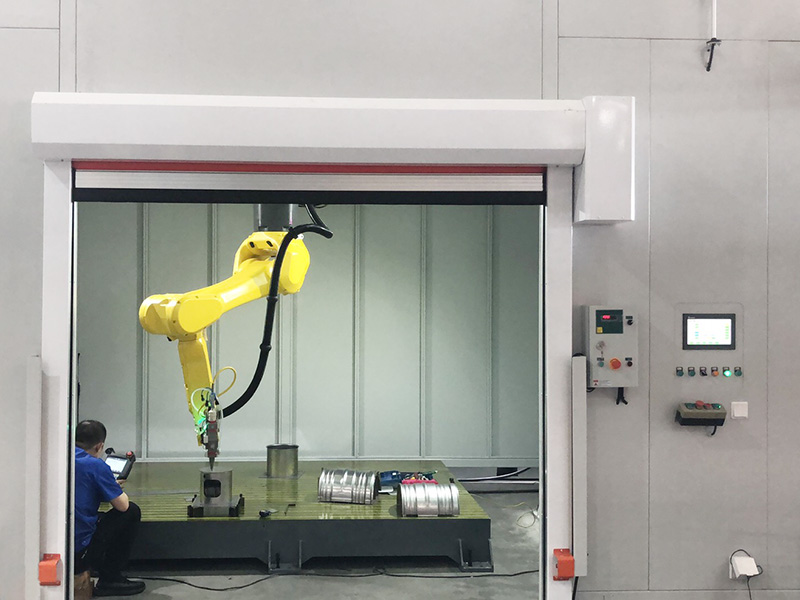
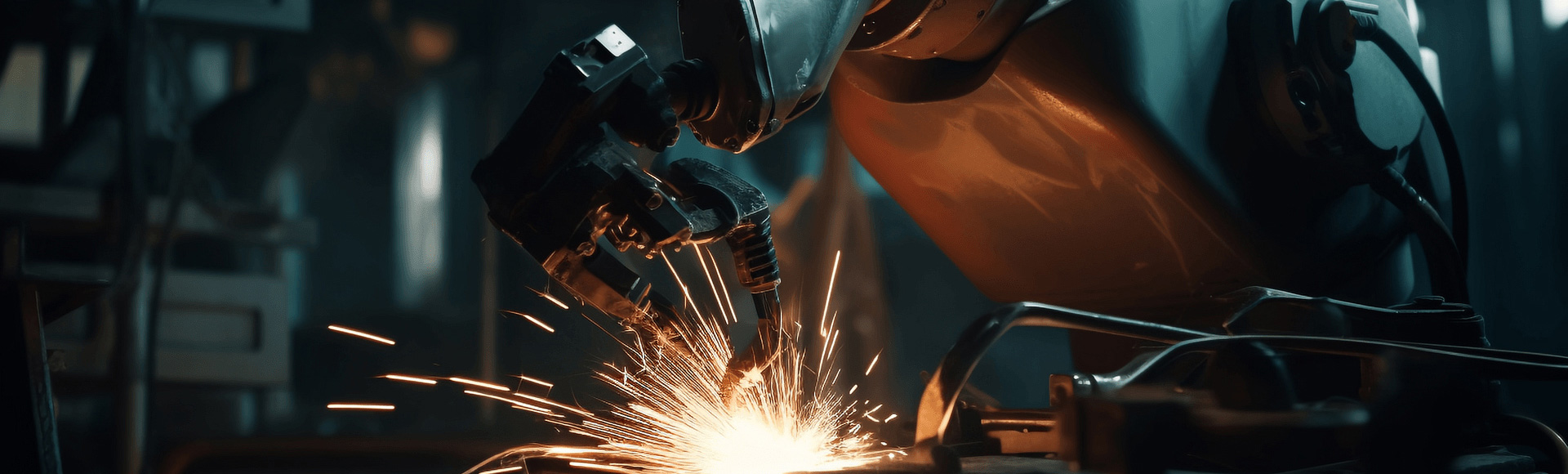
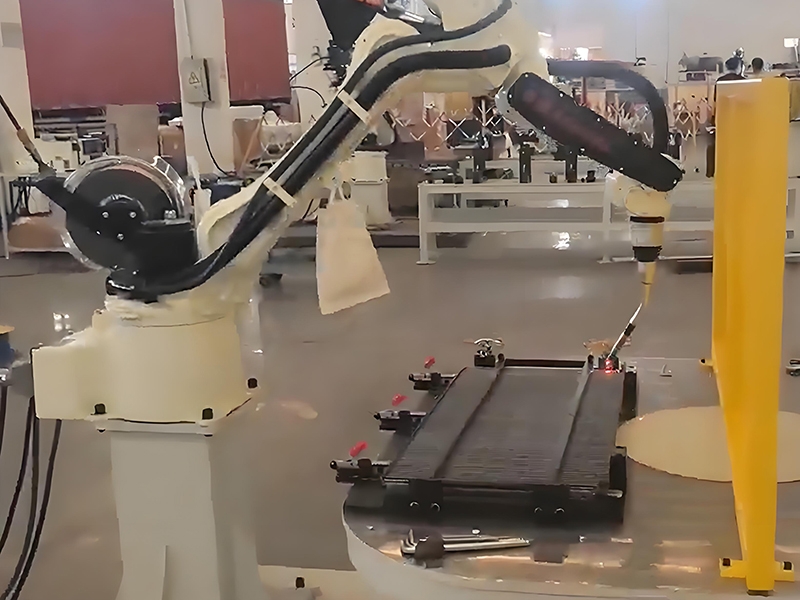
In modern industrial production, automation and intelligence have become key directions to improve efficiency and ensure quality. As an important branch of industrial robots, arc welding robots, with their high-precision and high-stability welding capabilities, play an irreplaceable role in automotive manufacturing, mechanical processing, and other fields. This article will comprehensively analyze the core value and application prospects of arc welding robots from the aspects of definition, composition, characteristics, key technologies, and development trends.
I. What is an Arc Welding Robot? Basic Definition and Application Scenarios
An
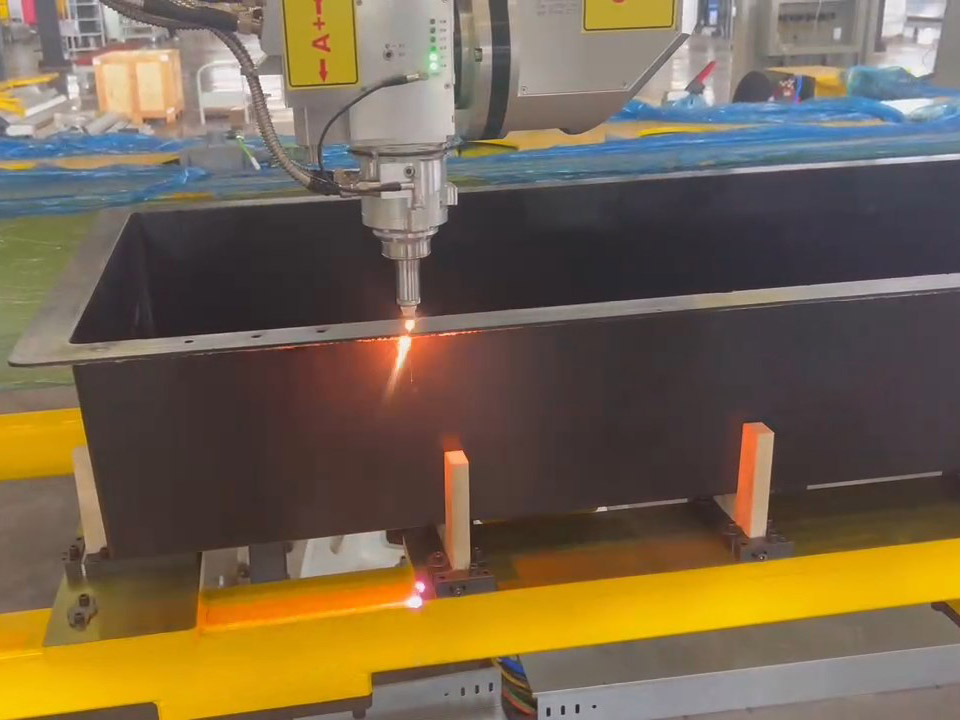
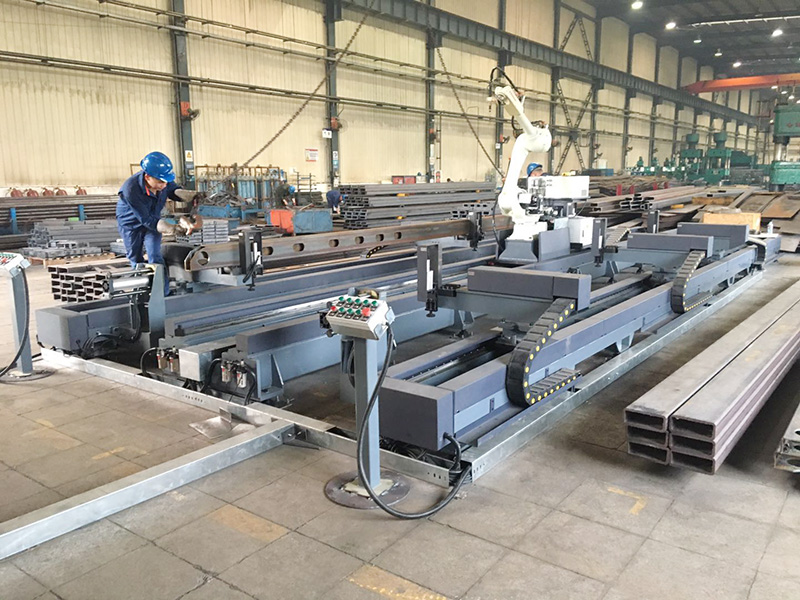
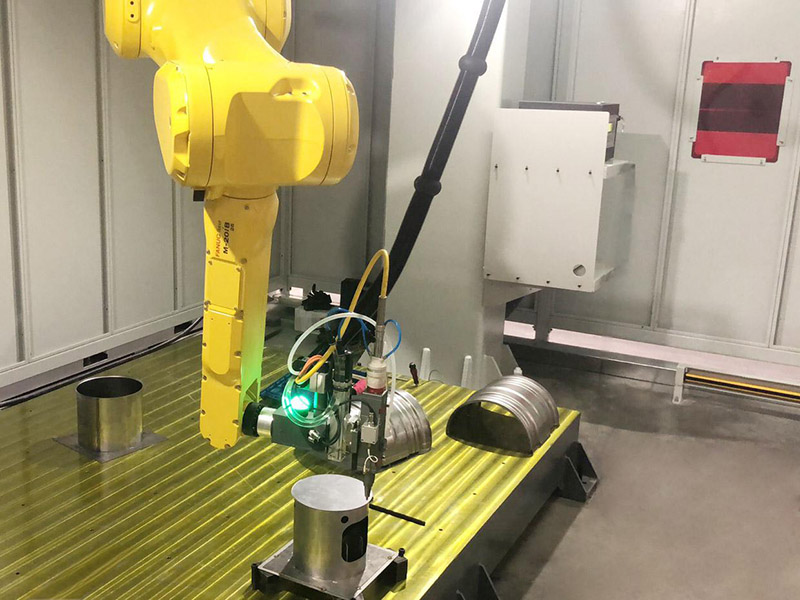
arc welding robot is an industrial robot specifically designed for automatic arc welding operations, whose core function is to realize the automation of the welding process through program control. Compared with traditional manual welding, it can complete continuous trajectory or point welding tasks under the precise control of a computer system, and is particularly good at handling complex spatial welds composed of straight lines and arcs.
In application scenarios, arc welding robots are widely used in various industrial productions, among which automotive parts welding is their most important application field. Whether it is the body frame, chassis components, or engine components, arc welding robots can ensure welding quality through stable operations, meeting the needs of large-scale and high-precision production.
II. Basic Composition of Arc Welding Robots: From Core Components to System Structure
The efficient operation of arc welding robots relies on the collaborative work of multiple key parts, and their basic composition can be divided into core components and extended systems:
1. Core Components
- Robot (Robot Body): As the executive mechanism, it undertakes the motion control during the welding process to ensure that the welding torch moves accurately according to the preset trajectory.
- Control System: Equivalent to the ""brain"" of the robot, it is responsible for receiving instructions, parsing programs, and controlling the body to complete welding actions, supporting continuous trajectory control and point control.
- Teach Pendant/Teach Box: An interactive device for operators to set parameters and program paths, realizing the ""teaching"" and storage of welding processes through intuitive operations.
- Welding Power Source: Provides stable power output for the welding process to ensure stable arc and uniform penetration.
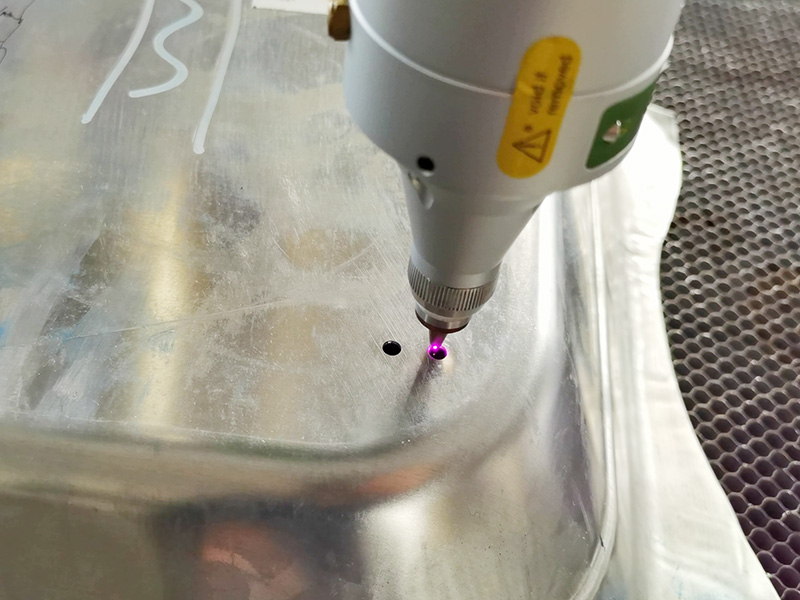
- Welding Torch: The tool that directly performs the welding operation, equipped with different nozzles and electrodes according to the welding type (such as consumable electrode, non-consumable electrode).
2. Optional Extended Devices
According to the welding method (such as consumable electrode welding, non-consumable electrode welding) and workpiece process requirements, the arc welding robot system can also be flexibly expanded with the following devices:
- Wire Feeder: Realizes the automatic feeding of welding wire to ensure the continuous supply of welding materials;
- Torch Cleaning and Wire Cutting Device: Regularly cleans the spatter residues in the torch nozzle to maintain welding accuracy;
- Cooling Water Tank: Provides heat dissipation for the welding torch and power source to avoid high temperature affecting the service life of the equipment;
- Welding Positioner: Adjusts the workpiece angle to keep the weld in the optimal welding position;
- Sensing Device: Real-time detects the weld position through visual or tactile sensors to realize automatic trajectory correction.
III. Core Advantages of Arc Welding Robots: Why They Are the First Choice for Industrial Welding?
Compared with traditional manual welding, arc welding robots have advantages in multiple dimensions, becoming the key to improving production efficiency and quality:
1. Stable Welding Quality, Ensuring Uniformity
Robots precisely control welding parameters (such as current, voltage, speed) through programs, avoiding errors such as hand tremors and fatigue in manual operations, ensuring the consistency of each weld, and greatly reducing the non-conforming rate.
2. Improve Working Conditions, Reduce Labor Dependence
Welding operations are often accompanied by harsh environments such as high temperature, arc light, and smoke. Robots can replace manual work in dangerous scenarios, reduce the risk of occupational diseases, and reduce dependence on highly skilled welders.
3. Improve Labor Productivity, Shorten Production Cycle
Robots can realize 24-hour continuous operation, and the welding speed is much higher than that of manual work (usually 2-3 times that of manual work), significantly increasing the output per unit time and helping enterprises quickly respond to market demands.
4. Optimize Production Management, Control Costs
The stable production rhythm of robots facilitates the formulation of accurate production plans and reduces production capacity fluctuations caused by fluctuations in manual efficiency. At the same time, in the long run, the investment in robots can reduce labor costs and training costs.
5. Adapt to Flexible Production, Support Rapid Model Change
By reprogramming or adjusting parameters, arc welding robots can quickly adapt to the welding needs of different workpieces, shorten the product replacement cycle, and help enterprises flexibly respond to market changes.
IV. Key Technologies of Arc Welding Robots: The Core Supporting Efficient and Stable Operation
The performance of arc welding robots depends on the breakthrough of a number of key technologies, which determine their welding accuracy, adaptability, and intelligence level:
1. System Optimization and Integration Technology
Efficiently integrate multiple modules such as robot body, welding power source, and sensing device to ensure signal transmission and collaborative control between components, and improve the overall stability and response speed of the system.
2. Coordinated Control Technology
In multi-robot collaborative welding or when robots cooperate with positioners, through precise motion planning and time synchronization, equipment interference is avoided, and efficient welding of complex workpieces is realized.
3. Accurate Weld Trajectory Tracking Technology
Through visual sensors or arc sensing technology, real-time detection of weld position deviations, and dynamic adjustment of robot motion trajectory to ensure that even if there is slight deformation or positioning error of the workpiece, the welding accuracy can still be guaranteed.
V. Development Trends of Arc Welding Robots: Intelligence and Flexibility Become the Mainstream
With the advancement of Industry 4.0 and intelligent manufacturing, arc welding robots are developing in a more intelligent and flexible direction:
- Intelligent Upgrade: Combining artificial intelligence (AI) and machine vision technology, robots can independently identify weld types, adjust welding parameters, and even predict equipment failures to achieve ""self-learning"" and ""self-optimization"".
- Flexible Production: Through modular design and quick gun change technology, one robot can be adapted to multiple welding processes (such as MIG welding, TIG welding) to meet the production needs of small batches and multiple varieties.
- Enhanced Human-Robot Collaboration: Develop lightweight, low-noise collaborative arc welding robots to realize human-robot co-operation, retaining the flexibility of humans and giving play to the stability of robots.
Summary: Arc Welding Robots - The Core Engine of Industrial Welding Automation
As an important part of industrial automation, arc welding robots have become an indispensable equipment in modern manufacturing through stable quality control, efficient production capacity, and flexible adaptability. From auto parts to construction machinery, from metal processing to pressure vessels, arc welding robots are promoting the upgrading of welding processes through technological innovation, helping enterprises reduce costs, increase efficiency, and enhance competitiveness. In the future, with the in-depth application of intelligent technology, arc welding robots will release value in a wider range of fields and become a key productivity in the Industry 4.0 era."