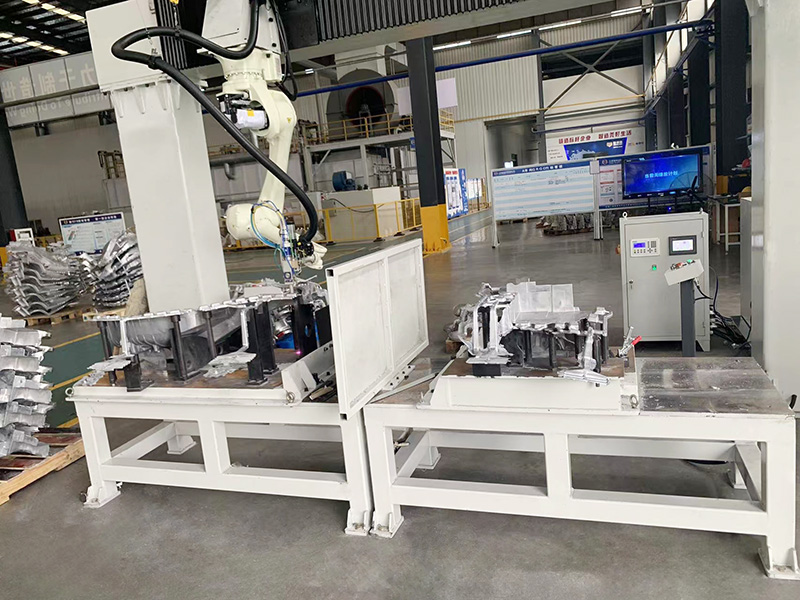
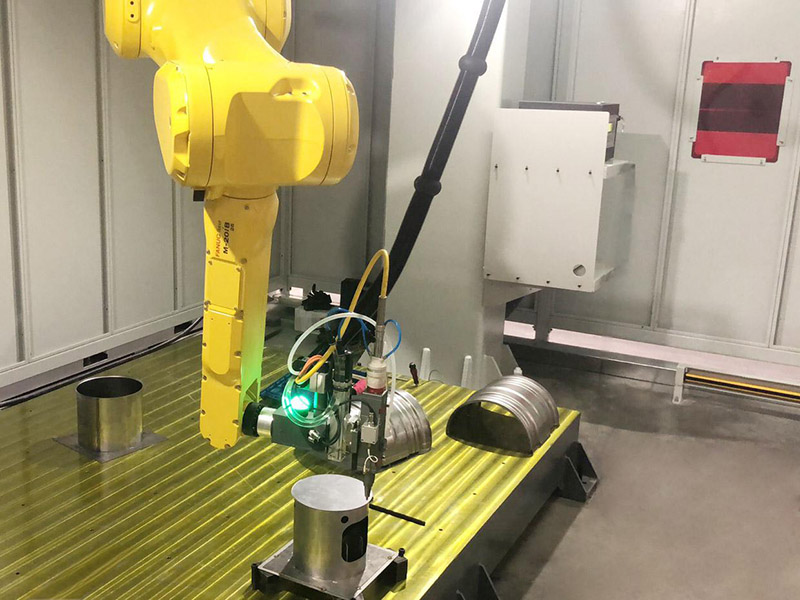
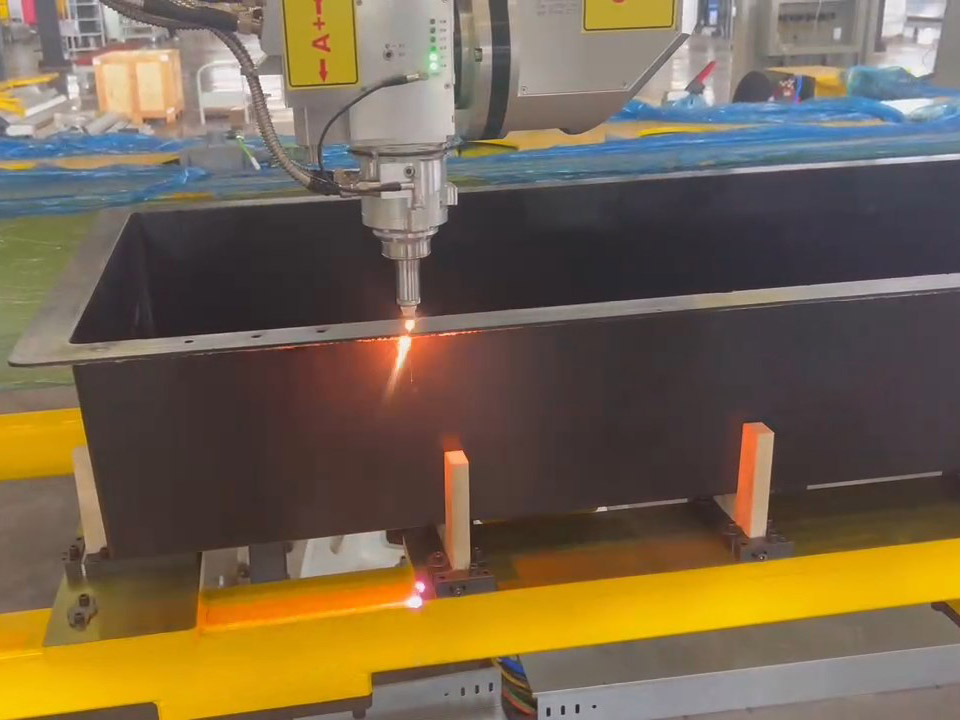
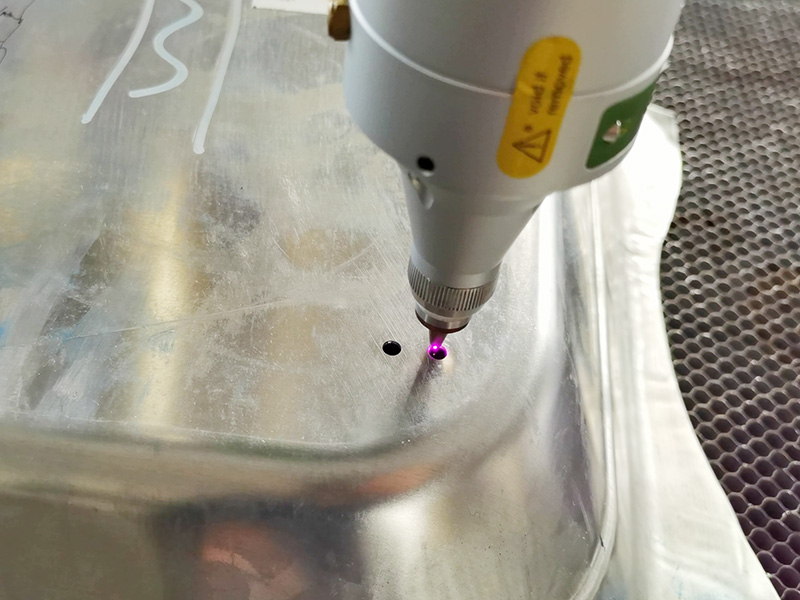
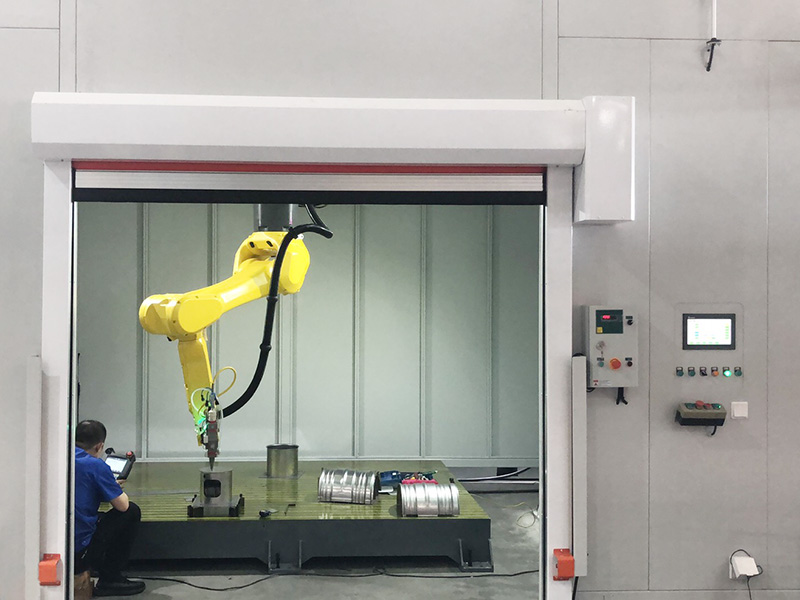
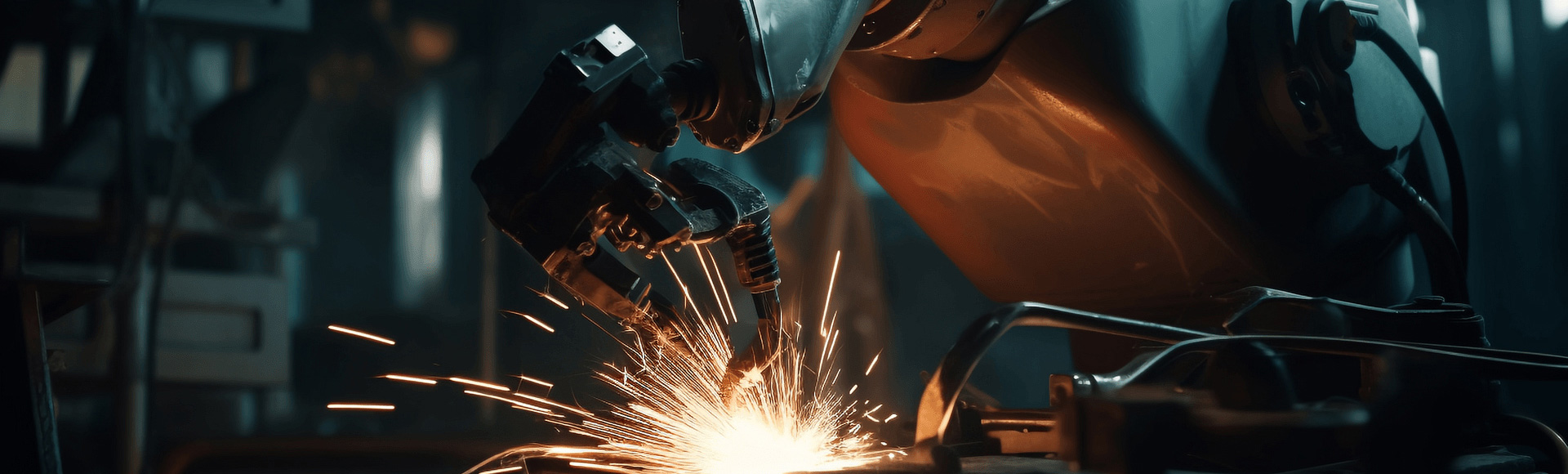
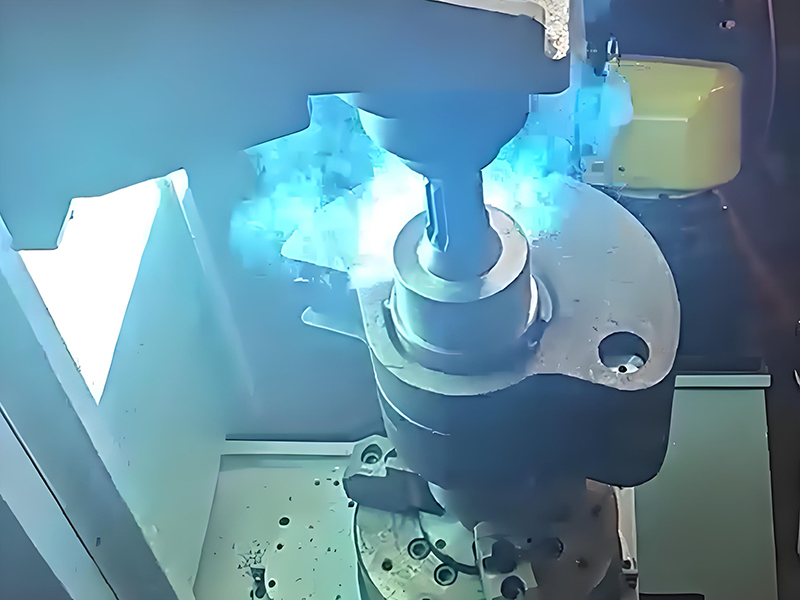
In today's rapidly evolving manufacturing landscape, industrial welding robots have become a key element in enhancing production efficiency and competitiveness. Through highly automated welding processes, they have not only revolutionized traditional production models but also demonstrated significant advantages in improving production efficiency, ensuring welding quality, and enhancing workplace safety. This article will delve into the application fields, main types, core advantages, programming support, and future development directions of industrial welding robots, revealing the complete picture of this crucial manufacturing technology.
Wide Application Fields of Industrial Welding Robots
Industrial welding robots have found their way into several key areas of modern manufacturing:
Automotive Manufacturing: As the most mature and extensive application field for welding robots, they undertake welding tasks for critical components such as body frames, chassis structures, and engine parts, ensuring high efficiency and precision in automobile production.
Aerospace Industry: Faced with demanding requirements for welding precision and reliability, welding robots, with their exceptional stability and consistency, play an irreplaceable role in high-end manufacturing such as aircraft structural components and engine parts, while also adapting to certain special working environments.
Electronics Manufacturing: In the production of miniaturized, high-precision electronic components, welding robots can perform precise welding of细微 parts such as circuit boards, precision connectors, and micro sensors, meeting the electronic industry's demand for sophisticated manufacturing.
Heavy Industry: For welding large-scale pressure vessels, boilers, bridge components, and other heavy equipment, industrial welding robots demonstrate strong load capacity and working range, ensuring the welding quality and safety of large structures.
Other Industries: Beyond the above main areas, industrial welding robots are also actively penetrating into metal processing, medical device manufacturing, building materials production, and other industries, constantly expanding their application boundaries.
Common Types of Industrial Welding Robots
Depending on welding processes and application scenarios, industrial welding robots are mainly categorized into the following types:
Spot Welding Robots: These robots apply pressure to metal parts through electrodes and use resistance heat to achieve local melting and welding. They are widely used in welding thin-plate components requiring numerous connection points, such as automobile body assembly.
Arc Welding Robots: Utilizing high temperature generated by an electric arc to melt the welding wire and base metal to form a weld, arc welding robots are suitable for continuous welding of various metal materials, particularly excelling in welding large structural components and pipelines.
Laser Welding Robots: Using a high-energy laser beam as the heat source for welding, laser welding robots feature fast welding speed, small heat-affected zone, and high welding precision, making them especially suitable for welding precision parts and special materials.
Other Types: Additionally, there are plasma welding robots, Metal Inert Gas/Metal Active Gas (MIG/MAG) welding robots, and other types, which provide diversified solutions for different welding requirements and material characteristics.
Core Advantages of Adopting Industrial Welding Robots
The introduction of industrial welding robots has brought about significant improvements for manufacturing enterprises in multiple aspects:
Significantly Improved Production Efficiency: Welding robots can operate continuously 24 hours a day, unaffected by human factors such as fatigue and mood, greatly shortening production cycles and significantly increasing output per unit time.
Stably Enhanced Welding Quality: Robots can precisely control key parameters such as welding current, voltage, speed, and path, ensuring uniform and consistent quality of each weld, effectively reducing welding defect rates and improving the overall product quality.
Effectively Improved Working Environment: Welding processes are often accompanied by high temperatures, arc light, fumes, and noise. Robots can replace manual operations in these harsh and harmful environments, fundamentally safeguarding workers' health and operational safety.
Reduced Dependence on Manual Skills: Complex welding processes have extremely high requirements for workers' skill levels. Welding robots, however, can complete high-difficulty welding tasks through pre-set programs, thereby reducing enterprises' reliance on highly skilled welders and alleviating recruitment pressures.
Programming and Control of Industrial Welding Robots
The efficient operation of industrial welding robots relies on professional programming software support. These software allow operators to set precise welding paths, parameters, and process logic for the robots to adapt to different welding tasks. Through intuitive programming interfaces and powerful functions, operators can conveniently create, simulate, debug, and optimize programs, ensuring that the robots can accurately execute welding operations as expected.
Future Development Trends of Industrial Welding Robots
With the continuous advancement of technology, industrial welding robots are rapidly developing in the following directions:
Continuous Improvement in Intelligence Level: Future welding robots will possess stronger environmental perception, autonomous decision-making, and self-learning capabilities. They will be able to monitor the welding process in real-time, automatically adjust parameters to adapt to workpiece changes or external disturbances, and continuously optimize welding strategies through data accumulation.
Increasing Popularization of Collaborative Applications: Collaborative welding robots will work more flexibly and safely alongside human workers without the need for complex safety isolation, realizing an efficient human-robot collaborative production model, which is particularly suitable for small-batch, customized production needs.
Continuous Enhancement of Flexibility: In response to the increasingly diversified product demands, welding robots will have higher flexible production capabilities, enabling rapid switching between different welding tasks, adapting to welding of workpieces of different shapes, sizes, and materials, and shortening production preparation time.
Conclusion
In summary, as an indispensable key equipment in modern manufacturing, industrial welding robots have profoundly changed traditional welding operation modes through their significant advantages in production efficiency, welding quality, and operational safety. With the continuous evolution of technological trends such as intelligence, collaboration, and flexibility, industrial welding robots will undoubtedly play a more central role in the future wave of intelligent manufacturing, injecting strong impetus into the continuous innovation and development of the manufacturing industry."