Industrial 5-Axis 3D Laser Metal Cutting Robot
Release time:2026-08-03
Visits:341
Ever run your hand over the sleek, curved door of a modern car and wonder, ‘How did they cut that metal so perfectly?’ The answer isn’t a giant stamp or a simple saw. It’s an industrial
5-axis laser cutting robot—a quiet giant in modern manufacturing that enables designs once thought impossible.
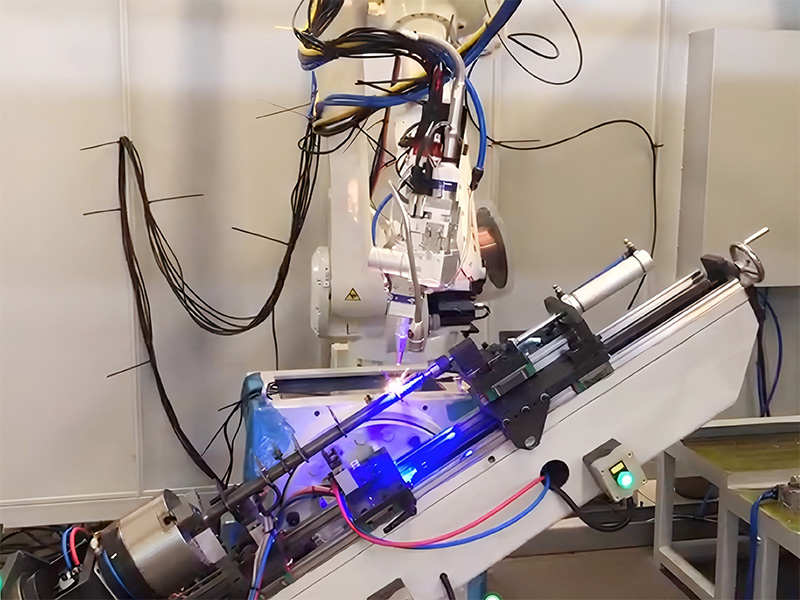
This remarkable machine fuses three technologies: an intensely focused beam of light that vaporizes steel, a tireless robotic arm with inhuman precision, and the five-axis 'magic' that allows it to cut from any angle, pushing the frontier of sheet metal fabrication.
What Makes a Laser Powerful Enough to Cut Steel?
Think about how a magnifying glass can focus sunlight into a single, hot point that can burn paper. An industrial laser does essentially the same thing, but with a beam of light made millions of times more powerful. This incredibly concentrated energy becomes so intense at its focal point that it can slice through thick steel as if it were butter.
This is a thermal process, not a physical one. Unlike a saw that uses brute force to tear material apart, the laser’s pinpoint of light instantly melts and vaporizes the metal in its path, creating the cut without ever making physical contact. Because nothing touches the material, this method allows for exceptionally high-precision laser trimming and leaves a perfectly clean edge. But a powerful tool needs precise guidance, especially across large, curved surfaces.
What Does the Robotic Arm Bring to the Table?
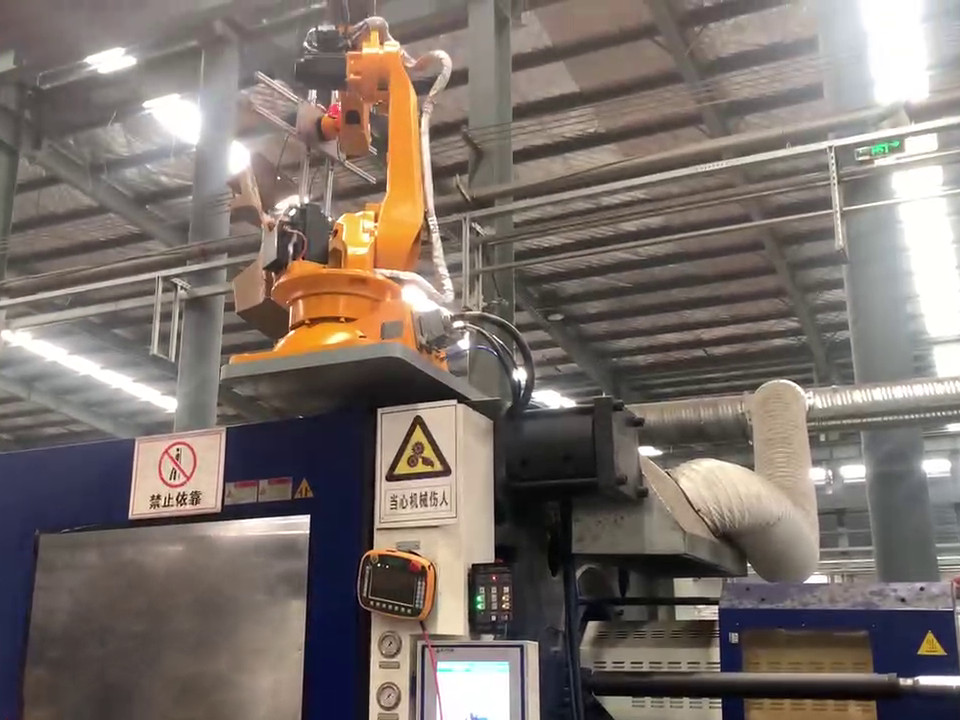
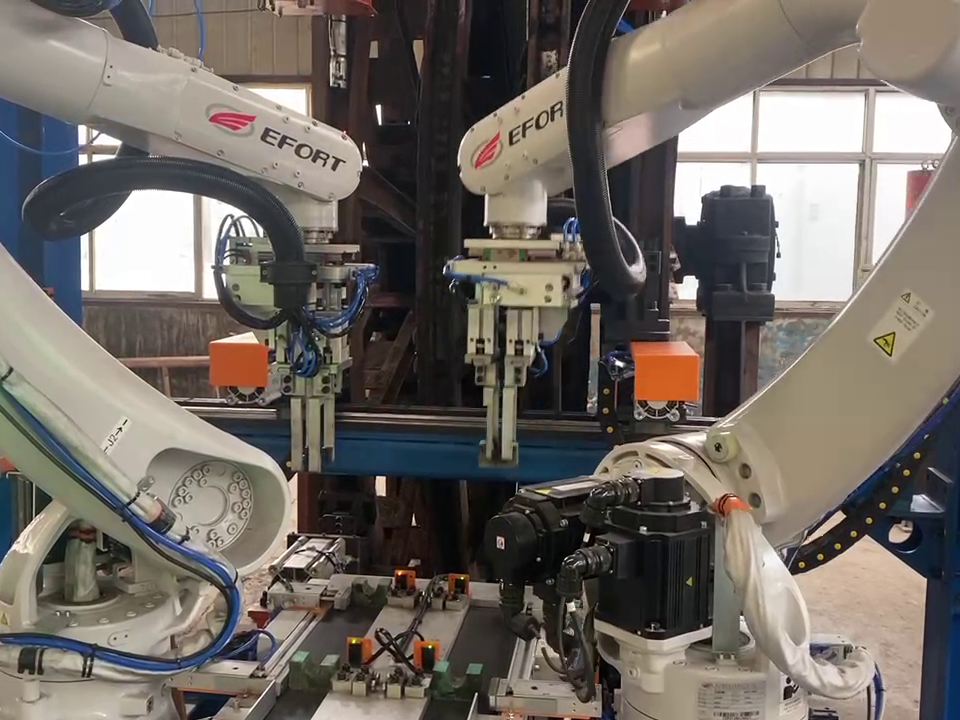
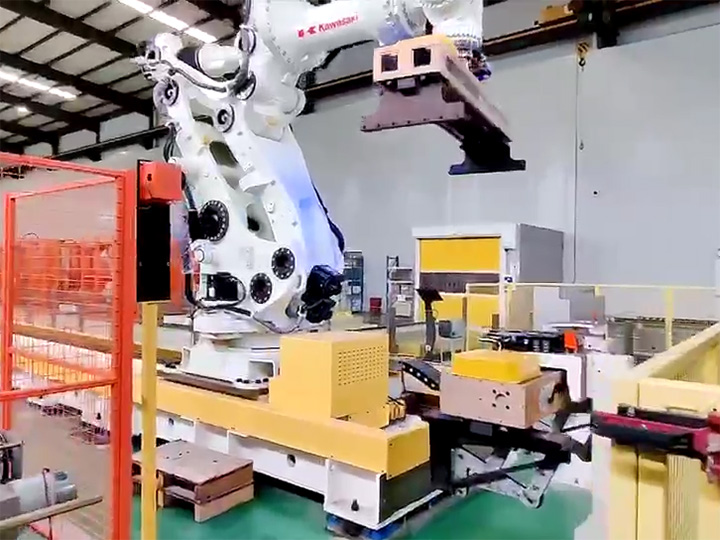
The robotic arm is the tireless, superhuman muscle of the operation. While a person would struggle to hold even a small tool perfectly steady for hours, the arm can position the heavy laser cutter with unwavering precision all day, every day, without fatigue. It provides the strength and stability needed to guide the delicate beam of light.
But the arm’s real superpower is repeatability. It can perform the exact same intricate motion millions of times in a row with no variation. The first car door panel it trims is a perfect, identical twin to the ten-thousandth. This consistency is the key to modern mass production, overcoming the natural limits of human hands. The arm provides strength and perfect consistency, but to cut complex curves, it needs incredible agility.
The 5-Axis Breakthrough: More Than Just Up, Down, Left, and Right
To appreciate the robot's agility, picture a simpler machine, like an arcade claw game. It can move in three basic directions, or axes: left-and-right, forward-and-backward, and up-and-down. This is called 3-axis movement. It’s great for working on flat surfaces but is completely stuck if it needs to cut a hole in the side of an object.
This is where 5-axis laser machining comes in. In addition to those first three movements, the robot adds two more that work just like your wrist. The fourth axis provides rotation (like twisting a doorknob), and the fifth axis provides tilt (like bending your hand up and down). These two "wrist" motions give the robotic arm its incredible dexterity.
With this full range of motion, the laser is no longer confined to approaching a part from directly above. It can swoop in from the side, tilt at a sharp angle to bevel an edge, or gracefully trace a perfect circle around a curved pipe. The difference between a 5-axis laser vs a 3-axis laser is like the difference between a simple drill press and a master sculptor’s hand. This multi-axis robotic laser cutting is what allows manufacturers to create the complex, seamless, and strong parts that define modern products.
From Digital Blueprint to Perfect Cut
That incredible agility would be chaos without clear instructions. The process begins on a computer where designers create a perfect 3D model of a part. This file acts as a highly detailed digital blueprint containing every curve, hole, and precise dimension.
Next, specialized software analyzes this blueprint and acts as a translator. Programming a laser cutting robot is a process of converting the "what" (the design) into the "how" (a step-by-step movement plan). The software calculates the most efficient route for the laser to follow, determining the exact angles and speeds needed for a flawless cut on a complex 3D surface.
With its instructions loaded, the robot springs to life. The arm gracefully moves into position, its ‘wrist’ tilting and turning as the laser activates. It flawlessly traces the programmed path, vaporizing metal to create a smooth cut that matches the digital blueprint to within a fraction of a millimeter. This symphony of software and motion creates a perfect part, every single time.
5-Axis Laser Cutting in the Real World
While this technology operates inside advanced factories, its results are all around you. It’s a key tool for automating sheet metal fabrication for intricate designs. From everyday travel to cutting-edge design, these robots are shaping our world:
Automotive: Trimming the sleek, stamped body panels, doors, and chassis components that give modern cars their distinctive look and strong frames.
Aerospace: Cutting precise openings and lightweight structural parts for aircraft fuselages, where every gram and millimeter counts.
Architecture & Design: Creating custom decorative metal facades for buildings, complex parts for designer furniture, and even large-scale metal sculptures.
Any industry that needs to cut complex 3D parts from formed metal—quickly and perfectly—relies on this solution.
Why It's Better Than Stamping or Plasma Cutting
Traditional metal stamping is like a giant, custom-made cookie cutter. It’s incredibly fast for making millions of the same part, but creating that custom cutter is slow and expensive. A 5-axis laser robot, by contrast, needs no physical tool. It simply follows a new digital blueprint, giving it the flexibility to create different complex designs on the fly.
When considering plasma cutting, the difference comes down to precision. A plasma torch cuts with brute force, like using a blowtorch on paper—it's powerful, but leaves a rough edge that needs cleanup. A laser is more like a surgeon’s scalpel. It vaporizes the metal in a microscopic line, resulting in a smooth, finished edge straight from the machine. Ultimately, a robotic laser cutting machine is ideal for the manufacturing sweet spot: producing intricate, high-quality 3D parts without the massive upfront cost of custom tooling.
The Future Is Cut with Light
The seamless curves on a modern car once seemed like magic, but now you can recognize the technology behind them: a powerful beam of light guided by the flexibility of an industrial 5-axis laser cutting robot. The chief advantages are the design freedom and efficiency it offers.
The next time you see a complex metal object, look for the tell-tale signs of high-precision laser trimming—a flawless edge on a 3D curve. You're no longer just seeing a product; you're seeing the story of its creation, an invisible artistry building the modern world.