Plasma Cutting: How It Works, Equipment And Applications
Release time:2026-10-09
Visits:2
Plasma cutting is the fastest way to cut electrically conductive metal in most fabrication shops. It uses an arc to ionize gas into a plasma jet that melts and blows away the metal, producing a clean edge at high speed. This article covers how plasma cutting works, the difference between standard and high-definition systems, and how to choose the equipment.
How Plasma Cutting Works
A plasma cutter has three essentials: a power source, a torch, and gas. Inside the torch, a tungsten electrode and the workpiece (or a nozzle) create an electric arc. Gas flows through the arc and ionizes into plasma, a stream of superheated, electrically charged gas that conducts the arc to the workpiece. A constricting nozzle squeezes the plasma into a narrow jet. The jet melts the metal, and the gas pressure blows the molten metal out of the cut.
The result is a kerf that is narrow, a cut that is fast, and edges that are usually good enough for welding with little or no preparation.
Plasma vs. Oxyfuel vs. Laser
Each cutting method has its territory:
Oxyfuel burns the metal with oxygen, so it only works on steel and it heats a wide zone. It is cheap and still the choice for very thick plate, but slow and imprecise on thin material.
Plasma melts any conductive metal: mild steel, stainless, aluminum, copper and brass. It is fast on thin and medium plate, and the heat-affected zone is small.
Laser cuts the cleanest edge with the narrowest kerf and the highest precision, at higher equipment cost. It wins on thin sheet and tight tolerances.
As a rule: up to about 25-30 mm of mild steel, plasma is usually faster than oxyfuel and much faster than laser on thicker material; above that thickness, oxyfuel or high-current plasma competes. For stainless and aluminum, plasma has no oxyfuel rival.
Air Plasma and High-Definition Plasma
Standard air plasma uses compressed air as the plasma gas. It is inexpensive to run, cuts mild steel from 1 mm to around 50 mm depending on current, and is the workhorse of general fabrication.
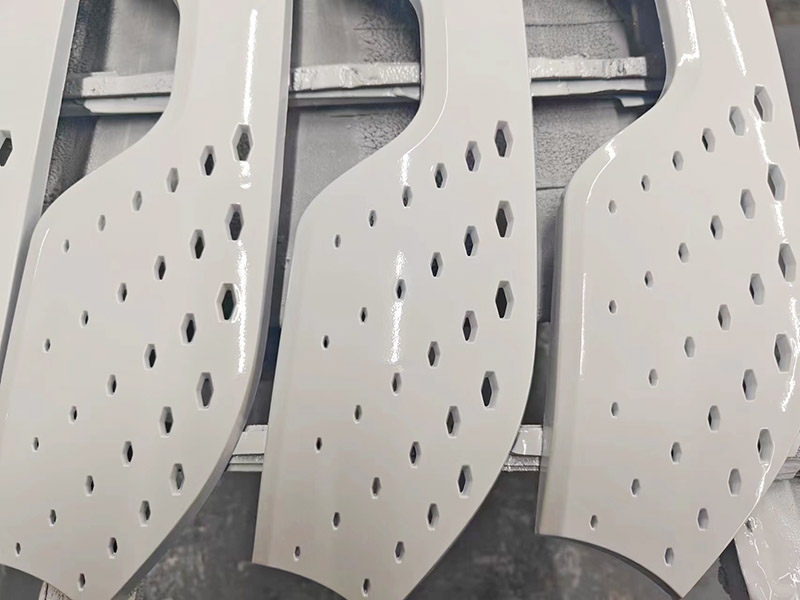
High-definition (HD) plasma uses a finer nozzle, a different gas mix (often nitrogen, oxygen or argon-hydrogen), and tighter current control. The result is a square edge, less dross, and a smaller heat-affected zone, approaching laser quality on plate. HD systems cost more and are used where edge quality feeds directly into welding or painting.
Plasma Cutting Equipment
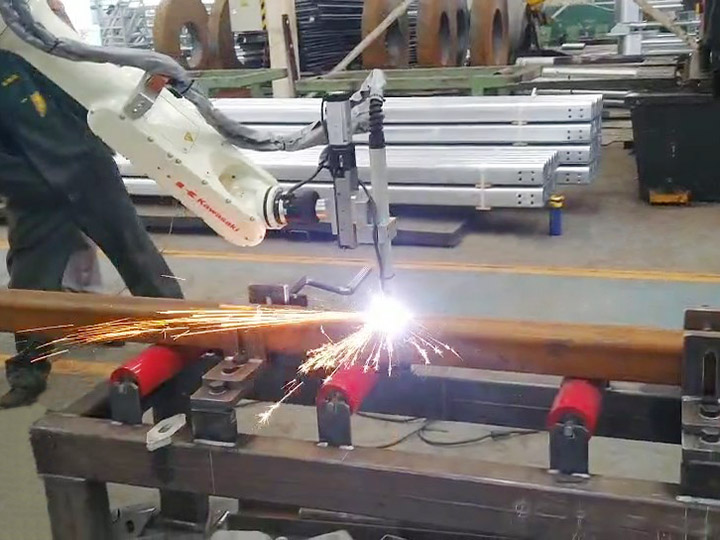
A complete system has a power source sized by output current, a torch with consumables (electrode, nozzle, swirl ring, shield), a gas supply, and a motion system. Manual torches handle handheld work. CNC plasma cutting machines cut sheets from a digital nest, which is where plasma shows its productivity. Robot plasma cutting stations cut 3D parts, profiles and pipes that a flat table cannot reach.
Modern CNC tables include height control that senses arc voltage and keeps the torch at the right standoff, which matters because torch height directly changes cut quality. Fume extraction is part of the package: plasma cutting produces fine fume and dust that have to be captured.
Cut Quality and Consumables
Cut quality shows up as kerf width, edge squareness, dross on the bottom edge, and the size of the heat-affected zone. All of them are controlled by current, travel speed, gas flow, torch height and consumable condition. Consumables wear: a worn nozzle widens the kerf, a worn electrode erodes the arc stability. Most shops track consumable life and change them on schedule rather than on failure.
Applications
Plasma cutting covers structural steel fabrication, shipyard plate work, heavy equipment, tanks and vessels, and metal recycling. It cuts profiles, flanges, pipe and plate in every position. Fabrication shops run it between the warehouse and the welding bay: parts arrive cut, nested, and ready to weld.
Bottom Line
Plasma cutting earns its place with speed and versatility. Standard air plasma covers most steel work; HD plasma adds edge quality where the weld or the paint line demands it; robot plasma cutting extends the process to 3D parts. Dade Heavy Industry supplies robot plasma cutting stations, including the RA20N series, alongside laser cutting systems, and can match the cutting method to your material mix and tolerance needs.