Plasma Welding: Process, Advantages And Applications
Release time:2026-10-12
Visits:2
Plasma welding, formally plasma arc welding (PAW), is an arc welding process that squeezes the arc through a narrow nozzle to produce an extremely hot, concentrated plasma stream. It welds deeper and faster than TIG on many materials, with less distortion, and it is a standard process in pressure vessel and pipe fabrication. This article explains how plasma welding works, where it beats TIG, and how to use it.
How Plasma Welding Works
The plasma torch looks like a TIG torch but works differently. A tungsten electrode sits inside the torch, and an arc forms between the electrode and the workpiece. Gas flows around the electrode and through a constricting nozzle, which squeezes the arc into a narrow column. The constriction does two things: it raises the arc temperature and energy density well above an open TIG arc, and it makes the arc column stable and directional.
There are two arcs to manage. The pilot arc runs between electrode and nozzle, keeping the plasma ready to transfer; the main arc transfers to the workpiece and does the welding. This arrangement makes arc starting reliable, even at very low currents.
Two Welding Modes
Plasma welding operates in two modes:
Melt-in mode. The plasma melts the joint like TIG, with or without filler wire. It suits thin material and gives a stable, controllable weld pool.
Keyhole mode. At higher current, the plasma jet blows a hole through the workpiece. The hole travels with the torch and the molten metal flows around it and fills in behind. The result is full penetration in a single pass, which is why keyhole plasma welds thick sections that would need multiple TIG passes.
Micro-plasma, operating at currents down to a few amps, extends the process to foil-thin material. It is used for precision work such as instrument bellows and thin sheet, where a conventional arc would burn through.
Plasma Welding vs. TIG
Both processes are clean and precise, and both suit stainless and alloys. The differences matter:
Penetration. Plasma's constricted arc goes deeper. One keyhole pass can replace several TIG passes.
Distortion. Less heat goes into the workpiece relative to weld depth, so distortion is lower.
Speed. Keyhole plasma welds faster on thick material.
Arc stability and standoff. The plasma arc tolerates a longer arc length and more variation in torch height, which makes mechanized welding easier.
Equipment and skill. Plasma torches cost more and consumables are more sensitive to setup. TIG is more forgiving for a manual welder.
Equipment and the P+T Combination
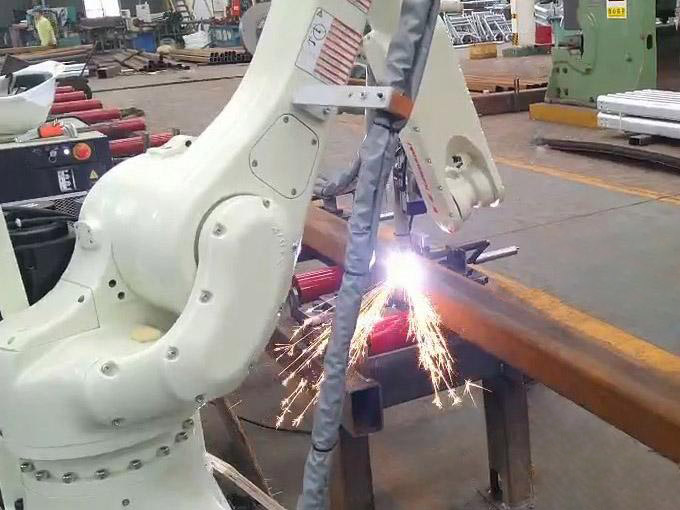
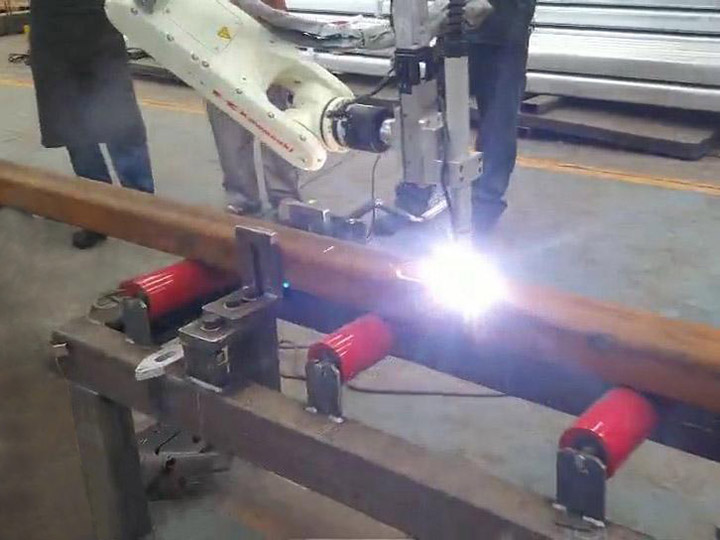
A plasma welding system includes the power source, the plasma torch with its consumables (electrode, nozzle, gas distributor), and gas supplies for plasma gas and shielding gas. In production, plasma welding is usually mechanized: the torch runs on a carriage, manipulator or robot, with a wire feeder where filler is needed.
The P+T combination is common in pressure vessel work. Plasma makes a deep, reliable root pass, and TIG fills the joint on top. The two processes run in sequence, sometimes in the same setup. The plasma root is fast and fully fused; the TIG fill gives a smooth, inspectable weld face. It is a standard approach for stainless and alloy vessels, and it is exactly the kind of equipment built for pressure vessel fabrication.
Key Parameters
Current sets penetration and mode. Plasma gas flow shapes the arc: too little gas and the arc loses stability, too much and it cuts instead of welding. Standoff distance is more forgiving than TIG, but still needs control. Shielding gas protects the pool, and backing gas protects the root on pipe and closed sections. For keyhole welding, travel speed has to match the keyhole: too slow and the hole widens, too fast and penetration drops.
Applications
Plasma welding is used for pressure vessels and storage tanks, pipe and tube joining, stainless process equipment, aerospace components, and any joint where deep penetration in one pass saves time. Micro-plasma covers precision instruments and thin sheet. Because the process is easy to mechanize, it also fits automated lines where TIG would struggle to hold parameters.
Quality and Inspection
Plasma welds are inspected like any critical weld: visual examination, then RT or UT on code-defined percentages, and PT or MT where surface quality matters. The process produces a narrow, consistent weld that NDT tends to like, provided the parameters and consumables stay in specification.
Bottom Line
Plasma welding earns its place where penetration, speed and low distortion decide the economics: pressure vessels, pipes and stainless fabrication. Mechanized with a positioner or manipulator, it runs the same weld all day. Dade Heavy Industry supplies plasma welding equipment, including P+T welding systems for pressure vessels, and can build the setup around your joint geometry and code requirements.