Vacuum Contactor For Welding Applications: A Practical Guide
Release time:2026-11-06
Visits:4
Resistance welding covers spot welding, projection welding, seam welding and butt welding, and each application switches current in its own rhythm. A vacuum contactor for welding applications has to match that rhythm: the operation count, the current, and the control system it works with. This article maps the applications and explains how to specify a vacuum contactor for each one.
What the Applications Have in Common.
Every
resistance welding application does the same electrical job at heart: feed a transformer primary through a switching device, one weld at a time. The differences are in the numbers. A spot welder makes short current pulses at high frequency. A seam welder runs continuous rolling welds. A projection welder fires heavy current through large contact areas. A multi-gun line switches several transformers in sequence, every cycle. The contactor selection follows the numbers of the specific machine.
Spot Welding
Spot welding machines make discrete welds at rates from a few per minute on heavy plate to over a hundred per minute on thin sheet. The contactor sees the highest operation count of any welding application. This is where a vacuum contactor earns its keep: millions of operations per year, and each one must break cleanly or the weld schedule drifts.
Sizing notes: match the primary current with margin, confirm the AC-4 duty rating against the weld rate, and keep the coil supply separate from circuits that sag under weld load. On robotic spot welding guns, the contactor is often mounted with the transformer, so check the enclosure rating and vibration tolerance.
Projection Welding
Projection welders concentrate the current through embossed projections on the parts, which melt and collapse to form the weld. The current per weld is high, the cycle is short, and the transformer is large. The contactor switches a heavy transformer primary, and the inrush at each close is significant.
Sizing notes: size the contactor for the transformer's full-load primary current plus inrush margin. Check the mechanical life, because projection welding lines run continuous duty. Verify the auxiliary contacts provide the weld-permit interlock the controller needs before firing.
Seam Welding
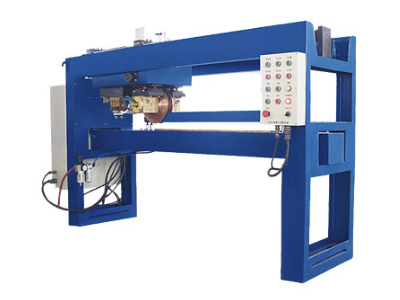
Seam welders make a continuous weld by rolling the electrodes along the joint while current pulses on and off, typically at 5 to 50 pulses per second depending on the speed. The transformer primary is switched in rapid succession, which is the most demanding duty for any switching device.
Sizing notes: this duty is at the top of the contactor's rating table. Confirm the electrical life at the rated current covers the operating hours, and consider the thyristor-plus-contactor arrangement where the current pulses are controlled by SCRs and the contactor handles isolation. The vacuum contactor is the right choice here because air contacts simply cannot hold this rate.
Butt Welding and Flash Welding
Butt welders clamp two parts end to end and pass current through the joint, with or without an upset force. Flash welding adds a flashing phase with high current and rapid switching before the upset. The contactor sees heavy current and a harsh mechanical environment from the clamping and upset forces.
Sizing notes: size for the peak primary current, check the coil supply for dips during the flash phase, and protect the contactor from vibration of the machine frame. Flash welding lines run the contactor hard, and a vacuum unit with its sealed contacts handles the shop conditions better than an open-contact unit.
Multi-Gun and Robotic Welding Lines
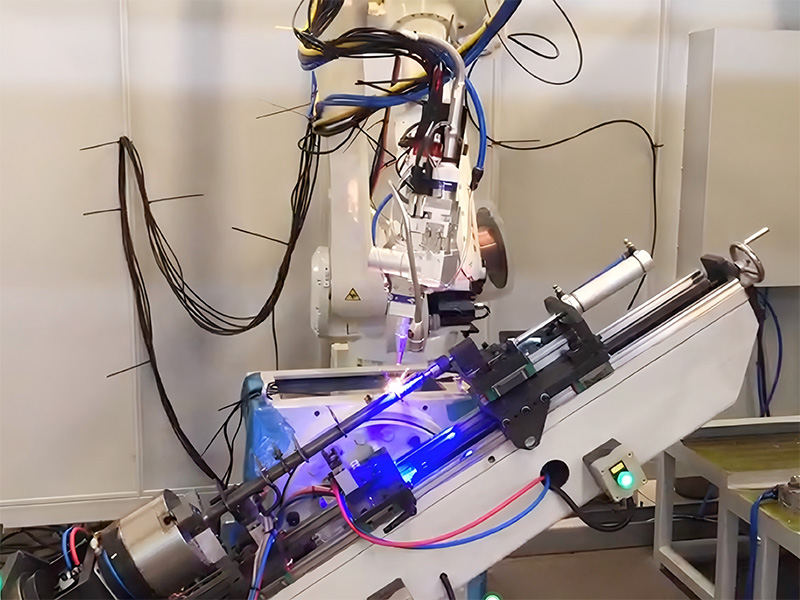
A multi-gun line switches several welding transformers, often in a programmed sequence, through one control system. Each gun's transformer may have its own contactor, or one contactor may serve a group through a changeover arrangement. The control sequence, the weld schedules and the safety interlocks all live in the PLC, and the contactors are its power arms.
Sizing notes: match each contactor to its transformer and duty, keep the coil wiring consistent across the line for easier spares, and use auxiliary contacts for weld-permit and fault reporting to the PLC. On robotic lines, the contactors are typically in a central panel rather than on the robot, which simplifies access and cooling.
How to Specify a Vacuum Contactor for Welding
Write the specification against the machine data, not the catalog:
Supply voltage and phase, transformer kVA, and primary current at full load.
Operation count per shift, to set the required electrical life.
Coil voltage and control interface, with the pick-up range checked against supply dips.
Poles, auxiliary contacts and enclosure rating.
Ambient temperature inside the panel, with derating applied.
Bottom Line
Match the vacuum contactor to the application's numbers, and the application defines the spec: spot welding needs life in operations, seam welding needs the highest duty rating, projection and butt welding need current margin and vibration tolerance, and multi-gun lines need consistent, PLC-friendly control. Dade Heavy Industry supplies resistance welding machines and welding automation, with vacuum contactors specified for each application's duty.