What Is Predictive Maintenance in Robotic Welding?
Predictive maintenance uses measured condition and performance trends to decide when maintenance is needed. It differs from reactive maintenance, which waits for failure, and from fixed-interval preventive maintenance, which services components on a calendar or cycle count regardless of condition.
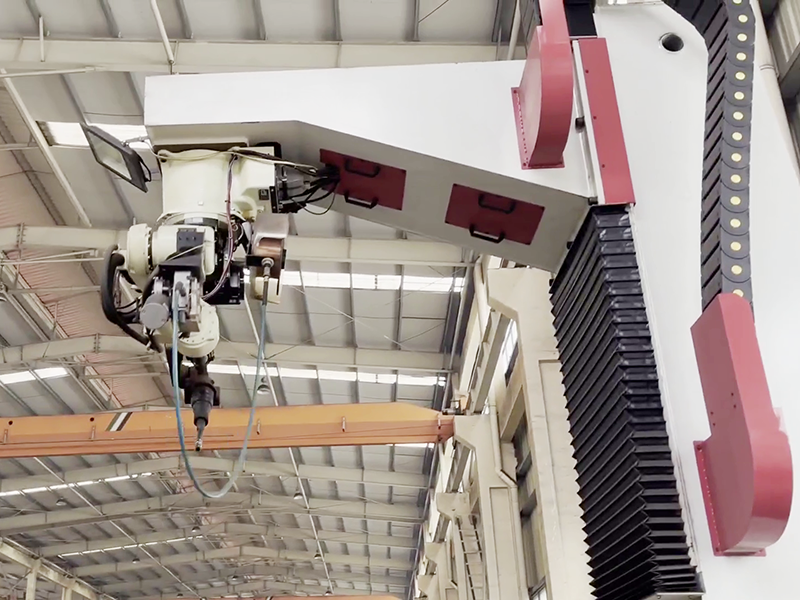
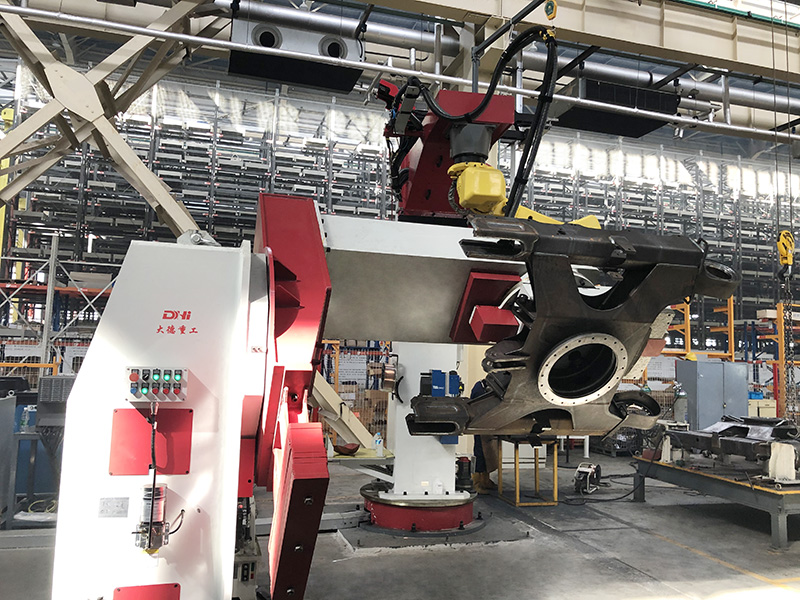
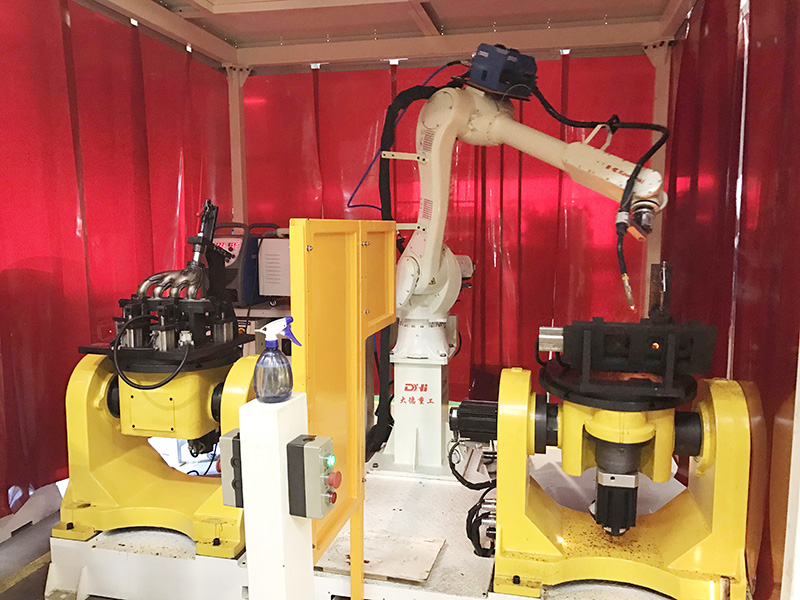
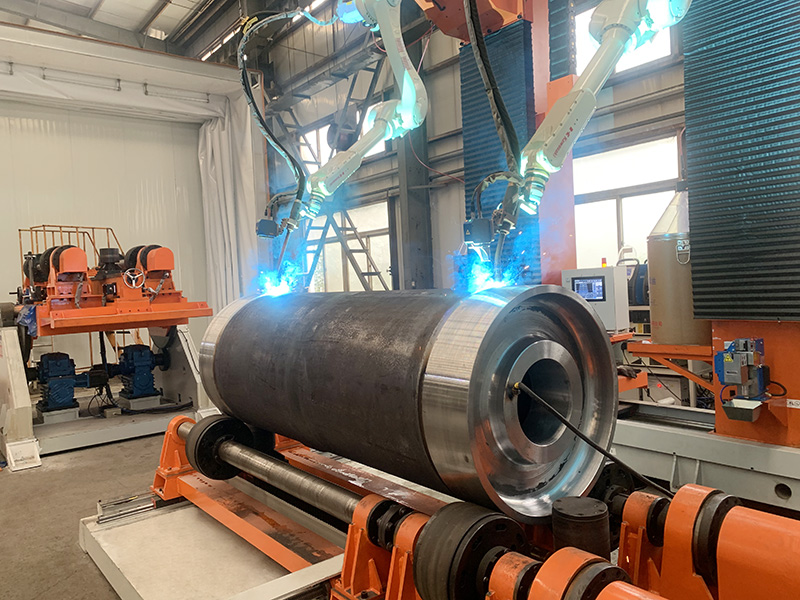
A robotic welding line contains several interacting systems: robot mechanics, controller, welding power source, torch and dress pack, wire feeder, gas and cooling circuits, fixture, positioner, sensors, extraction, safety devices, PLC, and loading equipment. A failure in one system may first appear as a weld defect or a gradual cycle-time increase.
The goal is not to collect every possible signal. It is to detect the failure modes that matter, early enough to plan an intervention.
Which Components Should Be Monitored First?
Start with components whose failure has high safety, quality, downtime, or recovery cost. A criticality review ranks equipment by consequence and detectability.
High-priority items often include:
Robot wrist, axis reducers, and mastering references.
Torch neck, contact tip, nozzle, liner, and cable package.
Wire feeder drive rolls and inlet guide.
Welding power source and output cables.
Positioner bearings, brakes, and gearboxes.
Fixture locators, clamps, sensors, and quick-change interfaces.
Laser head, protective window, cooling, and extraction on laser cells.
Gas regulators, flow sensors, valves, and leak-prone connections.
Safety gates, scanners, interlocks, and emergency devices.
Do not rank a part only by replacement price. A low-cost contact tip can create quality losses across hundreds of parts, while an expensive gearbox may show warning signs months before failure.
What Signals Predict Welding Problems?
The best predictive signals combine equipment condition with production response. A single alarm may be ambiguous; a trend across several signals is more useful.
|
Signal |
Possible Meaning |
|
TCP verification offset |
Torch impact, mount movement, consumable variation |
|
Robot axis load |
Mechanical friction, cable drag, collision, imbalance |
|
Arc current and voltage |
Contact, wire, power-source, or arc-length change |
|
Wire-feed motor current |
Liner friction, drive-roll wear, wire deformation |
|
Shielding-gas flow |
Leak, regulator drift, clogged nozzle, valve problem |
|
Cooling flow or temperature |
Restriction, pump issue, heat accumulation |
|
Cycle-time drift |
Minor stops, path changes, service, sensor retries |
|
Fixture sensor retries |
Contamination, misalignment, clamp wear |
|
Laser protective-window alarm |
Optics contamination, reflection, process spatter |
|
Defect and rework rate |
Combined evidence of process deterioration |
The signal must be linked to a timestamp, part identity, recipe, and machine state. Otherwise, engineers cannot separate a true trend from a change in product mix.
How Should Baselines Be Created?
A baseline records normal behavior after the cell is stable and produces conforming parts. Do not define normal values from the first day of commissioning when programs, fixtures, and operators are still changing.
Capture normal ranges for cycle time, robot loads, TCP checks, welding signals, gas and cooling, fixture response, and alarms. Store representative data across shifts, product models, robot orientations, and consumable age.
Use ranges and distributions instead of one rigid number. A robot axis load changes with posture, so compare a motion segment with its historical peers. A welding current trace varies by joint and recipe, so compare the same program block and material stack.
Document the baseline date, software version, tool configuration, and calibration status.
What Maintenance KPIs Should Be Tracked?
Maintenance KPIs should show reliability, response, and the effect of maintenance on production quality. Recommended measures include:
Mean time between failures (MTBF).
Mean time to repair (MTTR).
Planned versus unplanned maintenance hours.
Repeat failures by component and cause.
Emergency spare-part usage.
Preventive-maintenance compliance.
Alarm recurrence after repair.
First-pass yield and repair minutes per part.
OEE availability and minor-stop frequency.
Calibration failures and drift trend.
A lower MTTR can be more valuable than a small increase in MTBF if the cell can recover quickly with clear diagnostics and stocked parts. Always pair reliability metrics with quality metrics; a cell that runs but produces nonconforming welds is not healthy.
How Can Welding Data Reveal Mechanical Wear?
Welding defects can be an indirect indicator of mechanical degradation. A gradual shift in torch position, inconsistent stickout, or changing approach angle may arise from a loose mount, cable drag, robot wear, or fixture movement rather than a welding-parameter problem.
Use a troubleshooting sequence:
Confirm the part, recipe, and fixture are correct.
Check recent TCP and work-frame verification.
Review robot alarms, loads, and path-related faults.
Inspect torch, cable, nozzle, contact tip, and wire path.
Check fixture seating and clamp repeatability.
Review welding current, voltage, wire feed, gas, and cooling.
Run a controlled reference coupon before changing the production recipe.
This prevents the common mistake of compensating for mechanical wear by changing parameters until the defect moves somewhere else.
How Should Alert Thresholds Be Set?
Alert thresholds should balance early warning against alarm fatigue. A useful design has multiple levels:
Information: behavior is changing; observe and trend.
Inspection: schedule a check before the next planned run.
Action: service or replace a defined component.
Fault: stop or block the cycle because quality or safety may be compromised.
Use absolute limits for safety-critical conditions and statistical or trend limits for gradual wear. For example, a missing safety signal should fault immediately, while a small rise in wire-feeder motor current may prompt inspection.
Every alert should state what to check, who owns it, whether production can continue, and what evidence closes the alert. An unassigned dashboard does not constitute predictive maintenance.
What Is the Role of Digital Connectivity?
Connectivity makes maintenance data searchable across equipment and time, but it does not replace engineering interpretation. Useful interfaces include PLC tags, robot controller logs, welding-source data, sensor states, CMMS work orders, and quality records.
Use consistent naming for machine, axis, tool, fixture, recipe, alarm, and part identity. Keep controller backups and software versions with maintenance records. Protect access so changes to robot programs, parameters, and safety functions are authorized and traceable.
If a cell is not yet connected, start with a structured daily log and exported controller data. A reliable small data set is more valuable than an unreliable large one.
How Should a Maintenance Workflow Operate?
A predictive alert should move through detection, triage, inspection, decision, intervention, and verification. Define the workflow before purchasing analytics software.
Example Workflow
A trend crosses an inspection threshold.
The system creates a maintenance notification with machine state and evidence.
A technician checks the specified component and records findings.
The planner schedules service based on risk and production demand.
The component is adjusted, cleaned, repaired, or replaced.
TCP, fixture, process, or safety verification is completed where required.
A reference part confirms quality before normal production resumes.
The alert is closed with root cause and updated threshold feedback.
If the inspection finds no fault, record that result. False positives are useful when they lead to better thresholds rather than being silently ignored.
What Spares and Documentation Are Needed?
Predictive maintenance reduces risk only when the predicted failure can be acted on. Keep critical spares, tools, drawings, calibration artifacts, backups, and qualified procedures available.
Typical spares include contact tips, nozzles, liners, drive rolls, torch components, sensor windows, fuses, filters, regulators, cables, proximity sensors, and selected positioner or robot service parts. Stock levels should follow lead time, failure consequence, and commonality across cells.
Documentation should cover lockout and isolation, robot recovery, torch change, TCP verification, fixture inspection, gas and cooling checks, recipe backup, alarm interpretation, and post-maintenance quality release.
JiangSu Dade Heavy Industry supplies robotic welding and automation workstations. During handover, customers should request maintenance schedules, alarm lists, recommended spares, calibration methods, electrical and pneumatic drawings, software backups, and escalation contacts.
Frequently Asked Questions
Is predictive maintenance only for large factories?
No. A small cell can begin with cycle-time logs, alarm history, TCP checks, consumable counts, and a few critical process signals. Scale the system after the workflow proves useful.
Can OEE alone predict a failure?
OEE shows performance loss but usually does not identify the cause early enough. Combine it with condition signals and maintenance findings.
Should a welding robot be serviced whenever an alarm occurs?
Not every alarm indicates wear, but every recurring or safety-related alarm deserves documented triage. Review the alarm context, motion, part, and recent maintenance.
How does predictive maintenance protect weld quality?
It identifies drift in tool position, wire delivery, gas, cooling, fixture seating, and process signals before defects become widespread. Quality verification remains necessary.
What is the first practical step?
Create a failure-mode list, rank critical components, capture a stable baseline, and connect each high-priority alert to a clear inspection and reaction.
Conclusion
Predictive maintenance for
robotic welding is an operating discipline built around actionable evidence. Start with critical failure modes, baseline normal behavior, correlate equipment signals with good-part quality, and define a response for every alert. The result is not just fewer breakdowns; it is a welding line whose accuracy, availability, and process capability are maintained deliberately over time.