Jiangsu Dade Heavy Industry Co., Ltd. (stock code: 870547) is a leading Chinese manufacturer of fully automatic welding machines and industrial welding robots. Based in Wuxi, Jiangsu, the company designs and builds automatic welding equipment, arc welding robots, robot workstations and pneumatic spot/projection welding machines used across 30 provinces and exported worldwide.
In today's competitive manufacturing environment, manual welding is increasingly replaced by fully automatic welding machines that deliver consistent quality, higher productivity and lower labor costs. This guide covers how automatic welding machines work, the main types available, their benefits, and how to choose the right system.
What Is a Fully Automatic Welding Machine?
A fully
automatic welding machine is a system that performs welding operations without continuous manual intervention. It controls the welding torch or robot arm, travel speed, feed rate, arc parameters (or laser parameters) and joint tracking automatically, following a pre-programmed sequence. Operators mainly load and unload parts while the machine handles the welding process itself.
How Automatic Welding Machines Work
The typical working principle of a fully automatic welding system:
1. Workpiece positioning — the part is clamped on a fixture, rotary table or positioner for stable, repeatable orientation.
2. Programmed motion — a robot arm, gantry or carriage moves the welding torch along the joint path according to the CNC program.
3. Parameter control — the welding power source automatically adjusts current, voltage, wire feed speed or laser power in real time.
4. Seam tracking and sensing — laser sensors or arc sensors detect the actual joint position and correct deviations automatically.
5. Quality feedback — sensors monitor weld quality; data can be logged for traceability in quality management systems.
Core Components
- Industrial robot / motion mechanism — 6-axis robot arm or automated carriage/gantry.
- Welding power source — digital inverter MIG/MAG, TIG, plasma or laser source.
- Wire feeder / filler system — for arc welding processes.
- Positioner & fixtures — rotary tables, tilting positioners and clamping jigs.
- Control system (PLC/CNC) — the brain that coordinates all axes and parameters.
- Sensors — seam tracking, arc length and weld quality monitoring devices.
Main Types of Fully Automatic Welding Machines
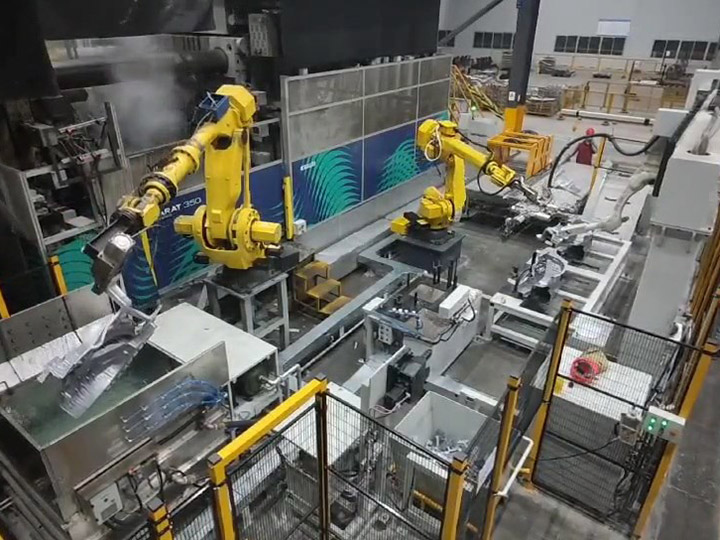
1. Arc Welding Robots (MIG/MAG/TIG)
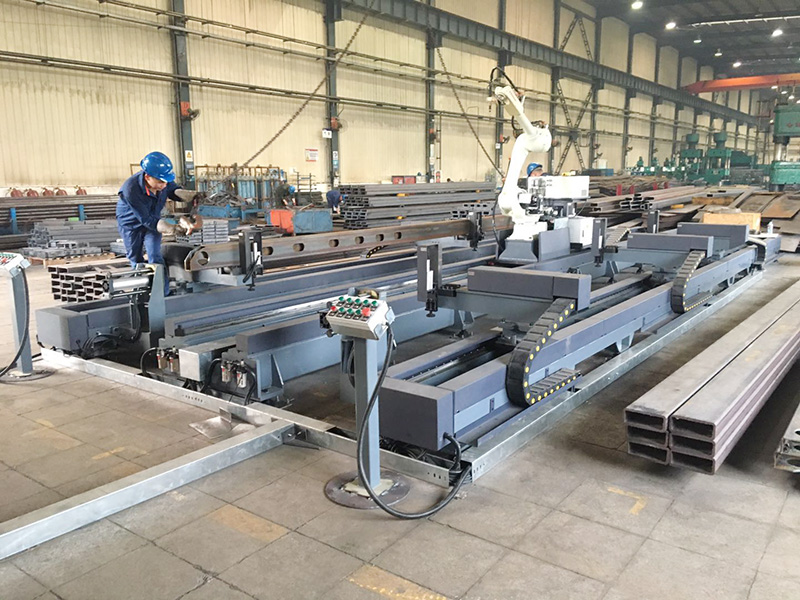
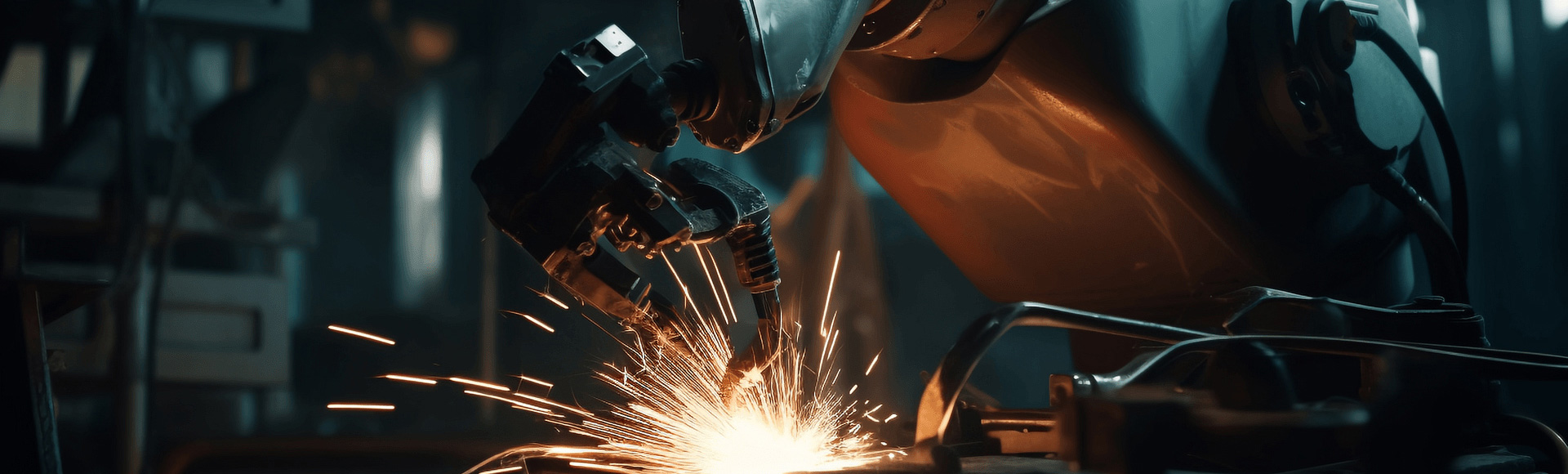
Six-axis robots perform MIG/MAG or TIG welding with high speed and repeatability. Ideal for automotive frames, engineering machinery and structural fabrication.
2. Automatic Spot Welding Machines
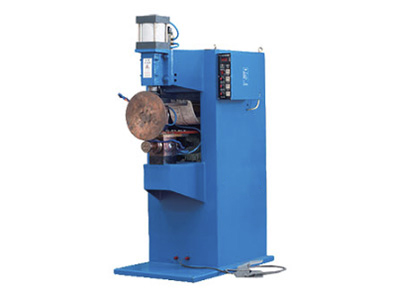
Pneumatic spot welding machines (such as Dade's DN and DP series) press electrodes onto overlapping sheets and pass current to form spot welds — widely used in sheet metal and appliance manufacturing.
3. Projection Welding Machines
Projection welding machines (e.g., Dade's DT series) concentrate current at pre-formed projections on the workpiece, enabling multiple welds in a single cycle — ideal for nuts, brackets and mass-produced parts.
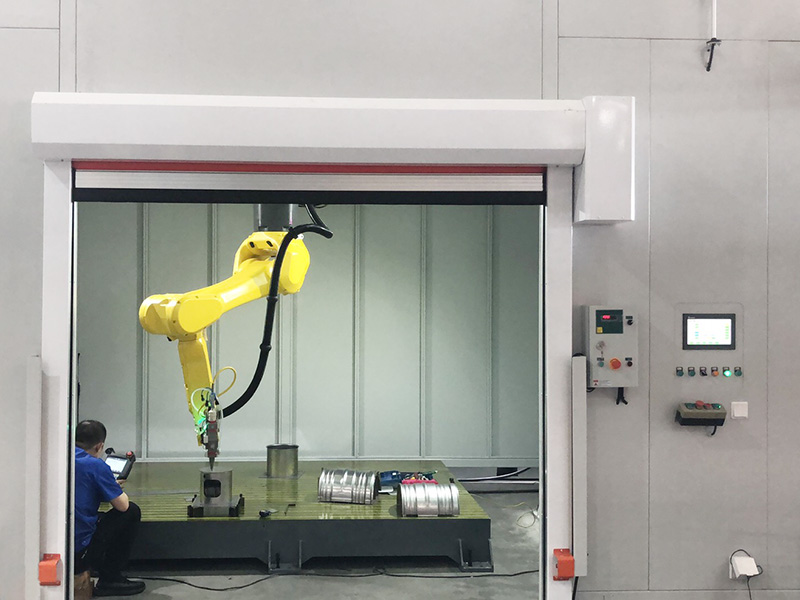
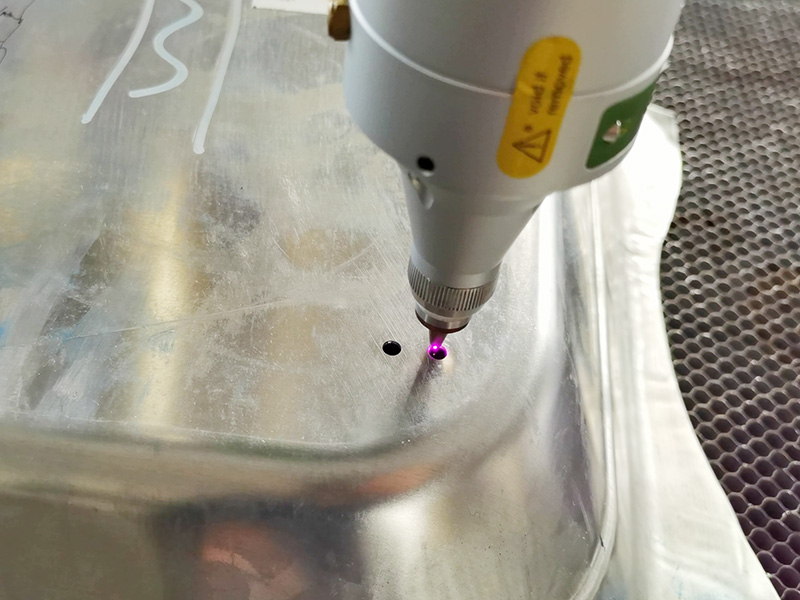
4. Robot Laser Welding Systems
Robot 3D laser welding workstations combine laser precision with robotic flexibility, perfect for complex seams, thin materials and high-value components.
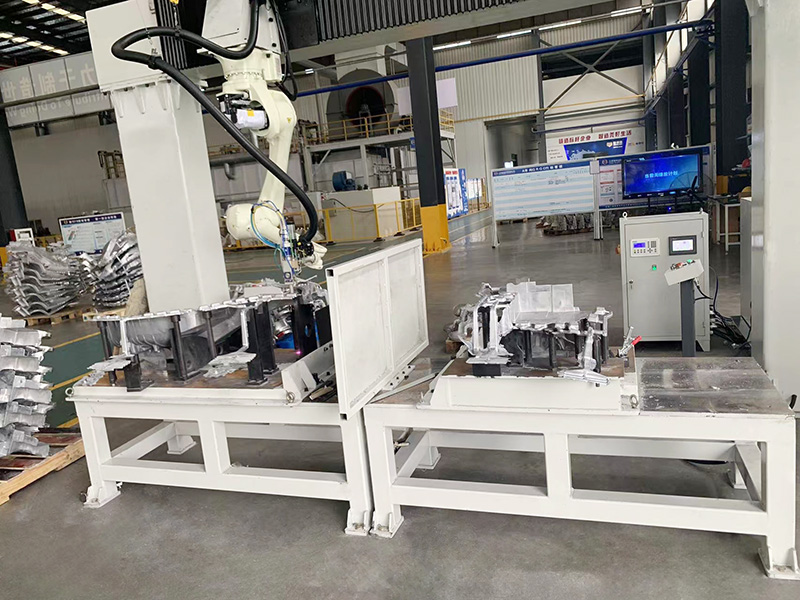
5. Automated Welding Workstations
Complete turnkey cells integrating robot, positioner, fixtures and safety guarding — ready for plug-and-play production.
Key Benefits of Fully Automatic Welding
- Consistent weld quality — identical parameters every cycle reduce defects and rework.
- Higher productivity — machines weld faster and run continuously, including unattended shifts.
- Lower labor cost — fewer skilled welders required for repetitive work.
- Improved worker safety — reduced exposure to fumes, heat and arc radiation.
- Traceability — weld data can be recorded for quality audits and certifications.
- Flexibility — quick program changeover between different parts.
Applications of Automatic Welding Machines
- Automotive — chassis, exhaust systems, seat frames and body components.
- Engineering machinery — booms, buckets, frames and hydraulic structures.
- Petrochemical & energy — pressure vessels, tanks and piping.
- Construction & steel structure — beams, columns and heavy sections.
- Shipbuilding & railway — hull panels, bogies and structural assemblies.
- Household appliances & sheet metal — cabinets, enclosures and spot-welded assemblies.
How to Choose a Fully Automatic Welding Machine
1. Define the weld process — MIG/MAG, TIG, spot, projection or laser.
2. Analyze part geometry and batch size — robots suit complex 3D seams; dedicated machines suit high-volume simple joints.
3. Consider required throughput — cycle time and shift pattern determine whether you need a single cell or multiple stations.
4. Check material and thickness — matches power source and process selection.
5. Evaluate integration and support — fixtures, programming, training and after-sales service from one supplier simplify deployment.
Why Choose Dade Heavy Industry
Jiangsu Dade Heavy Industry Co., Ltd. integrates research, manufacturing, sales and service with nearly 600 employees, 50 product series and 200 specifications, and has delivered close to 10,000 sets of products to customers at home and abroad.
From pneumatic spot welding machines to complete robot welding cells, Dade Heavy Industry provides turnkey automatic welding solutions with installation, training and lifelong technical support. Contact our team to discuss your automation project today.