12KW Laser Cutting Equipment: What The Power Class Buys You
Release time:2026-11-27
Visits:6
Twelve kilowatts is a threshold, not a marketing number. Below it, most cutting decisions are about speed on thin material. Above it, the machine starts to replace processes — plasma, waterjet, and in some cases milling — because it can cut thick section in one pass with an edge that needs no secondary operation.
That shift is why buyers ask about
12KW laser cutting equipment in the same breath as they ask about bed size. The question underneath is usually: can one machine cut 20 mm mild steel and still run 1 mm stainless at a competitive rate? The honest answer is yes, with qualifications about gas, edge finish and the cost per metre that nobody puts in the brochure.
What 12 kW Changes Physically
Energy density and piercing
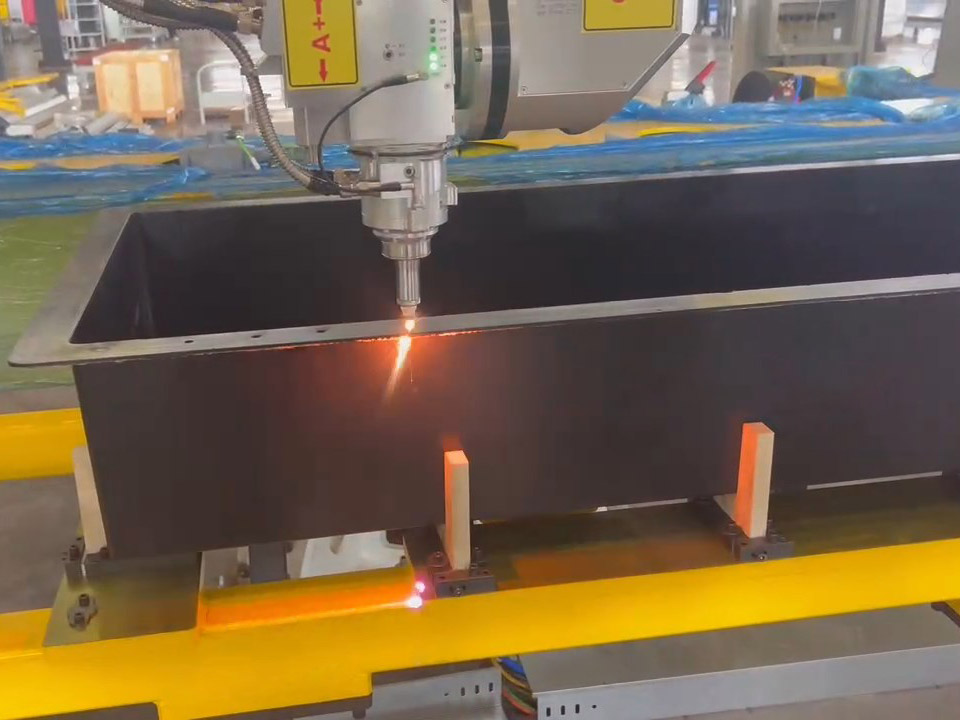
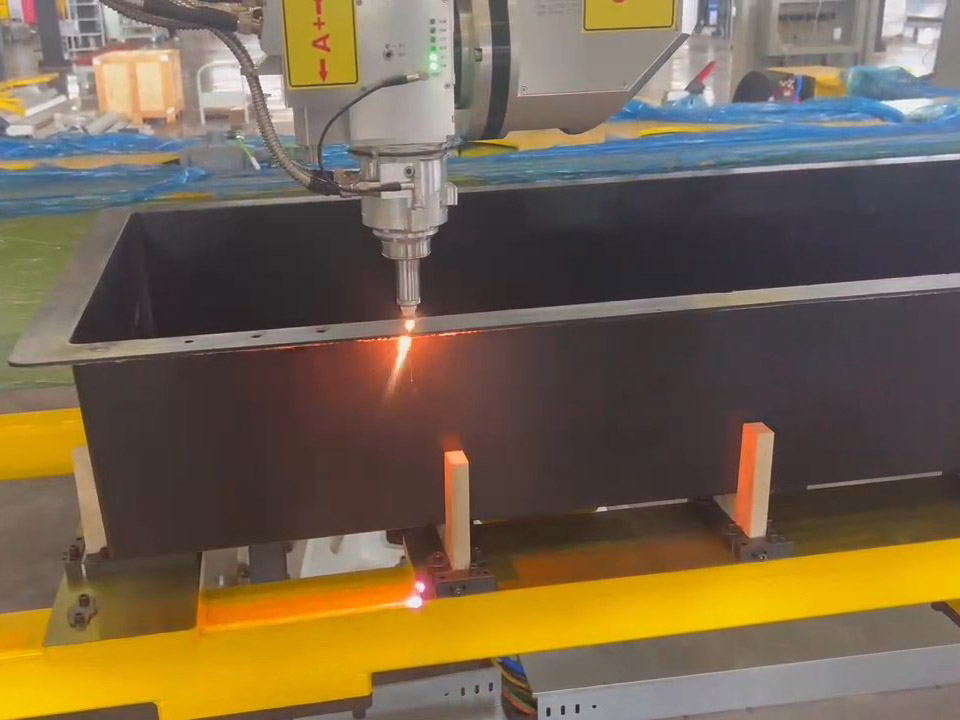
At 12 kW, a fiber source with a 100 µm core delivers enough energy density to pierce 20 mm carbon steel in a controlled ramp rather than a dwell. Piercing strategy is where thick-plate cutting is won or lost: a bad pierce leaves a crater, spatter on the lens, and a scrapped part. Modern high-power heads use a multi-stage pierce with focal position change and power ramp, completing in 2 to 6 seconds on 20 mm.
The gas question
Three modes dominate:
• Oxygen cutting on mild steel: exothermic assist, fast on 6 to 20 mm, but leaves an oxidized edge that needs painting or machining
• Nitrogen cutting: clean, weldable edge, high gas consumption, and the cost rises steeply with thickness
• Compressed air cutting: cheapest per metre, acceptable edge on thinner plate, but oxidation and nitrogen pickup on the cut face
At 12 kW, nitrogen cutting of 12 mm stainless becomes practical, which is where the process competes directly with plasma on quality rather than just speed.
Capability by Material and Thickness
Figures below are typical production ranges, not guarantees. Your edge quality requirement will move them.
|
Material |
Thickness |
Assist gas |
Typical cut speed |
Edge note |
|
Mild steel |
6 mm |
O₂ |
4.5–6.0 m/min |
Slight oxide, paint-ready |
|
Mild steel |
12 mm |
O₂ |
2.2–3.0 m/min |
Oxide layer, good squareness |
|
Mild steel |
20 mm |
O₂ |
1.0–1.5 m/min |
Needs pierce control |
|
Stainless |
6 mm |
N₂ |
4.0–5.5 m/min |
Clean, weldable |
|
Stainless |
12 mm |
N₂ |
1.8–2.6 m/min |
Dross control is the limit |
|
Aluminium |
8 mm |
N₂ |
2.5–3.5 m/min |
Reflective, needs power margin |
|
Aluminium |
15 mm |
N₂ |
1.0–1.6 m/min |
High gas consumption |
A
12 kW machine is not uniformly three times faster than a 4 kW machine. On 1 mm stainless, the gain is small because the process is already speed-limited by dynamics and gas. On 12 mm stainless, the gain is large because the lower-power machine simply cannot make the cut at production speed.
Where the Cost Actually Goes
Electricity and chiller load
A 12 kW source draws roughly 40 to 50 kW at the wall when cutting, and the chiller adds another 8 to 12 kW. Running 4,000 hours a year, that is in the region of 200,000 kWh before you count the extraction and the compressed air. The machine's purchase price is not the main number over a ten-year life.
Assist gas
This is the variable that surprises buyers. Nitrogen at 12 mm stainless can run 25 to 40 Nm³ per hour at 20 to 25 bar. At typical bottled or on-site generated costs, gas can exceed electricity on stainless work. Oxygen on mild steel is far cheaper per metre, which is why structural fabricators stay with O₂ even though the edge is oxidized.
Optics and consumables
High-power heads consume lenses and nozzles faster. Protective windows on a 12 kW head see more thermal load and more spatter, and a window that fails mid-cut can destroy the focusing lens behind it. Budget for protective windows as a weekly consumable on heavy plate work.
|
Cost element |
6 kW machine |
12 kW machine |
Comment |
|
Wall power while cutting |
~28 kW |
~45 kW |
Chiller excluded |
|
N₂ on 10 mm stainless |
~18 Nm³/h |
~30 Nm³/h |
Higher pressure, wider kerf |
|
Protective window life |
3–4 weeks |
1–2 weeks |
Spatter load scales with pierce energy |
|
Nozzle life on O₂ |
2–3 weeks |
1–2 weeks |
Thermal cycling |
When 12 kW Is the Wrong Purchase
If 80 percent of your work is under 3 mm, a
12 kW machine wastes capital, gas and optics life. It also cuts thin material with a wider kerf and more heat input than a 3 kW machine, which shows on painted or coated parts. A shop with a mixed book is usually better served by two machines at different power classes than one machine at the top of the range, unless floor space is the binding constraint.
3D Five-Axis Fiber Laser CNC Cutting Machine
The second wrong purchase is buying power to fix a fit-up problem. A 12 kW machine cannot cut a part that is not flat, cannot hold a tolerance the fixture does not hold, and cannot remove the distortion that the cutting process itself introduces in thin material.
Specifying the Machine Around the Source
Chiller and power supply
Size the chiller for the ambient temperature in your building, not the lab figure. In a workshop that reaches 38 °C in summer, a chiller rated at 30 °C ambient will derate exactly when you need full power. Confirm the supply: a 12 kW source typically needs a 380 V or 400 V three-phase feed with a dedicated transformer capacity, and voltage sag during pierce is a common cause of source faults.
Cutting head and optics
Ask for the head's rated power with margin — a head rated at exactly 12 kW runs at its thermal limit. Look for automatic focus adjustment, a protective window with a sensor that detects contamination, and a nozzle design that supports the gas pressure you need at the thickness you cut.
Dust extraction and safety
Cutting 20 mm plate produces a lot of fume and fine dust. Extraction sized for a 3 kW machine will not keep up, and the resulting haze deposits on the optics and in the beam path. Confirm the extraction volume at the cutting zone, not at the machine enclosure.
Throughput Arithmetic Before You Buy
Take a real part: 12 mm mild steel, 3.2 m of cut, four pierces. On a 12 kW machine at 2.4 m/min average with 4 seconds per pierce, cut time is 96 seconds; total 96 seconds plus handling. On a 6 kW machine at 1.3 m/min, cut time is 148 seconds. The difference is 52 seconds per part. At 120 parts a day that is 104 minutes — more than an hour and a half of machine time recovered daily.
Now add gas. If the 12 kW machine uses 20 percent more oxygen per metre because the kerf is wider, the saving shrinks. Run the calculation with your gas contract, not a list price. This is the same arithmetic Dade Heavy Industry applies during its pre-purchase analysis, where customer drawings are reviewed to estimate cycle time before a machine configuration is proposed.
Flat Bed or Robotic Head
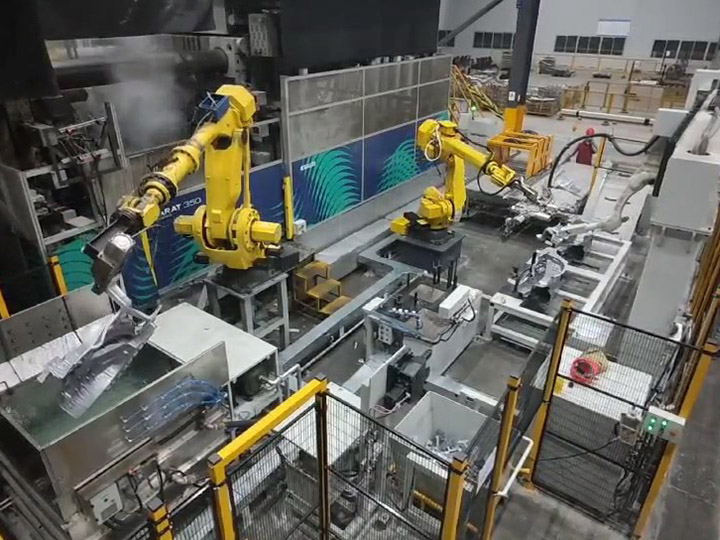
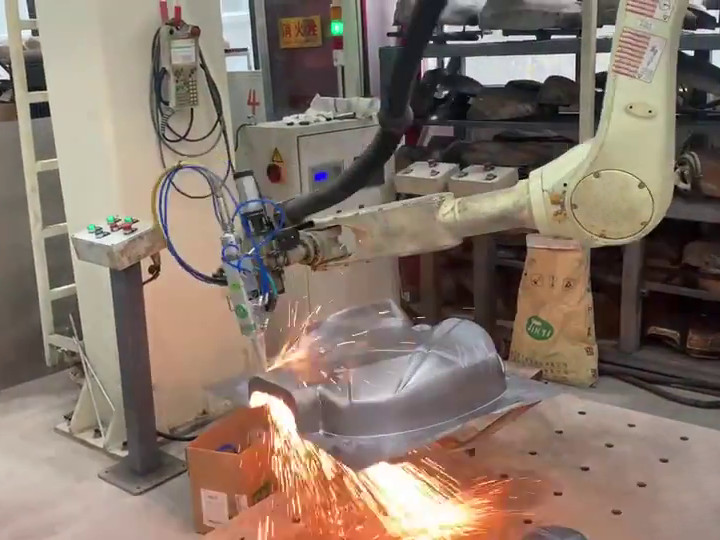
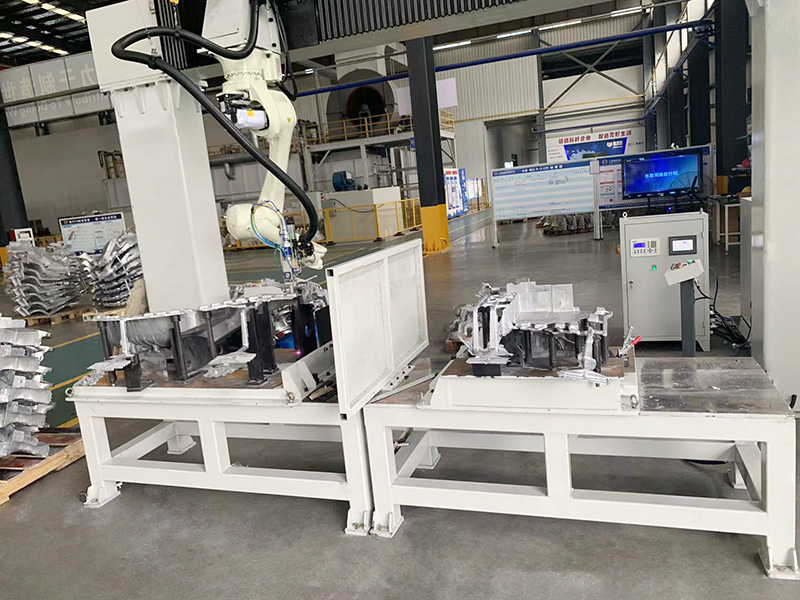
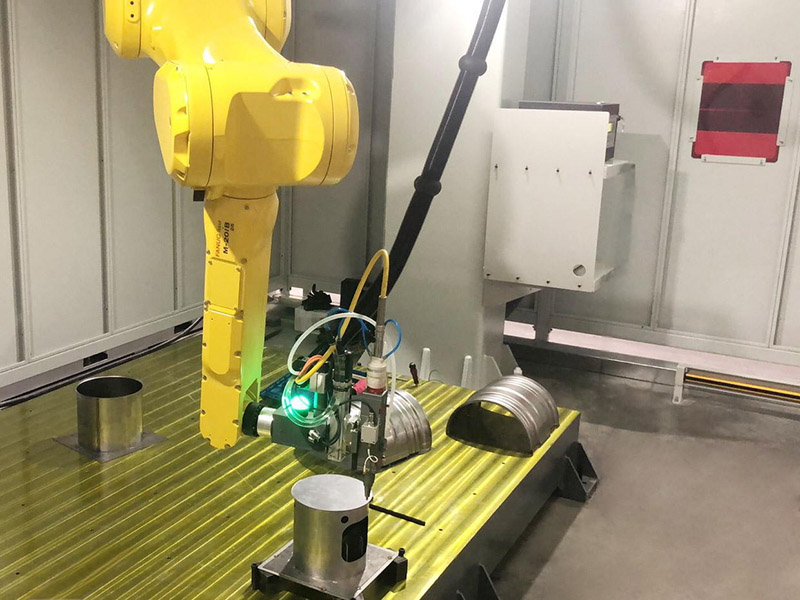
A 12 kW source can sit on a flat-bed gantry or on a robot. Flat bed gives stiffness and simple programming for plate work. A robotic head gives access to formed and three-dimensional parts, at the cost of a shorter standoff window and a lower practical power ceiling — most robot-mounted cutting heads in production run 1 to 3 kW, which is why Dade's robotic 3D cutting cells for cast aluminium chassis parts and cab structural beams are built around 1 kW, 2 kW and 3 kW sources matched to the part rather than to a headline number.
The choice follows the part. If the part is flat plate, buy the bed. If the part is formed or cast, buy the robot and accept the lower power class.
Working With Dade Heavy Industry
Dade Heavy Industry (stock code 870547) has spent decades matching laser and welding processes to specific parts rather than selling one platform to everyone. From a 100,000 m² site in Wuxi, Jiangsu, with roughly 600 employees and a portfolio of 50 series and 200 specifications, the company builds digital robot workstations, 3D laser, plasma and flame cutting systems, and automatic welding lines, with close to 10,000 sets delivered in China and exports to Southeast Asia, the Middle East, Japan, Europe and the Americas.
Its engineering team evaluates a customer's part first: material, thickness, trim geometry, tolerance and annual volume. Only then does the power class get fixed. That sequence is why a 12KW laser cutting equipment decision should start with a drawing and a gas contract, not with a specification sheet.