







© 2025 JiangSu Dade Heavy Industry Co.Ltd. All Rights Reserved.Web Design by Wangke

Release time:2025-10-15 Visits:1155
In automobile manufacturing, chassis welding is a core link that determines the safety, comfort, and stability of vehicles. Its process integrates materials science, precision machining, and advanced welding technologies. The following is an analysis of the key steps and technologies:
Material pretreatment is the foundation of chassis welding. Spectral analysis can be used to detect the purity of the steel's composition, ensuring that the anti - fatigue properties and rigidity of the material meet the standards. Surface treatment uses sandblasting and chemical degreasing processes to thoroughly remove the oil and oxide layer on the steel surface. Subsequently, phosphating or galvanizing treatment endows the metal with long - term anti - rust ability, enhancing the durability of the chassis in complex environments.
Large - scale stamping presses press steel plates into high - precision molds with hundreds of tons of pressure to complete the initial shaping of chassis components. The mold error needs to be controlled at the micron level (equivalent to one - tenth of the diameter of a human hair) to ensure the dimensional accuracy of the formed components, laying the foundation for subsequent welding and assembly.
III. Welding and Assembly : The Integration of Automation and Intelligence
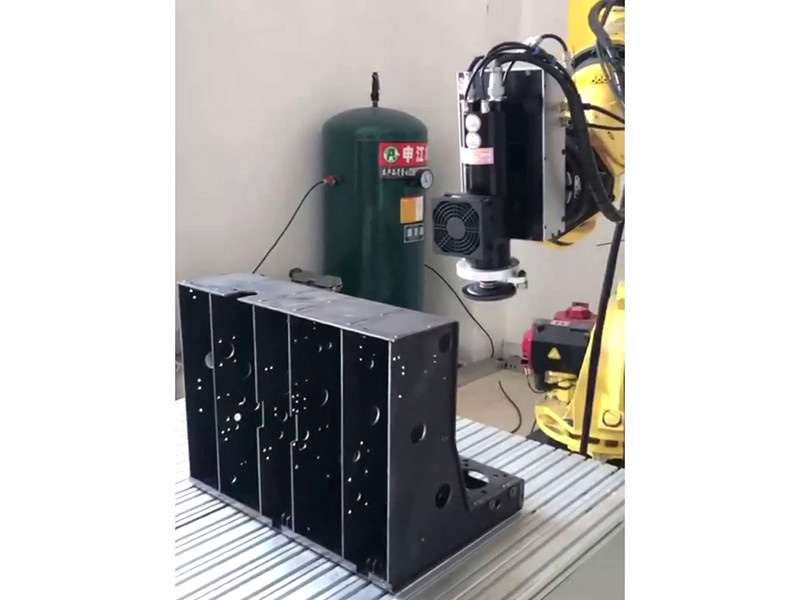
Modern automobile chassis welding is dominated by robot automation technology. Technologies such as spot welding, arc welding, and laser welding are flexibly selected according to different materials (such as steel and aluminum alloy). Through precise programming, efficient connection of multiple welding points is achieved. For example, resistance welding technology uses local heat generated by electric current to complete welding, and the time for a single point only takes a few seconds, which is suitable for mass production. After welding, CT scanning is used to detect the quality of internal welds and check for "hidden cracks" to ensure safety.
The welded chassis needs to go through electrophoretic coating to form a uniform and dense anti - corrosion primer layer. Subsequently, a high - anti - corrosion topcoat is sprayed to enhance weather resistance. For the bottom of the chassis, which is vulnerable to impact, a granular protective coating is used to effectively resist scratches and corrosion from gravel, extending the service life of the chassis.
Key components (such as bearing holes and threaded holes) are machined by CNC machines with micron - level precision to ensure a perfect fit of the mating dimensions. In addition, heat treatment processes such as quenching and tempering optimize the mechanical properties of the materials, enabling the components to have both strength and toughness.
In the assembly process, systems such as suspension, transmission, and braking are integrated with the chassis, and a torque control system is used to ensure consistent bolt tightening force. In the dynamic debugging process, bumpy road conditions are simulated to detect abnormal noises and looseness. Four - wheel alignment adjusts the camber and toe - in of the wheels to ensure driving stability and tire life.
| 1. High - level Automation | Welding robots will be further popularized to improve efficiency and consistency and reduce human errors. |
|---|---|
| 2. Penetration of New Welding Technologies | Due to the advantages of a small heat - affected zone and high strength, laser welding is gradually replacing some traditional processes, especially for lightweight aluminum - alloy components. |
| 3. Upgrade of Green Manufacturing | The application of low - energy - consumption welding equipment and environmentally friendly materials reduces pollution, which is in line with the goal of carbon neutrality. |
| 4. Adaptation to Lightweight Materials | In response to the needs of new energy vehicles, welding processes are continuously optimized to adapt to aluminum alloys, composite materials, etc., to achieve the best balance between strength and weight. |
In summary, chassis welding technology is evolving towards high precision, intelligence, and environmental friendliness. From material processing to final assembly and debugging, technological breakthroughs in each link are promoting automobile manufacturing towards higher safety and performance standards.
Material pretreatment is the foundation of chassis welding. Spectral analysis can be used to detect the purity of the steel's composition, ensuring that the anti - fatigue properties and rigidity of the material meet the standards. Surface treatment uses sandblasting and chemical degreasing processes to thoroughly remove the oil and oxide layer on the steel surface.
Large - scale stamping presses press steel plates into high - precision molds with hundreds of tons of pressure to complete the initial shaping of chassis components. The mold error needs to be controlled at the micron level (equivalent to one - tenth of the diameter of a human hair) to ensure the dimensional accuracy of the formed components, laying the foundation for subsequent welding and assembly.
The welded chassis needs to go through electrophoretic coating to form a uniform and dense anti - corrosion primer layer. Subsequently, a high - anti - corrosion topcoat is sprayed to enhance weather resistance. For the bottom of the chassis, which is vulnerable to impact, a granular protective coating is used to effectively resist scratches and corrosion from gravel, extending the service life of the chassis.
Key components (such as bearing holes and threaded holes) are machined by CNC machines with micron - level precision to ensure a perfect fit of the mating dimensions. In addition, heat treatment processes such as quenching and tempering optimize the mechanical properties of the materials, enabling the components to have both strength and toughness.
In the assembly process, systems such as suspension, transmission, and braking are integrated with the chassis, and a torque control system is used to ensure consistent bolt tightening force. In the dynamic debugging process, bumpy road conditions are simulated to detect abnormal noises and looseness. Four - wheel alignment adjusts the camber and toe - in of the wheels to ensure driving stability and tire life.
Explore our full range of robot welding workstations.
Related equipment: the AGV-driven welding assembly line.




