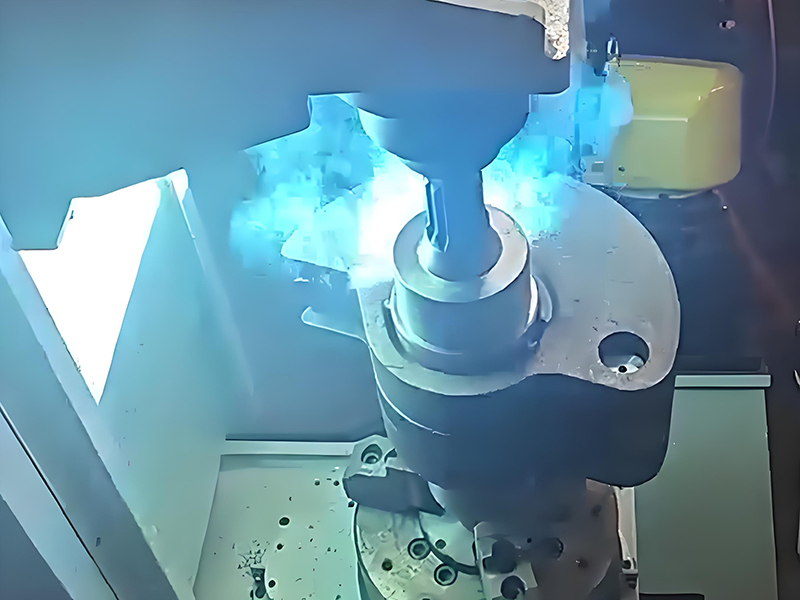
Irregular Sheet Metal Laser Cutting Machine: Planning The Trim, Not Just The Cut
Release time:2026-11-20
Visits:6
A flat-bed fiber laser cuts a flat sheet. That sentence sounds tautological until the sheet arrives already formed — a cab panel with a crown, a bracket with a folded flange, a stamped housing with a hole that has to move 3 mm because the tool wore. Now the cutting head has to reach a surface that is not in the plane of the table, and the machine that was perfectly adequate yesterday is suddenly the wrong machine.
An
irregular sheet metal laser cutting machine is built for that second situation. Its job is not nesting rectangles out of a 3 × 1.5 m sheet. Its job is following a real, imperfect, three-dimensional part and cutting the edge or the hole where the drawing says it should be — at a cycle time that beats the manual grinder it replaces.
What "Irregular" Actually Covers
Flat but non-rectangular blanks
Blanks with curved outlines, internal cut-outs, or a shape that would waste half the sheet if nested conventionally. A flat-bed machine handles these well if the part is flat; the difficulty is handling and scrap, not geometry.
Formed panels with holes to trim
Doors, cab panels, enclosures and covers that are stamped or bent first and cut afterwards. The cut is often a hole, a notch or a flange trim that cannot be produced in the die without a tooling change. This is the highest-value use of an irregular sheet metal laser cutting machine, because it removes the die from the loop.
Cast and stamped parts with flash
Aluminium castings with flash lines, brackets with trimming allowance, hot-formed steel with a hardened edge that must be trimmed after forming. These parts are dimensionally inconsistent, so the machine has to find the part before it cuts it.
Why a Flat-Bed Cutter Stops Working
|
Part condition |
Flat-bed laser |
Robot or 5-axis laser |
|
Flat blank, tight tolerance |
Ideal |
Workable, slower |
|
Formed panel, single curvature |
Cannot hold focus |
Standard |
|
Formed panel, compound curvature |
Not possible |
Standard |
|
Casting with flash |
Not possible |
Standard with probing |
|
Part-to-part variation above 0.3 mm |
Fixture must absorb it |
Sensor corrects it |
|
Mixed part family, low volume |
Changeover is fast |
Changeover is fast if programmed |
The dividing line is focus. A flat-bed machine holds the focus by holding the sheet flat. Once the surface leaves the plane by more than the depth of focus — typically 1 to 2 mm at trimming powers — the cut quality falls away and dross appears on the underside.
Machine Configurations
Robot-carried head
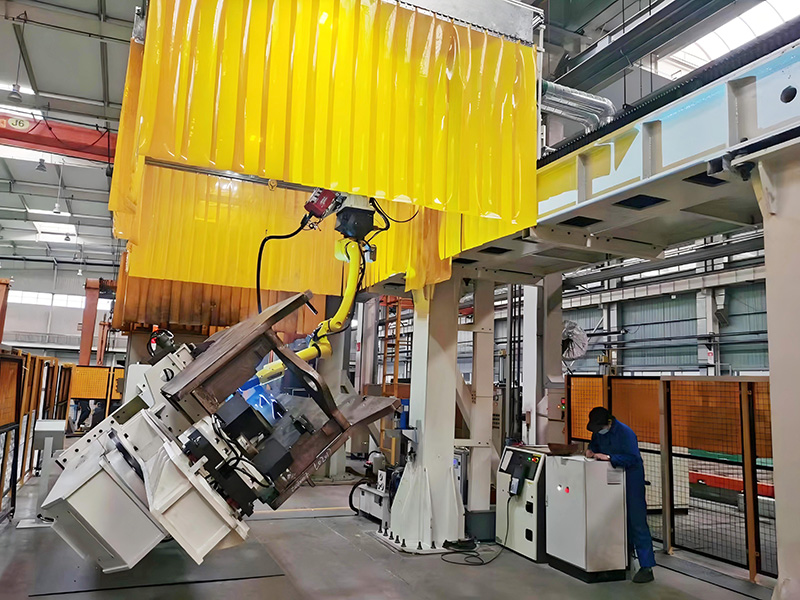
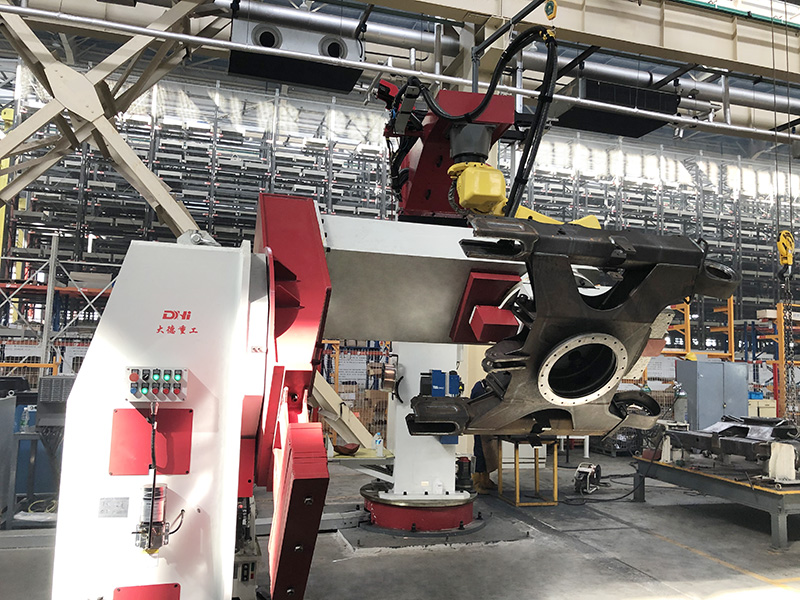
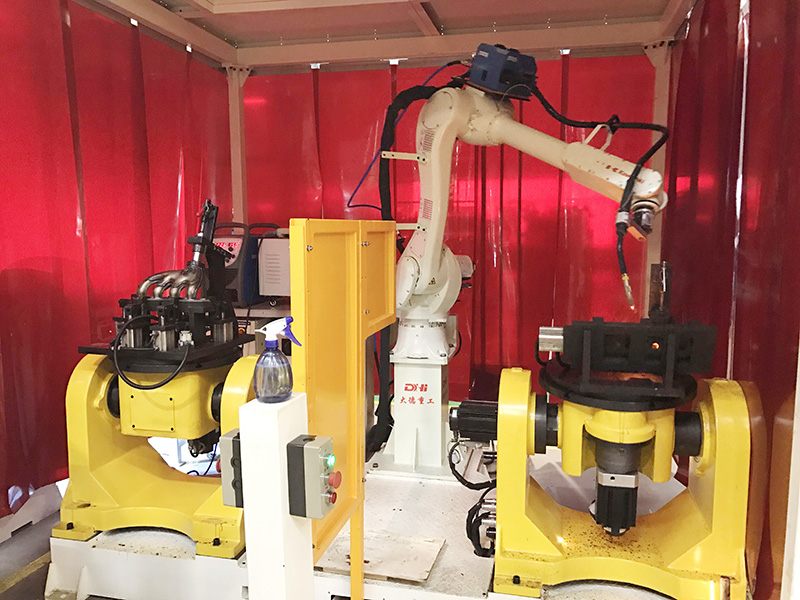
The most common layout for formed parts up to about 2 m. The arm carries the cutting head, the part sits in a fixture, and the path comes from CAD plus a correction from probing or tracking. A Kawasaki RA20N class arm with a 1 kW to 2 kW fiber source covers most sheet-metal trimming: thin material, high speed, and a kerf narrow enough that the cut edge needs no secondary operation.
Dade Heavy Industry builds this configuration for motorcycle fuel tanks, where a Kawasaki RA20N with a Raycus 1000W source cuts stainless and carbon steel tank shells with micron-level path accuracy and burr-free edges, removing the grinding step that followed the previous process.
Five-axis gantry
Better for large panels and for parts that must be cut with the head always normal to a surface that spans more than the robot's comfortable reach. Stiffer, more expensive, and slower to change over. Choose it when the part is large and the volume is steady.
Power class for trimming
|
Work |
Power |
Reason |
|
Thin formed sheet, 0.8–1.5 mm |
1 kW |
Kerf control matters more than power |
|
Formed panel, 1.5–3 mm |
2 kW |
Speed with acceptable dross |
|
Hot-formed steel, 1.5–2.5 mm |
3 kW |
Hardened surface needs energy density |
|
Casting flash, 3–6 mm |
2–3 kW |
Cut depth varies, so headroom helps |
Higher power is not automatically better on a trimming job. A 6 kW source on 1.2 mm formed panel cuts faster but widens the kerf and increases the heat-affected zone, which shows up as discolouration on the visible face of a painted part.
Programming From CAD, Then Correcting for Reality
Path from the model
The cutting path is generated from the 3D model: an offset curve along the trim line, with lead-in and lead-out, and a defined cut direction so the kerf taper falls on the scrap side. On a formed part, the path also carries the head orientation, which is why the machine needs either five axes or a robot with a wrist that can hold normal.
Dealing with deviation
Stamped and cast parts do not match the model. Three correction methods, in order of cost:
• Datum probing at three to six points, then transform the whole path
• Cross-section scanning of the trim line, then local correction
• Real-time seam tracking with a laser sensor
For most sheet-metal trimming, datum probing plus a fixture that forces the part onto a known stop is enough. Real-time tracking is reserved for long, thin, distortion-prone parts.
Fixture and Support
Supporting a formed panel
Vacuum cups on a contoured fixture, or a machined nest that matches the part's inner surface, keeps the panel from flexing under the head. Flex is the enemy: 0.2 mm of panel movement during the cut shows as a step in the edge.
Scrap and slug control
A trimmed hole leaves a slug. If the slug stays in place it can tilt into the beam path, cause a collision, or fall through and damage the machine below. Design the fixture with a drop-out path, a slug catch tray, or a pre-cut break point so the scrap leaves in a predictable direction.
Cost Per Part: The Arithmetic
|
Item |
Manual / die process |
Irregular sheet metal laser cutting machine |
|
Setup per variant |
Die change, hours to days |
Program recall, minutes |
|
Cycle time per part |
20–40 min manual trim |
40–120 s |
|
Consumables |
Grinding discs, die wear |
Lens, nozzle, electricity, gas |
|
Rework |
Frequent, skill-dependent |
Low, repeatable |
|
Design change |
New die |
New path |
The cab upper beam case makes the point concretely. A tractor plant cut cab upper beams by hand, taking close to 30 minutes per piece, and could not keep up with the line. A 3000W robotic 3D laser cutting machine replaced the manual process and raised output enough to clear the schedule, while removing the variation that hand grinding introduces.
Put your own numbers into that table. If the part takes 25 minutes by hand and 90 seconds on the machine, and you build 40 a day, the machine releases about 15 labour hours daily. That is the payback calculation, and it does not depend on the machine's purchase price being low — it depends on the labour it displaces and the variants it frees from tooling.
Quality Checks That Matter
• Edge squareness on a sectioned sample, measured at the start and end of the cut
• Dross height on the underside, checked on the first part each shift
• Hole position relative to datum, checked on a CMM for the first article
• Heat tint on stainless, controlled by assist gas and cut speed
• Slug ejection confirmed per cycle, by sensor where the part is enclosed
Working With Dade Heavy Industry
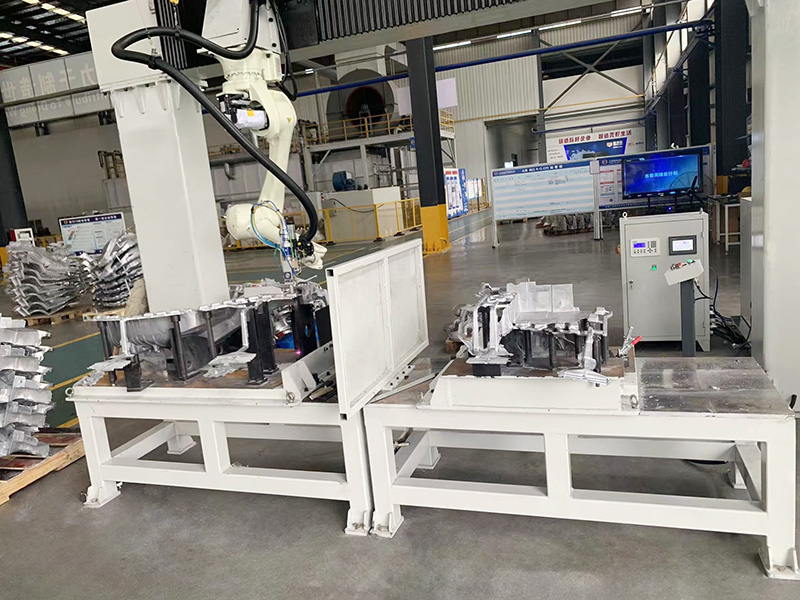
Chassis Auminum Laser Cutting Machine / Cutter
Dade Heavy Industry (stock code 870547) builds
irregular sheet metal laser cutting systems as part of a wider robot application business that includes welding cells, cutting cells and complete production lines. The company runs from a 100,000 m² plant in Wuxi, Jiangsu, with roughly 600 employees, 50 product series and 200 specifications, and has delivered close to 10,000 sets of equipment to customers in 30 provinces as well as Southeast Asia, the Middle East, Japan, Europe and the Americas.
Its reference work in this area covers chassis aluminium castings cut by a Kawasaki RA20N with a Raycus 2 kW source, cab structural beams cut by a 3000W robotic cell, and motorcycle fuel tanks cut at micron-level path accuracy. Because Dade also builds the welding cells that follow the cut, it can plan a trim operation around the downstream assembly rather than treating the cut as an isolated step.
If your part is formed before it is cut, describe the forming process as well as the drawing. The right irregular sheet metal laser cutting machine is chosen by the deviation your forming process produces, not by the tolerance on the print.