Advantages Of Robotic Welding Systems In Industry
Release time:2026-08-10
Visits:318
Take a look at the car in your driveway. Ever notice the perfectly smooth, strong seams holding the doors and frame together? Creating that flawless connection once is a skill, but doing it thousands of times a day without a single mistake is nearly impossible for a human.
This is where the unsung heroes of modern manufacturing enter: welding robots. While human welders are essential for custom work, no person can perfectly replicate the same high-energy task for hours on end. The core advantages of robotic welding are absolute consistency and tireless speed, ensuring every joint is as strong as the last.
Let’s pull back the curtain on the robotic welding systems that build our world, making products better and keeping human workers safe.
What Is a Robotic Welding System, Exactly?
A
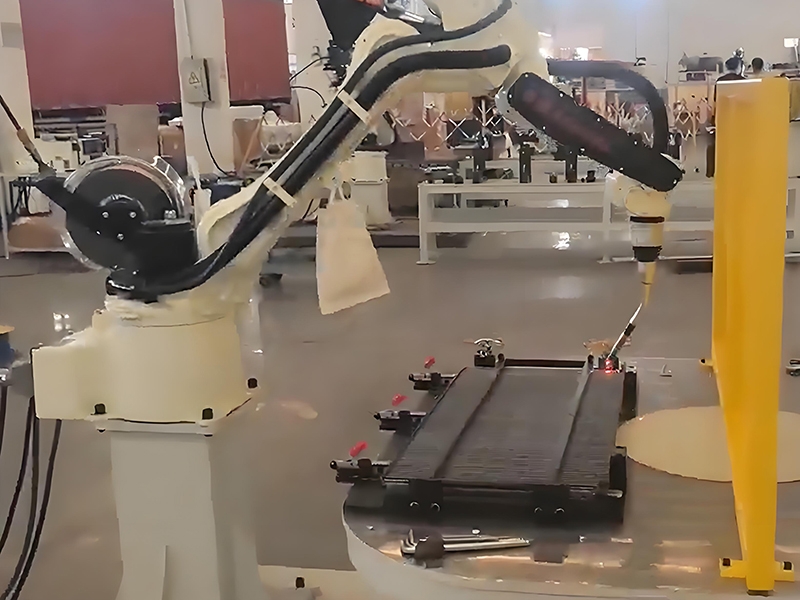
robotic welding system is best understood not as a single machine, but as a highly coordinated team. A welding robot relies on three core components to work with incredible speed and accuracy, with each part playing a distinct role.
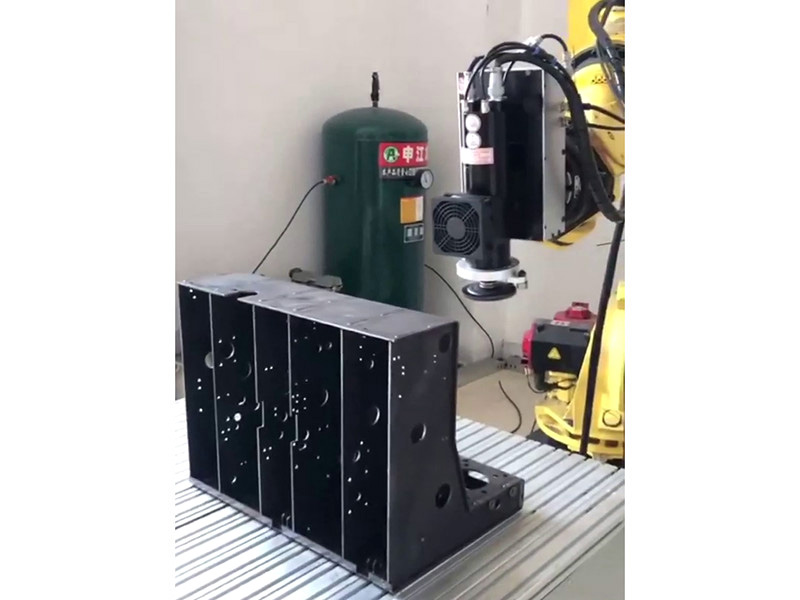
The most visible player is the industrial robot arm for welding. This is the system’s body, built with joints that let it bend and pivot with more flexibility than a human arm. At its tip, it holds the welder itself—the tool that does the actual work, fusing metal parts together.
The arm and tool are directed by the controller, a powerful computer that acts as the robot’s brain. From this central hub, every command is sent, choreographing the arm’s movements and telling the welder precisely when to fire. This flawless teamwork is how a welding robot works, but how does it get those instructions in the first place?
How Does a Robot Learn to Weld?
Programming a welding robot is surprisingly hands-on. A skilled human welder acts as the robot’s first teacher, showing it exactly what needs to be done. The answer to how to program a welding robot lies in direct physical guidance.
Using a device called a teach pendant—which resembles a rugged gaming console with a screen and joystick—an operator physically guides the robot arm through the precise path of the weld. They carefully position the welding tip at every point, recording each movement and angle into the robot’s controller.
Once this lesson is saved, the robot has a perfect memory. This is the key to improving welding consistency, as the machine can now replicate that exact motion, speed, and path thousands of times without tiring or making a mistake. This incredible repeatability makes robots invaluable for mass production.
Robotic vs. Manual Welding: Why Automation Excels at Repetitive Tasks
If a human has to teach the robot first, why use one at all? While a skilled human welder’s creativity is essential for custom jobs, robots are the undisputed champions of repetition. When comparing robotic welding vs. manual welding for mass production, the robot’s superhuman advantages become clear.
The main benefits of automated welding come down to three factors:
Perfect Consistency: Imagine trying to draw the exact same line a thousand times. It’s nearly impossible for a person, but a robot does it perfectly every time, ensuring each product is strong and reliable.
Non-Stop Speed: Robots don’t get tired or need breaks. They can work around the clock at a constant pace, building parts much faster than humanly possible.
Improved Safety: Welding creates intense heat, blinding light, and unhealthy fumes. Using robots for this work is a key welding robot safety feature, as it moves human workers away from a dangerous environment.
By combining precision with tireless stamina, these machines help create products that are not only made faster but are also built better.
Where You Can Find the Work of Welding Robots in Your Life
While cars are a famous example, the world of industrial robot applications extends right into your home and office. The same technology that builds a car’s frame is likely responsible for the sturdy metal legs on your office chair, the strong racks in your oven, or the smooth seams on a modern bicycle. Look closely at the point where two metal parts are joined on a mass-produced item. If you see a perfectly consistent, almost machine-drawn seam with no wavering or blobs, you’re likely looking at the signature of a robotic welder.
That uniformity isn’t just for looks—it’s a sign of strength and one of the most valuable robotic arc welding applications. A flawless weld creates a stronger, more reliable bond, making the product more durable and ensuring the things you depend on are built to last.
Do Robots Take Jobs from Skilled Welders?
A common concern is job displacement, but the reality on the factory floor is often surprising. Many manufacturing industries face a significant labor shortage, with not enough skilled welders to fill open positions. Far from replacing people, robotic systems are essential welding labor shortage solutions, stepping in to handle the overwhelming demand for perfectly welded products.
This arrangement works because robots excel at the most repetitive tasks imaginable, like welding the same two spots on a frame thousands of times a day. Automated systems perform this grueling work with perfect consistency, delivering a clear ROI of automated welding through stamina and precision.
Instead of competing, this creates a powerful partnership. Automation frees up skilled human welders to focus on what they do best: problem-solving, creating custom parts, programming the robots, and performing complex repairs. They become the technicians and innovators who manage the process, representing the real future of welding: combining robotic strength with human creativity.
The Secret Behind the Perfect Seams Building Our World
The flawless seams holding together cars, furniture, and appliances are no accident. They are the result of a powerful collaboration where human skill teaches a robotic arm to perform a difficult job with unparalleled consistency, speed, and safety.
Next time you spot one of those perfectly uniform welds, you’ll know the secret. It’s not just a machine at work; it’s a testament to the partnership between human ingenuity and robotic precision that builds our modern world.