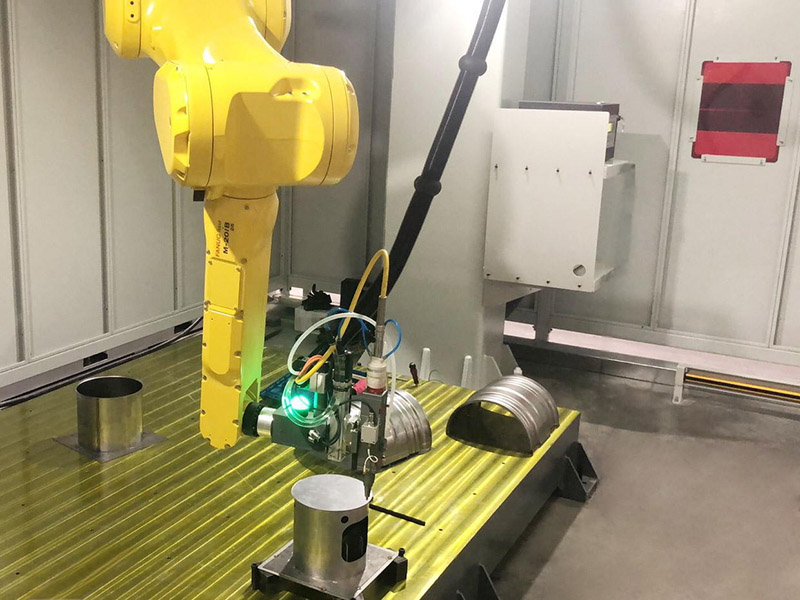
Why Robotic Laser Cutting Stands Out In Today’s Manufacturing
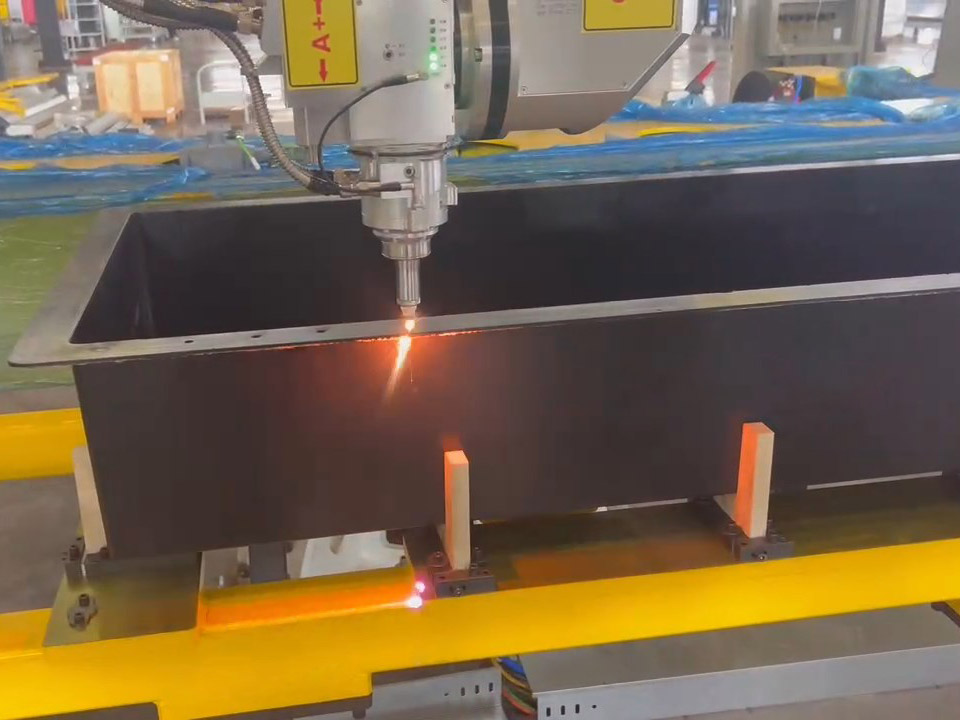
Laser cutting uses high‑density fiber laser energy to melt or vaporize metal material for clean, narrow kerf cutting. When paired with multi‑joint industrial robots, the technology gains extra spatial flexibility that fixed‑bed laser cutters cannot match.
Key Functional Advantages
1. 3‑dimensional complex contour processing: Robot arms can adjust cutting head orientation freely, performing laser cutting on curved, bent or irregular stamped parts instead of only flat sheets.
2. Minimal secondary finishing: Properly‑tuned laser cutting delivers burr‑free cutting edges, greatly reducing subsequent grinding and polishing workload.
3. Fast model change‑over: New cutting paths can be programmed offline, shortening setup time amid frequent product updates.
4. High production consistency: Eliminates human operation variance, keeping part quality stable for both small‑batch trial runs and mass‑volume orders.
Many factories only know flat‑plate laser cutting; they overlook that robotic laser cutting opens processing possibilities for formed components, stamped shells and welded assemblies directly on production lines.
Typical Industrial Application Scenarios For Laser Cutting Solutions
Jiangsu Dade Heavy Industry’s laser cutting systems serve customers covering multiple heavy‑manufacturing verticals. Below are the most common application fields:
New‑Energy & Conventional Automotive Industry
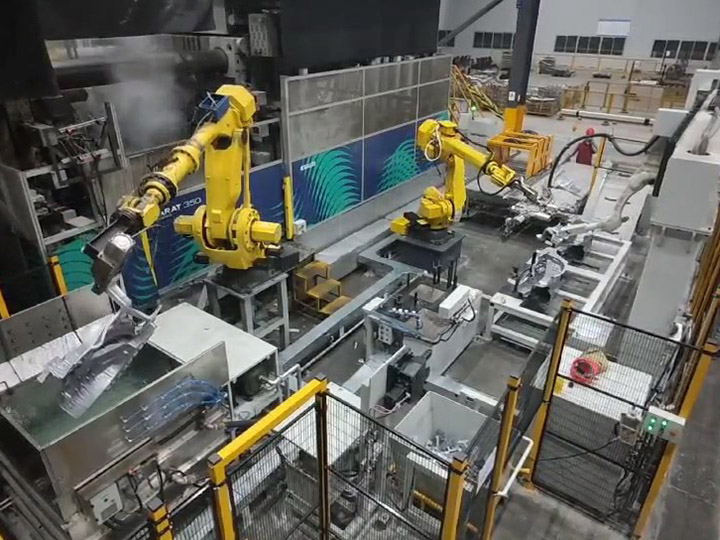
Robotic laser cutting handles cast‑aluminum chassis housings, cab ring beams, structural stamping parts and new‑energy vehicle component shells. One well‑known case from Dade Heavy Industry adopts Kawasaki robotic hardware plus Raycus laser source for cutting cast‑aluminum rear longitudinal beam housings, achieving stable high‑speed production on customer sites.
Motorcycle Manufacturing
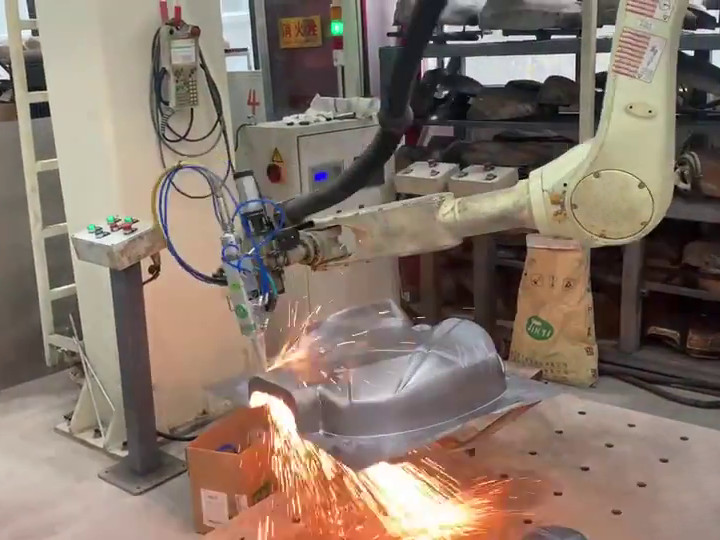
Formed motorcycle fuel tanks are typical hard‑to‑process curved workpieces. The customized laser cutting workstation delivered by Jiangsu Dade Heavy Industry realizes precise contour cutting for fuel‑tank shells. Without robotic assistance, manual cutting would produce unstable edges and heavy post‑processing work.
Construction & Engineering Machinery
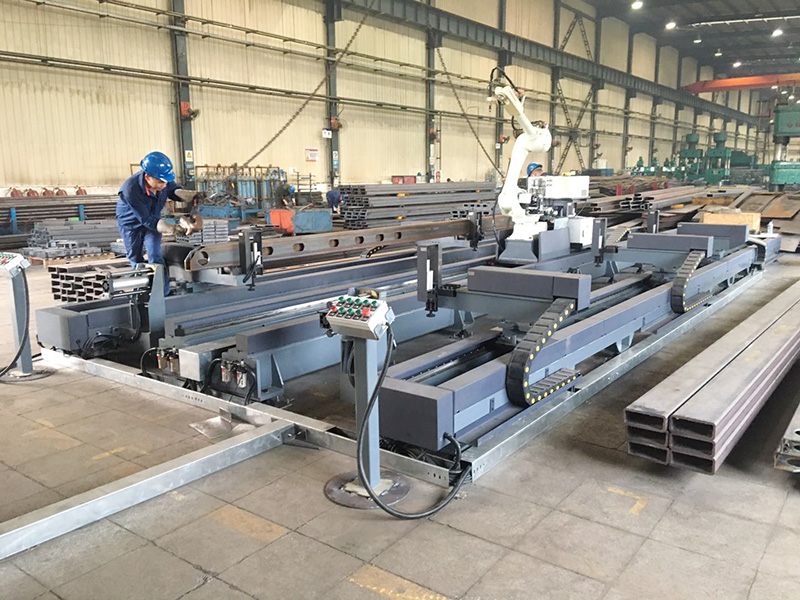
Large structural components, tractor cab assemblies and mechanical housing parts require multi‑angle laser cutting. Dade Heavy Industry’s gantry‑supported robotic laser cutting workstation solves the processing difficulty of oversized workpieces, replacing slow manual cutting processes and shortening single‑piece processing cycles significantly.
General Heavy‑Industry Fabrication
Apart from above sectors,
laser cutting solutions are also deployed for metallurgical equipment, pressure‑vessel accessories and transport machinery components.
Practical Points When Selecting Robotic Laser Cutting Equipment
Many project purchasers focus merely on laser power and ignore system matching, which leads to unsatisfactory final performance. When you evaluate laser cutting automation solutions, you should examine these practical dimensions:
1. Robot payload & working envelope: Confirm whether robot reach and load capacity cover your maximum workpiece size and cutting‑head weight.
2. Laser source power: Match power according to your main cutting material and plate thickness; carbon steel, stainless steel and aluminum alloy each have different power requirements.
3. Auxiliary mechanical structure: Gantry tracks or seventh‑axis slide rails can expand effective working range for large‑size parts.
4. Fixture & safety enclosure: Custom fixtures locate workpieces accurately; fully‑closed protective cabins reduce laser radiation risk and collect smoke and dust.
5. After‑sales support: Off‑line programming training, on‑site commissioning and long‑term technical guidance determine your actual production efficiency after equipment arrival.
As a full‑solution manufacturer, Jiangsu Dade Heavy Industry does not only supply stand‑alone robot machines. Its engineering team carries out process analysis according to customer drawings or physical samples, and provides matched fixture design, layout planning and sample‑testing services before formal order confirmation.
Real‑World Project Insight: Laser Cutting Project For Motorcycle Fuel Tank
For motorcycle fuel‑tank production, each tank is a complex curved stamped part, where traditional flat laser cutting cannot work.
Jiangsu Dade Heavy Industry completed a robotic laser cutting project for motorcycle fuel‑tank components. The workstation uses Kawasaki RA20N robot cooperating with Raycus 1000W laser source. The robot manipulates laser cutting head to follow 3‑D contours of fuel‑tank shells, producing smooth cutting edges with little deformation. The customer reduced manual cutting labor, lowered rework ratio and boosted daily output after putting this laser cutting workstation into service.
This case proves that well‑matched robotic laser cutting systems can solve tricky forming‑part cutting pain‑points for discrete manufacturers.
Common Misconceptions About Robotic Laser Cutting
Misconception 1: Higher laser power always equals better cutting result
Higher power does not guarantee good output. If robot path accuracy, gas‑assist parameters and fixture positioning cannot keep pace, high‑power laser cutting will still generate burr, over‑burn or workpiece deformation. System matching matters more than single‑index hardware parameters.
Misconception 2: Robotic laser cutting can fully replace flat‑bed fiber laser cutter
They target different application scenarios. Flat‑bed machines excel for large‑volume flat sheet cutting. Robotic laser cutting gains advantages mainly on formed, curved and three‑dimensional workpieces. Many factories deploy both two types of equipment to build complete cutting capacity.
Final Thoughts
Laser cutting empowered by industrial robots keeps evolving as modern manufacturing pursues higher flexibility and quality consistency. Factories processing lots of 3‑D formed metal parts will gain obvious competitive edge by adopting proper robotic laser‑cutting automation.
If you are assessing automation upgrade for your metal‑cutting workshop, Jiangsu Dade Heavy Industry Co., Ltd. offers pre‑sales process evaluation, custom workstation design, on‑site installation debugging and operator technical training. You may submit workpiece drawings or samples for technical assessment before purchase.
Frequently Asked Questions
Why Robotic Laser Cutting Stands Out In Today's Manufacturing?
Laser cutting uses high‑density fiber laser energy to melt or vaporize metal material for clean, narrow kerf cutting. When paired with multi‑joint industrial robots, the technology gains extra spatial flexibility that fixed‑bed laser cutters cannot match.
What are key functional advantages?
1. 3‑dimensional complex contour processing: Robot arms can adjust cutting head orientation freely, performing laser cutting on curved, bent or irregular stamped parts instead of only flat sheets.
Where is it applied?
Robotic laser cutting handles cast‑aluminum chassis housings, cab ring beams, structural stamping parts and new‑energy vehicle component shells. One well‑known case from Dade Heavy Industry adopts Kawasaki robotic hardware plus Raycus laser source for cutting cast‑aluminum rear longitudinal beam housings, achieving stable high‑speed production on customer sites.
What is practical points when selecting robotic laser cutting equipment?
1. Robot payload & working envelope: Confirm whether robot reach and load capacity cover your maximum workpiece size and cutting‑head weight.
What is real‑world project insight: laser cutting project for motorcycle fuel tank?
For motorcycle fuel‑tank production, each tank is a complex curved stamped part, where traditional flat laser cutting cannot work.
Related Reading
Explore our full range of robotic contour cutting systems.